Metal Forming Practise: Processes - Machines - Tools
Chapter 9: Ironing (Wall Ironing)

9.1 Definition

Ironing is a bulk forming process where the deformation force (tensile force) must be absorbed by the cup wall which is deformed. If the stress in the formed cup wall exceeds the tensile strength of the cup material, the base is torn off.

9.2 Application of the Process

For the production of flanged hollow parts whose base is thicker or thinner than the wall. With this method, hollow parts with inner tapering can also be produced.

9.3 Starting Stock

The starting stock is a pre-formed (mainly produced by extrusion), thick-walled cup.

9.4 Principal Strain (Figure 9.1)


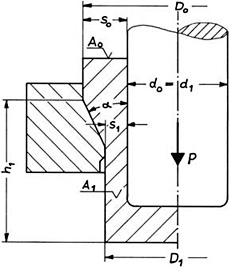
  • A 0 in mm 2 ring area before forming

  • A 1 in mm 2 ring area after forming

  • D 0 in mm external diameter before forming

  • d 0 in mm inside diameter before forming

  • D 1 in mm external diameter after forming

  • d 1 in mm inside diameter after forming (usually d 0 = d 1)

  • ? p principal strain


Figure 9.1: Cup with flange. Ironing with a ring

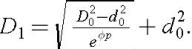
If ? p is provided and the limiting diameter D 1 is sought where d 0 = d 1 = const., then:


During ironing with a die ring (Figure 9.1), the values provided in Table 9.1 are permissible. When ironing with several die rings arranged one after the other (Figure 9.2), approx. 20% more deformation can be allowed (e.g. not 35% but 40%).

Table 9.1: Permissible deformations...

UNLIMITED FREE
ACCESS
TO THE WORLD'S BEST IDEAS

SUBMIT
Already a GlobalSpec user? Log in.

This is embarrasing...

An error occurred while processing the form. Please try again in a few minutes.

Customize Your GlobalSpec Experience

Category: Metal Strip
Finish!
Privacy Policy

This is embarrasing...

An error occurred while processing the form. Please try again in a few minutes.