Neural Networks for RF and Microwave Design

An electrical engineering textbook on practical applications of artificial intelligence technology methods to solving complex radio-frequency and microwave design problems.
 TABLE OF CONTENTS
 A neural network in the beginning stages will not represent any device/circuit behavior unless it is trained with corresponding device/circuit data. In this chapter, we present a systematic description of important issues in microwave-oriented neural model development, including data generation, data scaling, training, validation, and testing. Training algorithms that are relevant to RF/microwave neural modeling are described, including backpropagation, conjugate gradient, Quasi-Newton, Levenberg-Marquardt, Genetic Algorithms, and Simulated Annealing. Comparisons between these training methods are discussed.
Let x represent an n-vector containing physical/process/bias parameters of a microwave device/circuit (e.g., gate length and gate width of an FET, width and spacing of a transmission line). Let y represent an m-vector containing the electrical behaviors of the device/circuit under consideration (e.g., drain current of an FET, or mutual inductance of a transmission line). The theoretical physics/EM relationship between x and y can be represented as
| (4.1) | 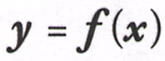 |
The relation f can be highly nonlinear and multidimensional. In practice, the theoretical model for this relationship may not yet be available, (for example, for a new type of semiconductor device). The existing problem theory may be too complicated to implement, or the theoretical model may be computationally intensive for online microwave design and repetitive optimization (for example, a 3-D full-wave EM analysis inside a Monte Carlo statistical design loop).
To overcome these problems, we aim to develop a fast and accurate neural model for the relation f by teaching/training a neural network...