Safety Instrumented Systems: Design, Analysis, and Justification, 2nd Edition

Although the title of this chapter is "Installing a system," the intent is to cover key activities ranging from the completion of the design to the successful operation of the system. These activities include the following:
factory acceptance testing (FAT)
installation and checks
validation/site acceptance testing (SAT)
functional safety assessment/pre-startup safety review (PSSR)
training
handover to operations
startup
post startup activities
The overall objectives are to ensure that safety systems are installed per the design requirements, that they perform per the safety requirements specification, and that personnel are adequately trained on how to operate and support the systems. The activities listed above are required in order for this to be accomplished effectively.

The examination of over 30 accidents by the U.K. Health and Safety Executive [ [1]] indicated that 6% of the accidents were due to "installation and commissioning" problems. This relatively low figure may be somewhat misleading because the potential for major problems is high if safety systems are not installed as designed and are not commissioned per the safety requirements specification. Some potential problems are:
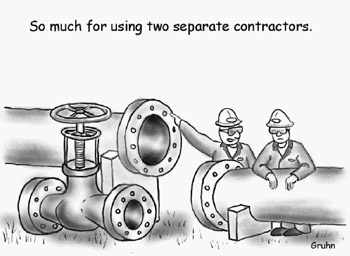
Installation errors such as improper/incorrect terminations, or a wrong device being installed for a particular service.
Inadequate testing in order to detect installation and/or possible design errors. This normally occurs if the testing in not well planned, personnel doing the testing are not adequately trained, or the testing procedures and documentation are poor.
Use of substandard "free issue" components by the installation contractor. Major components are usually well specified. Minor...