The Six Sigma Way, How GE, Motorola, and Other Top Companies Are Honing Their Performance

An implementation blueprint for
Six Sigma.
 TABLE OF CONTENTS
 The ability to create new or wholly-renewed process was described in Chapter 2 as a critical core competency for 21st Century organizations. To achieve Six Sigma levels of performance and keep pace with market and technology changes, both Six Sigma improvement strategies improvement and design/redesign will be needed. This reinventing activity focused on exponential versus incremental improvement is our focus in this chapter (see Figure 16.1).
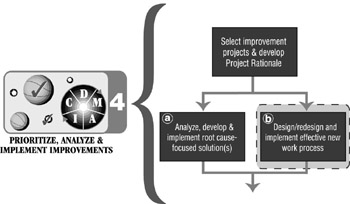
The DMAIC process, applied to designing or redesigning a business process, can be revealed to you by asking a few key questions:
What extent or scope of activities will be subject to our process design?
What are the critical outputs, output requirements, and service requirements that the new process must be able to achieve? What new standards should the process be able to meet in the future?
What internal performance goals are key to the success of the new process (speed, cost, ease of use, flexibility, etc.)?
What will the new flow of work and assignment of responsibilities look like? How can we improve on our first-pass redesign?
How will we test, refine, and transition to the new work process?
How will we manage the organizational impact of a substantial change in how we accomplish this work?
Before we look at how to answer these questions, though, let s explore some of the key issues relating to why and when Process Design/Redesign is needed.
Since...