Standard Handbook of Audio and Radio Engineering, Second Edition
Jerry C. Whitaker, Editor-in-Chief
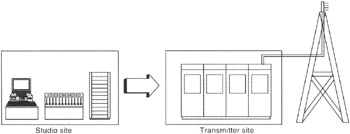
One of the major concerns in the design and operation of a radio broadcasting facility is the means by which the program audio from the studio is conveyed to the transmitter site. As illustrated in Figure 11.4.1, this link represents an important element in the overall reliability of the transmission chain. Furthermore, as digital technology continues to move into daily radio station operation, the studio to transmitter link (STL) must become as transparent as possible. An inferior link will impose an unacceptable limit on overall audio quality. The requirements for reliability and transparent program relay have led to the development of new STL systems based on digital technology.
Changes in FCC broadcast ownership rules and the popularity of local marketing agreements (LMAs) have reshaped radio broadcasting. The need for high-quality audio programming is one outgrowth of new competition and new alliances. STL systems are an important component of these audio improvement efforts. Furthermore, increasing numbers of stations are using intercity relay (ICR) facilities to share programming. Unfortunately, in many areas of the United States, the demand for 950 MHz STL channels has far outstripped the available supply. The Part 74 bandwidth allocations for STL systems, therefore, necessitate highly-efficient designs to meet the needs of radio broadcasters today.
Market demand for STL systems is not limited to North America. The commercialization of radio broadcasting in Europe and elsewhere has...