Practical Electronics Handbook, Sixth Edition
Chapter 18: Connectors, Prototyping and Mechanical Construction

Hardware

The hardware of electronics, meaning the chassis, covers, cabinets, switches and other external features is, for the manufacturer of consumer electronics, almost as important as the circuitry within, because the external appearance is all that the casual user can go by to judge the system. For military contract work, adhering to specifications is what counts, but on any score hardware cannot be neglected, though it very often is. The task is made much easier when there is a company policy of using some particular form of hardware such as standardized board and cabinet sizes. The most difficult decision is on how to package some piece of equipment that is, for the moment, a one-off product, particularly if there is any chance that other items will follow. A lash-up that works in the laboratory may not work in the same way when packaged as a consumer product, so the final packaging should be considered once a prototype is working.

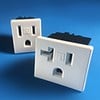
The prospective user of a piece of electronics equipment first makes contact with the design when he/she tries to connect it to other equipment and to whatever power supply is used. Mains-operated equipment for domestic or office use will usually have a connected and well-tethered mains cable of the correct rating, preferably with a correctly fused three-pin plug, if it is intended for the UK market. The option is to use a BS/IEC-approved three-pin plug on the chassis, with a lead that has a matching socket at one end and a...

UNLIMITED FREE
ACCESS
TO THE WORLD'S BEST IDEAS

SUBMIT
Already a GlobalSpec user? Log in.

This is embarrasing...

An error occurred while processing the form. Please try again in a few minutes.

Customize Your GlobalSpec Experience

Category: Power Plugs
Finish!
Privacy Policy

This is embarrasing...

An error occurred while processing the form. Please try again in a few minutes.