
DC Dynamometers
Last Updated: April 1, 2025
Description
DC dynamometers are devices used to measure the torque and rotational speed of an engine or motor, thereby calculating its power output. They are essential tools in testing and evaluating the performance of various mechanical systems by providing precise measurements of power and efficiency.
Working Principle
DC dynamometers operate on the principle of electromagnetic induction. They use a DC motor as a generator to absorb the power produced by the engine or motor under test. The interaction between the magnetic fields of the stator and rotor generates a rotational force, or torque, which is measured to determine the power output. The back electromotive force (EMF) generated by the rotor as it spins creates an opposing voltage, which is crucial for controlling the speed and efficiency of the motor. This principle makes DC dynamometers particularly useful for providing accurate and reliable performance data.
Applications
DC dynamometers are commonly used in various industries for performance testing and monitoring. Specific applications include testing automotive engines, aircraft engines, and industrial machinery. They are also used in the development and testing of transmissions, gearboxes, and fluid power systems, where precise measurement of power and torque is critical.
Advantages over other Dynamometers
One of the key advantages of DC dynamometers is their ability to provide frictionless torque loading, which is independent of shaft speed. This feature allows for more accurate and consistent measurements compared to other types of dynamometers that rely on friction-based braking systems. Additionally, DC dynamometers can offer better control over the testing process, making them ideal for applications requiring high precision.
Limitations
DC dynamometers have certain limitations, such as the complexity of their setup and the need for precise calibration to ensure accurate measurements. They may also require more maintenance compared to simpler dynamometer types due to their reliance on electromagnetic components.
Considerations
When considering the use of DC dynamometers, it is important to evaluate factors such as initial costs, operating expenses, and maintenance requirements. While they may have higher upfront costs compared to other types of dynamometers, their durability and accuracy can justify the investment for applications requiring precise performance data. Additionally, the costs associated with replacement and maintenance should be considered, as these can impact the overall cost-effectiveness of using DC dynamometers in the long term.
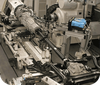
from Unico, Inc.
From the testing of internal combustion engines and their components to torque transducers and motors, our transmission dyno drives help you perform a complete drive train testing comfortably. Test all kinds of systems, including single-axis systems, 2-wheel drive, 4-wheel drive, hybrid, fully... [See More]
- Technology: DC
- Application: Automotive; Transmissions