
Triac Solid State Relays
Description
Triac Solid State Relays are electronic devices that control the flow of electrical power. They function as switches that can turn on or off the power supply to a load, such as a motor or lamp, by using a small control signal. These relays are known for their ability to handle AC power and provide smooth control over the power delivered to the load.
Working Principle
Triac Solid State Relays operate by utilizing a triac, which is a bi-directional gate-controlled thyristor. This allows them to conduct current in both directions, providing full-wave control of AC power. The triac is essentially two Silicon Controlled Rectifiers (SCRs) connected in an inverse parallel arrangement, enabling it to control the power during both halves of the AC supply voltage. Once the triac is triggered by a gate signal, it remains conducting until the current through it drops to zero, making it useful for applications requiring smooth and continuous power control.
Applications
Triac Solid State Relays are commonly used in applications where precise control of AC power is required. Specific examples include controlling the speed of AC motors, dimming incandescent lamps, and regulating the temperature in heating systems. They are also used in industrial automation systems to manage the power supply to various equipment and machinery.
Advantages over other Solid State Relays
Triac Solid State Relays offer several advantages over other types of solid-state relays. They provide full-wave control of AC power, which is beneficial for applications requiring smooth and continuous power delivery. Additionally, their ability to conduct in both directions makes them more versatile for AC applications compared to unidirectional devices like SCRs.
Limitations
One of the limitations of Triac Solid State Relays is their high power dissipation due to conduction losses, which can lead to the need for heat sinks to manage thermal performance. This can affect the packaging density and limit their applicability in certain high-current applications. Additionally, they may have a residual high forward voltage drop when in conduction mode, which can impact efficiency.
Considerations
When considering the use of Triac Solid State Relays, it is important to evaluate factors such as initial costs, operating expenses, and durability. While they offer precise control and reliability, the need for additional components like heat sinks can increase the overall cost. Their durability and low maintenance requirements can offset some of these costs over time. However, users should also consider the accuracy of control and potential replacement and maintenance costs when selecting these relays for specific applications.
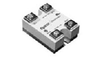
from Richardson RFPD
Solid State Relays and Input/Output Modules [See More]
- Output Device: Triac
- Output Voltage Type: AC
- Mounting: Hockey Puck
- Maximum Switching Current: 10.00
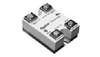
from Richardson RFPD
Solid State Relays and Input/Output Modules [See More]
- Output Device: Triac
- Output Voltage Type: AC
- Mounting: Hockey Puck
- Maximum Switching Current: 25.00
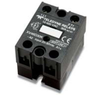
from Richardson RFPD
The Series XV relay combines the best of solid-state and electromechanical technology. The relay is designed in a touch-proof hockey-puck package. The XV relay switches current up to 30A without a heat sink. Visual control status is provided as a standard. Elimination of the heat sink conserves... [See More]
- Output Device: Triac
- Output Voltage Type: AC
- Mounting: Surface Mount
- Maximum Switching Current: 30.00
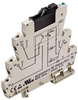
from Weidmuller
Relays of the MICROSERIES are used for isolating and coupling digital signals. They are characterised by the following features: modular width 6.1 mm. Pluggable relay. Pluggable cross-connection for four voltages in input and output circuits,. innovative retention and ejection aid,. LED operating... [See More]
- Output Device: Triac
- Input Voltage (Control Signal) Type: AC; DC
- Mounting: Screw Connection
- Input Voltage (Control Signal) Range: 67 to 69

from Gefran
Zero crossing relay with antiparallel thyristor output is the most used solid state relay in industrial applications. "Zero crossing" relay is energised when voltage meets the zero point and disenergised when current meets the zero point, depending on the signal control on the input circuit. For... [See More]
- Output Device: Triac
- Application Type: General
- Solid State Relay Type: Optically
- Input Voltage (Control Signal) Range: 32

from Vincotech GmbH
Vincotech offers fully electronic relays potted into two standard relay housings with standardized pin configuration for innovative, reliable and wear-free switching. All relays operate noise-, spark- and bounce-free without the need for any design or layout change. Product Features. Small... [See More]
- Output Device: Triac
- Mounting: PCBoard; Socket or Plug-in Style
- Application Type: Interface application; Couplers; Process control
- Input Voltage (Control Signal) Range: 60
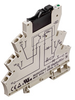
from Weidmuller
Relays of the MICROSERIES are used for isolating and coupling digital signals. They are characterised by the following features: modular width 6.1 mm. Pluggable relay. Pluggable cross-connection for four voltages in input and output circuits,. innovative retention and ejection aid,. LED operating... [See More]
- Output Device: Triac
- Input Voltage (Control Signal) Type: AC; DC
- Mounting: Clamp Connection
- Input Voltage (Control Signal) Range: 67 to 69

from Gefran
The insertion and disinsertion of an electrical load requires the use of a suitable switching device and protection that is safe and immune to interference. Many industrial applications require the load to be activated with very short switching times in order to maintain accurate control. The... [See More]
- Output Device: SCR; Triac
- Mounting: DIN; Panel (optional feature)
- Application Type: General
- Input Voltage (Control Signal) Type: AC; DC
from Weidmuller
The TERMOPTO solid-state relay module is used in industrial applications where electrical isolation and signal conditioning without switching amplification is sufficient. The compact design in terminal-block format saves space on the terminal rail and offers the option of a pluggable... [See More]
- Output Device: Triac
- Input Voltage (Control Signal) Type: AC
- Mounting: Socket or Plug-in Style
- Input Voltage (Control Signal) Range: 96
from Weidmuller
The TERMOPTO solid-state relay module is used in industrial applications where electrical isolation and signal conditioning without switching amplification is sufficient. The compact design in terminal-block format saves space on the terminal rail and offers the option of a pluggable... [See More]
- Output Device: Triac
- Input Voltage (Control Signal) Type: DC
- Mounting: Screw Connection
- Input Voltage (Control Signal) Range: 88