
Aerospace / MIL-SPEC Relay Solid State Relays
Description
Aerospace / MIL-SPEC Relay Solid State Relays are specialized devices designed to meet stringent military standards for reliability and performance. These relays are used to control electrical circuits by opening and closing contacts in another circuit. They are manufactured to comply with U.S. military standards such as MIL-PRF-39016, M83536, and M83726, ensuring they can withstand harsh environments and demanding conditions typical in aerospace and defense applications .
Working Principle
Solid state relays (SSRs) operate by using semiconductor devices to switch electrical loads without the need for moving parts. They typically employ TRIACs or MOSFETs as the switching elements, which are controlled by optically isolated drivers. This optical isolation ensures that there is no direct electrical connection between the input and output circuits, enhancing safety and reliability. The absence of mechanical components in SSRs leads to higher durability and longer lifespan compared to traditional electromechanical relays (EMRs) .
Applications
Aerospace / MIL-SPEC Relay Solid State Relays are used in various high-performance applications within the aerospace and defense sectors. Specific examples include controlling avionics systems, managing power distribution in military vehicles, and switching signals in satellite communication systems. These relays are chosen for their ability to perform reliably under extreme conditions, such as high vibration, temperature fluctuations, and exposure to moisture or dust .
Advantages over other Solid State Relays
Compared to standard solid state relays, Aerospace / MIL-SPEC Relay Solid State Relays offer enhanced reliability and compliance with military standards, making them suitable for critical applications where failure is not an option. They are designed to withstand more rigorous environmental conditions and provide higher levels of performance and durability, which are essential in aerospace and defense applications .
Limitations
One of the primary limitations of solid state relays, including those designed for aerospace and military applications, is their high power dissipation. This is mainly due to the conduction losses of the power switches used in the relays, such as TRIACs or SCRs, which can result in a significant forward voltage drop when in conduction mode. Additionally, high-current SSRs often require heat sinks to manage thermal output, which can limit packaging density and increase the overall size of the relay system .
Considerations
When selecting Aerospace / MIL-SPEC Relay Solid State Relays, several factors should be considered. Initial costs may be higher due to the specialized nature and compliance with military standards. However, the operating expenses can be lower over time due to their durability and reduced maintenance needs compared to electromechanical relays. These relays offer high accuracy and reliability, but the need for heat sinks in high-current applications can increase the size and complexity of the installation. Replacement and maintenance costs are generally lower due to the longer lifespan and fewer moving parts, which reduce the likelihood of mechanical failure .
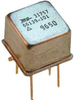
from Micropac Industries, Inc.
The 53012 is a military SPST solid-state relay. This light-weight device is resistant to damage from shock and vibration, and. is immune to contact-related problems (contamination, arcing) associated with mechanical equivalents. Optical coupling between the input and output stages provides effective... [See More]
- Solid State Relay Type: MilSpec
- Mounting: Socket or Plug-in Style
- Application Type: General
- Input Voltage (Control Signal) Type: AC; DC

from Perfect Switch, LLC
Specifically designed for automotive, military, marine, aerospace, industrial, test fixtures, and various 12 and 24 volt OEM applications, POWER-GATE devices are engineered to handle shock and high-vibration environments . Our MOSFET-based relays are well suited for switching both large inductive... [See More]
- Solid State Relay Type: MilSpec; Optically (optional feature)
- Mounting: Bracket (Flange) Mount (optional feature); Various Packaging Options Available
- Application Type: Automotive; Industrial, Text Fixtures, Marine
- Input Voltage (Control Signal) Type: DC
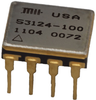
from Micropac Industries, Inc.
The 53111 is a single channel, hermetically sealed, power MOSFET optocoupler. Low on-resistance of the MOSFET output, combined with 1500 VDC isolation between input and output, makes this optocoupler ideal for solid-state relay applications. Operation is specified over the full military temperature... [See More]
- Solid State Relay Type: MilSpec
- Mounting: Socket or Plug-in Style
- Application Type: General
- Input Voltage (Control Signal) Type: AC; DC

from Micropac Industries, Inc.
The 53272 is a single channel power MOSFET optocoupler expanding upon the electrical performance of Mii P/N 53124 with reduced RDS(ON) and increased current capability. Performance is specified over the full military temperature range. Functionally, the device operates as a single-pole, normally... [See More]
- Solid State Relay Type: MilSpec; Optically
- Mounting: Socket or Plug-in Style
- Application Type: General
- Input Voltage (Control Signal) Type: DC
from Micropac Industries, Inc.
The 53274 is a Power MOSFET Optocoupler designed for military applications. This light-weight device is resistant to damage from severe shock and vibration, and is immune to contact related problems inherent in electromechanical relays. The device is enclosed in a hermetic metal package to ensure... [See More]
- Solid State Relay Type: MilSpec
- Mounting: Socket or Plug-in Style
- Application Type: General
- Input Voltage (Control Signal) Type: DC