
Serial Torque Sensors
Description
Serial Torque Sensors are devices designed to measure the torque, or rotational force, applied to a rotating system such as a motor or engine. These sensors convert the mechanical torque into an electrical signal that can be easily measured and analyzed.
Working Principle
Serial Torque Sensors typically operate using strain gage technology, which is one of the most accurate methods for measuring torque. The strain gages are attached to a rotating shaft, and as torque is applied, the shaft deforms slightly. This deformation changes the electrical resistance of the strain gages, which is then converted into an electrical signal. This signal can be used to determine the torque, speed, power, and efficiency of the rotating device. The use of such sensors is crucial for optimizing the performance of mechanical systems by providing precise torque measurements, which are essential for efficient operation and maintenance .
Applications
Torque sensors are widely used in various industries. In the automotive industry, they are employed to measure torque on driveshafts and crankshafts to optimize engine and transmission performance and improve vehicle stability. They are also used in electrical power-assisted steering systems (EPAS) to enhance steering performance. Additionally, torque sensors are crucial in pump systems to ensure efficient operation by accurately determining the torque required for different pump and motor combinations .
Advantages over other Torque Sensors
One of the main advantages of Serial Torque Sensors, particularly those using strain gage technology, is their high accuracy and repeatability. This makes them ideal for applications requiring precise torque measurements, such as power and efficiency testing in pumps. Unlike slip ring technology, which involves wear components that need replacement, strain gage-based sensors offer a more durable and reliable solution for high-speed and low-torque measurements .
Limitations
A limitation of traditional torque sensors, such as those using slip rings, is the wear and tear of components, which can lead to maintenance issues and reduced accuracy over time. However, strain gage-based sensors mitigate some of these issues by eliminating the need for slip rings, although they may still face challenges in extremely high-speed applications .
Considerations
When considering the use of Serial Torque Sensors, it is important to evaluate the initial costs, which can vary depending on the technology and accuracy required. Operating expenses are generally low, but maintenance costs can arise if the sensors are not properly calibrated or if components wear out over time. Durability and accuracy are key factors, with strain gage technology offering a reliable and precise solution. Replacement and maintenance costs should also be considered, particularly for sensors with wear components like slip rings, which may require more frequent servicing .

from S. Himmelstein & Company
MCRT ® 86011V and 88711V have high accuracy in real-world applications, not just in the cal lab. That ’s due, in part, to industries highest Overrange. High Overrange avoids clipping real-world torque peaks and driveline torsionals. Without high Overrange, clipped peaks produce large... [See More]
- Electrical Output: Voltage; Frequency; Serial
- Accuracy: 0.1000
- Torque: 4.42E6 to 8.85E6
- Features: Temperature Compensation
from XJCSENSOR Technology Co., Ltd.
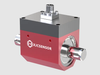
With clear function. Various communication methods are available. Output positive and negative torque signals. Non-contact structure, no wear. Up to 500r/min can be customized. High torsional rigidity and strong overload protection capacity. High precision with the principle of resistance strain... [See More]
- Electrical Output: Voltage; Serial
- Technology: StrainGauge
- Features: Temperature Compensation
- Category of Device: Element/Chip

from S. Himmelstein & Company
MCRT ®84000V and 85000V Torque meters have very high accuracy in real-world applications, not just in the cal lab. That ’s due to very high stiffness which yields wider installed bandwidth and faster response than competitive devices. Furthermore, Industries highest Overrange avoids errors... [See More]
- Electrical Output: Voltage; Frequency; Serial
- Accuracy: 0.0250 to 0.0400
- Torque: 250 to 50000
- Features: Temperature Compensation
from XJCSENSOR Technology Co., Ltd.
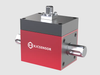
With reset function and speed measurement function. Output positive and negative torque signals. Various communication methods are available. Non-contact structure, no wear. Up to 5000r/min can be customized. High torsional rigidity and strong overload protection capacity. High precision with the... [See More]
- Electrical Output: Voltage; Serial
- Technology: StrainGauge
- Features: Temperature Compensation
- Category of Device: Element/Chip

from S. Himmelstein & Company
MCRT ®84000V and 85000V Torque meters have very high accuracy in real-world applications, not just in the cal lab. That ’s due to very high stiffness which yields wider installed bandwidth and faster response than competitive devices. Furthermore, Industries highest Overrange avoids errors... [See More]
- Electrical Output: Voltage; Frequency; Serial
- Accuracy: 0.0400 to 0.2500
- Torque: 500 to 100000
- Features: Temperature Compensation

from S. Himmelstein & Company
MCRT ®81008V Torque meters have very high accuracy in real-world applications, not just in the cal lab. That ’s due to very high stiffness which yields wide installed bandwidth and very fast response to torsional transients . Furthermore, industries highest Overrange avoids errors which... [See More]
- Electrical Output: Voltage; Frequency; Serial
- Accuracy: 0.1000
- Torque: 88510 to 221300
- Features: Temperature Compensation

from S. Himmelstein & Company
MCRT ® 86100V Metric Range Torque meters have high accuracy in real-world applications, not just in the cal lab. That ’s due, in part, to industries highest Overrange. High Overrange avoids clipping real-world torque peaks and driveline torsionals. Without high Overrange, clipped peaks... [See More]
- Electrical Output: Voltage; Frequency; Serial
- Accuracy: 0.1000
- Torque: 265500 to 3.98E6
- Features: Temperature Compensation

from Interface, Inc. - AZ
Wireless Rotary Torque Transducer. Capacities from 250 to 10K Nm (2,200 to 88,500 lb-in). Full 18-bit useable resolution (24 bit internal). 2,000 fully processed results per second. 4X safe overload (2x for DIN 90 size). Easy stator alignment. Push button configuration - No PC required for basic... [See More]
- Electrical Output: Voltage; Current; Frequency; Serial
- Accuracy: 0.0500
- Torque: 2212 to 88496
- Torque Sensor Type: Rotary

from TECAT Performance Systems, LLC
The WISER 4000 system is the latest release of TECAT ’s low-cost, ultra-low power and extremely accurate torque sensor. The wireless system has the optional ability to measure 3-axis acceleration, barometric pressure and ambient temperature, all within the same incredibly small footprint. The... [See More]
- Electrical Output: Voltage; Serial
- Torque Sensor Type: Rotary
- Accuracy: 0.1000
- Technology: StrainGauge

from DEPRAG, Inc.
Key Features: Most modern brushless Strain-Gauge technology. Direct measurement-acquisition on the product >evaluates actual conditions. Non-contact signal transfer. High accuracy over the entire measuring range. Highly resistant to interference. Maintenance free operation. Compact design. [See More]
- Electrical Output: Serial
- Accuracy: 1
- Torque: 1.77 to 177
- Technology: StrainGauge

from Sensor Developments, Inc.
This special steering torque and angle sensor is specifically designed to test drift pull on vehicles. Featuring integrated electronics that are powered by the USB connection, operators are able to use their laptop computer to acquire and process torque and angle. The unit is easily clamped to the... [See More]
- Electrical Output: Serial
- Accuracy: 0.1000
- Torque: 85
- Category of Device: Sensor / Transducer

from Sensor Technology, Ltd.
Our TorqSense rotary strain gauge transducers use non contact technology, eliminating the need for noisy slip rings. They are suitable for torque measuring, testing, feedback and control of drive mechanisms and process control applications. The SGR523 torque transducer now includes an external... [See More]
- Electrical Output: Serial
- Torque Sensor Type: Rotary
- Torque: 1.55 to 177
- Technology: StrainGauge

from Sensor Developments, Inc.
SDI ’s 90229 is designed for calibrating tools used to apply torque including electric and pneumatic power tools, torque sensors, hand and click wrenches. The strain gage based reaction torque sensors in the bench-mount housing remain stationary while torque is applied. The housing... [See More]
- Electrical Output: Voltage; Serial
- Technology: StrainGauge
- Accuracy: 0.1000
- Category of Device: Sensor / Transducer

from Sensor Technology, Ltd.
Our TorqSense rotary strain gauge transducers use non contact technology, eliminating the need for noisy slip rings. The SGR540/SGR541/SGR542 series torque transducers are direct equivalents of the SGR520/SGR521/SGR522 models but feature an external electronics module to overcome space,... [See More]
- Electrical Output: Serial
- Torque Sensor Type: Rotary
- Torque: 1.55 to 115044
- Technology: StrainGauge

from Sensor Technology, Ltd.
Our TorqSense rotary strain gauge transducers use non contact technology, eliminating the need for noisy slip rings. Specifically designed for square shafts, the SGG545/SGR546 transducers offer a seamless fit, enhancing measurement accuracy and stability in applications with non-cylindrical shafts. [See More]
- Electrical Output: Serial
- Torque Sensor Type: Rotary
- Torque: 1.55 to 115044
- Technology: StrainGauge

from Sensor Technology, Ltd.
Our TorqSense rotary strain gauge transducers use non contact technology, eliminating the need for noisy slip rings. They are suitable for torque measuring, testing, feedback and control of drive mechanisms and process control applications. The SGR series transducers use modern strain gauge signal... [See More]
- Electrical Output: Serial
- Torque Sensor Type: Rotary
- Torque: 1.55 to 115044
- Technology: StrainGauge

from Sensor Technology, Ltd.
The SGR525/SGR526 TorqSense Digital Rotary Strain Gauge Transducers (SGR series) utilize non-contact technology, eliminating the need for noisy slip rings. This makes them ideal for torque auditing applications. Specifically designed for square shafts, these transducers offer a seamless fit,... [See More]
- Electrical Output: Serial
- Torque Sensor Type: Rotary
- Torque: 1.55 to 115044
- Technology: StrainGauge