
>360° Electric Rotary Actuators
Description
Electric rotary actuators drive components rotationally using electromagnetic power from a motor. They typically provide control and indexing capabilities, allowing for multiple position stops along their strokes. The rotational element can be either a circular shaft or a table, with circular shafts often including keyways and tables providing a bolt pattern for mounting other components. These actuators are designed to offer precise control over rotational movement, making them essential in various engineering applications.
Working Principle
Electric rotary actuators operate by converting electrical energy into rotational motion through an electric motor. The motor generates electromagnetic power, which drives the rotational element, such as a shaft or table. This setup allows for precise control over the actuator's movement, enabling it to stop at multiple positions along its stroke. The ability to adjust angles via screws or other stop adjustments enhances their versatility. These actuators are useful because they provide high precision and repeatability, essential for tasks requiring exact positioning and control.
Applications
Electric rotary actuators are used in a wide range of applications. In semiconductor manufacturing, they are employed for precise positioning tasks. In the automotive industry, they are used in car seats for adjusting positions. They also find applications in the electric power industry, particularly in high-power switching gears. Additionally, they are suitable for packaging applications and are used in laboratory or medical settings where precise control is crucial.
Advantages over other Electric Rotary Actuators
Electric rotary actuators offer several advantages over other types of actuators. They provide the highest precision-control positioning, with accuracy and repeatability that are unmatched by pneumatic or hydraulic actuators. They are quieter, eliminating noise issues common with other actuators. Furthermore, they can be networked and reprogrammed quickly, offering immediate feedback for diagnostics and maintenance. The absence of fluid leaks also eliminates environmental hazards, making them a cleaner option.
Limitations
One limitation of electric rotary actuators is their dependency on electrical power, which may not be suitable for all environments, especially where power supply is inconsistent. Additionally, they may not provide the same level of force as hydraulic actuators, which could be a limitation in applications requiring high force output.
Considerations
When considering electric rotary actuators, it's important to evaluate initial costs, which can be higher compared to other actuator types. However, their operating expenses are generally lower due to their efficiency and lack of fluid maintenance. Durability is another factor, as these actuators are designed to be long-lasting with minimal maintenance. Accuracy and repeatability are key benefits, making them ideal for precision applications. Replacement and maintenance costs are typically lower, as they do not require the same level of upkeep as hydraulic systems.

from Indelac Controls, Inc.
This series of heavy-duty reversing actuators were developed in 1995 and went into production early in 1996. ICI ‘s K series rotary electric actuator is a machine that was designed to automate quarter turn equipment requiring up to 27300 lb × in (2275 lb × ft) torque. The K series... [See More]
- Rotation Angle: Less than 45 degrees; 45°; 90°; 135°; 180°; 225°; 270°; 315°; 360°; >360°; Multiple Position; Adjustable Angle One Side; Adjustable Angle Both Sides
- Maximum Torque: 27300
- Supply Voltage: 12 to 460
- Operating Temperature: -40 to 150
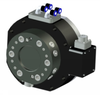
from Robot System Products
Swivels provides air supply and electrical signals without limting your robots motion capabilities. You can spin the 6:th axis free from hoses, cables or other obstacles. Low weight, high corrosion resistance and minimum service will shorten your cycle-times, enhance your productivity and maximize... [See More]
- Rotation Angle: >360°
- Radial Load: 787
- Maximum Torque: 1770
- Rotational Output: Table

from WITTENSTEIN, Inc. (formerly alpha gear drives)
The high torque version of the revolutionary TPM+ servo rotary actuator. This product is the most compact, most dynamic actuator available, making installation and operation simple and reliable. The TPM+ has been developed as a product representing the highest level of integration, consisting of an... [See More]
- Rotation Angle: >360°
- Maximum Torque: 27434
- Supply Voltage: 320 to 560
- Number: Single Shaft
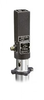
from Emerson Automation Solutions – TESCOM Regulators, Valves & Systems
24 Volt DC Motor. Motorized actuator. Adjustable limit stops. Variable speed control [See More]
- Rotation Angle: >360°
- Maximum Torque: 51
- Supply Voltage: 10 to 24
- Axial Load: 51