
General Serial Interface Signal Generators
Description
General Serial Interface Signal Generators are electronic instruments designed to produce electrical signals with specific characteristics. These devices generate signals according to user-defined parameters such as waveform type, frequency, amplitude, and phase. They are essential tools in testing and validating electronic circuits and systems by providing controlled and repeatable test signals.
Working Principle
Signal generators operate by creating electrical signals that vary over time, typically in the form of waveforms such as sine, square, or triangular waves. The generation of these signals is controlled by internal circuitry that allows for precise adjustments to the signal's characteristics. This precision is crucial for tasks like calibration and testing, where consistent and accurate signals are necessary to evaluate the performance of electronic components and systems. The ability to produce a wide range of signal types and modulations makes these generators versatile tools in both research and development and production environments.
Applications
General Serial Interface Signal Generators are used in a variety of specific applications. For instance, they are employed in the testing of communication systems, where they simulate the signals that a system might encounter in real-world conditions. They are also used in the development of electronic devices, allowing engineers to test how circuits respond to different signal inputs. Additionally, these generators are crucial in educational settings, where they help students understand the principles of signal processing and electronics.
Advantages over other Signal Generators
One of the key advantages of General Serial Interface Signal Generators is their ability to produce highly accurate and repeatable signals, which is essential for precise testing and calibration. Unlike some other types of signal generators, they offer advanced modulation capabilities, including pulse and IQ modulation, which are necessary for testing modern communication systems. Their programmability and integration with computer systems also provide enhanced control and flexibility in testing scenarios.
Limitations
Despite their advantages, General Serial Interface Signal Generators have limitations. They may not be suitable for generating extremely high-frequency signals required in certain advanced applications. Additionally, the complexity of their operation can lead to a steep learning curve for users unfamiliar with their functionalities. The precision and advanced features of these generators can also result in higher costs compared to simpler signal generation devices.
Considerations
When considering the purchase and use of General Serial Interface Signal Generators, several factors should be taken into account. Initial costs can be significant due to the advanced technology and features these devices offer. Operating expenses may include maintenance and calibration to ensure continued accuracy and performance. Durability is generally high, but regular maintenance is necessary to prevent wear and tear. Accuracy is a critical factor, and users should ensure that the generator meets the required specifications for their specific applications. Replacement and maintenance costs should also be considered, as these can add to the overall cost of ownership over time.
from Corech Microwave
The MSG10M6G is a high-performance RF signal generator module covering 10 MHz to 6 GHz. Optimized for system integration, it delivers ultra-low phase noise of -130 dBc/Hz (at 1 GHz) and fast 300 µs frequency switching. Featuring a robust J30J interface with RS422 control and adjustable output power... [See More]
- Interface: Serial Interface
- Generator Type: Pulse
- Device Type: Generator
- Form Factor: Other Form Factor
from Corech Microwave
The MSG9K20G is a compact RF signal generator module covering 9 kHz to 20 GHz. Engineered for rugged system integration, it delivers low phase noise of -105 dBc/Hz (at 20 GHz) and fast 300 µs frequency switching. Featuring a robust J30J interface with RS422 control and adjustable output power up to... [See More]
- Interface: Serial Interface
- Generator Type: Pulse
- Device Type: Generator
- Form Factor: Other Form Factor
from Corech Microwave
The MSG9K40G is an ultra-wideband signal generator module covering 9 kHz to 40 GHz. Designed for millimeter-wave integration, it delivers low phase noise of -100 dBc/Hz (at 30 GHz) and fast 300 µs frequency switching. Featuring a rugged J30J interface with RS422 control and adjustable output power... [See More]
- Interface: Serial Interface
- Generator Type: Pulse
- Device Type: Generator
- Form Factor: Other Form Factor

from Red Pitaya, d.o.o.
SDRlab 122-16 External clock is based on the SDRlab 122-16 model that is modified to be used with an external clock oscillator, which is important especially for RF applications that operate at other frequencies, require better quality clock or clock synchronization. [See More]
- Interface: Serial Interface; Ethernet; Universal Serial Bus; I2C.SPI.CAN
- Generator Type: Continuous Wave; Function; Noise; Pulse; Sweep; Multiple Outputs; Synchronized Multiple Outputs; Signal
- Device Type: Generator
- Form Factor: Portable; PCB

from Fujian Lilliput Optoelectronics Technology Co., Ltd.
middot; OWON 1-CH High Frequency Arbitrary Waveform Generator. · Advanced DDS technology, max 150MHz frequency output. · Up to 400MS/s sample rate, and 1 μHz frequency resolution. · Vertical Resolution : 14 bits, up to 1M arb waveform length. · Comprehensive waveform... [See More]
- Interface: Serial Interface; Ethernet; Universal Serial Bus
- Generator Type: Pulse; Multiple Outputs; Sine, Square, Pulse, Ramp, Noise and others, total 45 built-in waveforms
- Device Type: Generator
- Form Factor: Portable

from Tektronix, Inc.
Today's designs are often complex, demanding a variety of stimulus signals during test. With standard waveforms, arbitrary waveform capability and signal impairment options, a Tektronix Function Generator supports a wide range of application needs with one instrument. Best-in-class Function... [See More]
- Interface: Serial Interface; Universal Serial Bus
- Generator Type: Function; Multiple Outputs
- Device Type: Generator
- Form Factor: Portable

from Red Pitaya, d.o.o.
SDRlab 122-16 was developed specifically for software-defined radio and more demanding RF applications. [See More]
- Interface: Serial Interface; Ethernet; Universal Serial Bus; I2C.SPI.CAN
- Generator Type: Continuous Wave; Function; Noise; Pulse; Sweep; Multiple Outputs; Synchronized Multiple Outputs; Signal
- Device Type: Generator
- Form Factor: Portable; PCB

from Tektronix, Inc.
Tektronix arbitrary waveform generators enable complex signal generation with simple, easy to use tools. The AWG family provides leading-edge performance with sample rates up to 50 GS/s, up to 4 channels, and software packages that simplify the creation of these complex signals. The unparalleled... [See More]
- Interface: Serial Interface
- Generator Type: Continuous Wave; Multiple Outputs
- Device Type: Generator
- Form Factor: Portable

from Red Pitaya, d.o.o.
SIGNALlab 250-12 is most sophisticated Red Pitaya product, built for more demanding industrial applications and research, where robustness and performance matter more than cost. [See More]
- Interface: Serial Interface; Ethernet; Universal Serial Bus; I2C.SPI.CAN
- Generator Type: Continuous Wave; Function; Noise; Pulse; Sweep; Multiple Outputs; Synchronized Multiple Outputs; Signal
- Device Type: Generator
- Form Factor: Portable; PCB

from Tektronix, Inc.
TSG4100A Series RF Vector Signal Generators offer mid-range RF performance and up to 200MHz modulation bandwidth. They allow a convenient, in-field software upgrade to easily transition units from analog to more advanced vector and digital modulation capabilities, providing the most flexible... [See More]
- Interface: Serial Interface
- Generator Type: Continuous Wave
- Device Type: Generator
- Form Factor: Portable

from Red Pitaya, d.o.o.
SIGNALlab 250-12 is most sophisticated Red Pitaya product, built for more demanding industrial applications and research, where robustness and performance matter more than cost. [See More]
- Interface: Serial Interface; Ethernet; Universal Serial Bus; I2C.SPI.CAN
- Generator Type: Continuous Wave; Function; Noise; Pulse; Sweep; Multiple Outputs; Synchronized Multiple Outputs; Signal
- Device Type: Generator
- Form Factor: Portable; PCB

from Tektronix, Inc.
Tektronix pulse generators offer fast risetime and high amplitude combinations with unparalleled signal integrity. Instruments have adjustable pulse duration and are available with manual or computer control. [See More]
- Interface: Serial Interface
- Generator Type: Pulse
- Device Type: Generator
- Form Factor: Portable
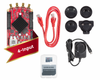
from Red Pitaya, d.o.o.
STEMlab 125-14 4 Inputs is based on STEMlab 125-14 board, but instead of 2 inputs and 2 output channels offers 4 Input channels that with improved performance. [See More]
- Interface: Serial Interface; Ethernet; Universal Serial Bus; I2C.SPI.CAN
- Generator Type: Continuous Wave; Function; Noise; Pulse; Sweep; Multiple Outputs; Synchronized Multiple Outputs; Signal
- Device Type: Generator
- Form Factor: Portable; PCB
from Red Pitaya, d.o.o.
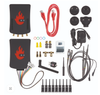
STEMlab 125-14 is our most versatile and popular product, which was introduced to the market in 2013 when Red Pitaya was established. Since then it has been used in a wide variety of contexts, from hobbyists and ham radio operators to industry, research, and space applications. [See More]
- Interface: Serial Interface; Ethernet; Universal Serial Bus; I2C.SPI.CAN
- Generator Type: Continuous Wave; Function; Noise; Pulse; Sweep; Multiple Outputs; Synchronized Multiple Outputs; Signal
- Device Type: Generator
- Form Factor: Portable; PCB