
On-board Oscillator Signal Generators
Description
On-board oscillator signal generators are electronic circuits designed to produce a continuous, repetitive waveform at a specific frequency. These devices are integral components in various electronic systems, providing a stable and precise clock signal necessary for the operation of digital circuits and communication systems.
Working Principle
Oscillator signal generators operate by using an amplifier and a feedback network to create a positive feedback loop. The amplifier provides gain to the feedback signal, while the feedback network ensures that the signal is fed back into the amplifier in phase, allowing the circuit to sustain oscillations. The frequency of the generated waveform is determined by the characteristics of the oscillator circuit, such as the type of resonator used. Quartz-based oscillators, for example, are known for their precision and stability over a wide temperature range due to the specific properties of quartz crystals .
Applications
On-board oscillator signal generators are used in a variety of applications. In radio-frequency (RF) communication systems, they serve as the central component in frequency synthesizers, which are crucial for generating signals at precise frequencies required for communication. They are also used in RFICs (Radio Frequency Integrated Circuits) for frequency shifting in both the receive and transmit sections of communication devices . Additionally, they are employed in electronic systems as clocks to synchronize operations within digital circuits .
Advantages over other Signal Generators
One of the primary advantages of on-board oscillator signal generators, particularly those using quartz resonators, is their superior stability and precision over a wide temperature range compared to RC oscillators . This makes them highly reliable for applications requiring consistent frequency output. Furthermore, ring oscillators, which are a type of on-board oscillator, offer a wider tuning range and are simpler to design in standard digital processes, as they do not require inductors or varactors .
Limitations
Despite their advantages, on-board oscillator signal generators have limitations. The design of these oscillators can be complex, requiring careful consideration of factors such as power consumption, stability, and interference with adjacent signals . Additionally, the process of manufacturing high-quality quartz crystals for oscillators is time-consuming and involves multiple steps to ensure consistency and performance .
Considerations
When selecting an on-board oscillator signal generator, several factors should be considered. Initial costs can vary depending on the type of resonator and the precision required. Operating expenses are generally low, but the durability and accuracy of the oscillator can impact long-term costs. Quartz-based oscillators, while more expensive initially, offer better stability and lower maintenance costs due to their precision and reliability over time . Replacement and maintenance costs should also be considered, particularly for applications requiring high precision and stability.

from Trans-Tek, Inc.
The Series 1000 Oscillator/Demodulators provide complete electrical support for AC LVDTs. Working from an unregulated DC input, the modules generate a stable sinusoidal excitation voltage for the transducer. The LVDT ’s secondary voltages are converted into DC voltage by the module ’s... [See More]
- Device Type: Other Device Type; Oscillator Demodulator
- Form Factor: Portable
- Generator Type: Signal
- Inputs: 1

from Red Pitaya, d.o.o.
SDRlab 122-16 External clock is based on the SDRlab 122-16 model that is modified to be used with an external clock oscillator, which is important especially for RF applications that operate at other frequencies, require better quality clock or clock synchronization. [See More]
- Device Type: Generator
- Form Factor: Portable; PCB
- Generator Type: Continuous Wave; Function; Noise; Pulse; Sweep; Multiple Outputs; Synchronized Multiple Outputs; Signal
- Inputs: 2 to 4

from Krohn-Hite Corporation
The 4402B is an ultra-pure sinewave, stable amplitude oscillator designed to meet the needs of today ’s high precision 16 to 18 bit A/D converter testing, and audio test and measurement technology. Covering the frequency range from 1Hz to 110kHz, with precise 3 digit frequency tuning, the... [See More]
- Device Type: Other Device Type; Oscillator
- Form Factor: Portable; Fixed (optional feature)
- Generator Type: Ultra-Low Distortion RC Oscilaltor
- Minimum: 1.00E-6

from Trans-Tek, Inc.
The Series P010 Oscillator/Demodulator PC Boards are the ideal AC LVDT interface for OEM applications. The compact circuit board design includes an ASIC for the oscillation/demodulation function, with peripheral components included for voltage regulation, output scaling and filtering. The... [See More]
- Device Type: Other Device Type; Oscillator Demodulator
- Form Factor: Other Form Factor; PCB
- Generator Type: Signal
- Inputs: 1

from Red Pitaya, d.o.o.
SDRlab 122-16 was developed specifically for software-defined radio and more demanding RF applications. [See More]
- Device Type: Generator
- Form Factor: Portable; PCB
- Generator Type: Continuous Wave; Function; Noise; Pulse; Sweep; Multiple Outputs; Synchronized Multiple Outputs; Signal
- Inputs: 2 to 4

from Red Pitaya, d.o.o.
SIGNALlab 250-12 is most sophisticated Red Pitaya product, built for more demanding industrial applications and research, where robustness and performance matter more than cost. [See More]
- Device Type: Generator
- Form Factor: Portable; PCB
- Generator Type: Continuous Wave; Function; Noise; Pulse; Sweep; Multiple Outputs; Synchronized Multiple Outputs; Signal
- Inputs: 2 to 4

from Red Pitaya, d.o.o.
SIGNALlab 250-12 is most sophisticated Red Pitaya product, built for more demanding industrial applications and research, where robustness and performance matter more than cost. [See More]
- Device Type: Generator
- Form Factor: Portable; PCB
- Generator Type: Continuous Wave; Function; Noise; Pulse; Sweep; Multiple Outputs; Synchronized Multiple Outputs; Signal
- Inputs: 2 to 4
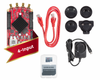
from Red Pitaya, d.o.o.
STEMlab 125-14 4 Inputs is based on STEMlab 125-14 board, but instead of 2 inputs and 2 output channels offers 4 Input channels that with improved performance. [See More]
- Device Type: Generator
- Form Factor: Portable; PCB
- Generator Type: Continuous Wave; Function; Noise; Pulse; Sweep; Multiple Outputs; Synchronized Multiple Outputs; Signal
- Inputs: 4
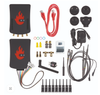
from Red Pitaya, d.o.o.
STEMlab 125-14 is our most versatile and popular product, which was introduced to the market in 2013 when Red Pitaya was established. Since then it has been used in a wide variety of contexts, from hobbyists and ham radio operators to industry, research, and space applications. [See More]
- Device Type: Generator
- Form Factor: Portable; PCB
- Generator Type: Continuous Wave; Function; Noise; Pulse; Sweep; Multiple Outputs; Synchronized Multiple Outputs; Signal
- Inputs: 2 to 4
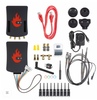
from Red Pitaya, d.o.o.
STEMlab 125-14 is our most versatile and popular product, which was introduced to the market in 2013 when Red Pitaya was established. Since then it has been used in wide variety of contexts, from hobbyists and ham radio operators to industry, research and space applications. [See More]
- Device Type: Generator
- Form Factor: Portable; PCB
- Generator Type: Continuous Wave; Function; Noise; Pulse; Sweep; Multiple Outputs; Synchronized Multiple Outputs; Signal
- Inputs: 2 to 4
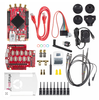
from Red Pitaya, d.o.o.
STEMlab 125-14 Edu Pack is based on Red Pitaya's best-selling DAQ platform and with the chosen accessories a perfect fit for educational purposes. [See More]
- Device Type: Generator
- Form Factor: Portable; PCB
- Generator Type: Continuous Wave; Function; Noise; Pulse; Sweep; Multiple Outputs; Synchronized Multiple Outputs; Signal
- Inputs: 2 to 4