
Hydraulic Chillers (industrial)
Description
Hydraulic chillers are industrial cooling systems designed to remove heat from a fluid through a vapor-compression or absorption refrigeration cycle. These chillers are integral in maintaining the temperature of hydraulic fluids, ensuring that machinery and processes operate within optimal thermal conditions.
Working Principle
Hydraulic chillers operate by circulating a coolant through a closed-loop system. The coolant absorbs heat from the hydraulic fluid, which is then transferred to the chiller's evaporator. The absorbed heat is removed from the system through a refrigeration cycle, typically involving a compressor, condenser, and expansion valve. This process ensures that the hydraulic fluid remains at a stable temperature, which is crucial for the efficient operation of hydraulic systems. The utility of hydraulic chillers lies in their ability to maintain precise temperature control, which is essential for the stability and reproducibility of industrial processes.
Applications
Hydraulic chillers are used in various industrial applications where precise temperature control of hydraulic fluids is necessary. For example, they are employed in the food and beverage industry to maintain the temperature of hydraulic systems used in production lines. Additionally, they are used in manufacturing processes that require consistent cooling to prevent overheating of machinery and ensure product quality.
Advantages over other Chillers
One of the significant advantages of hydraulic chillers over other types of industrial chillers is their ability to provide precise temperature control, which is critical for processes that require high stability and reproducibility. The use of high-quality components and a sophisticated control system allows for minimal temperature fluctuations, enhancing the reliability and efficiency of the cooling process.
Limitations
Hydraulic chillers can have limitations related to their initial setup and integration into existing systems. The complexity of the closed-loop system may require specialized knowledge for installation and maintenance. Additionally, the efficiency of hydraulic chillers can be affected by the quality of the coolant used and the condition of the system components.
Considerations
When considering the implementation of hydraulic chillers, it is essential to evaluate the initial costs, which can be significant due to the complexity of the system and the quality of components required. Operating expenses should also be considered, as they can vary depending on the efficiency of the chiller and the cost of energy. Durability and maintenance are crucial factors, as high-quality components can reduce downtime and repair costs. Regular maintenance is necessary to ensure the longevity and accuracy of the chiller, which can impact replacement and maintenance costs over time.
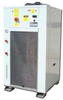
from Jet Edge
Closed Loop Chillers are designed to cool the hydraulics on waterjet intensifier pumps. This eliminates the discharge of hydraulic cooling water to the drain. Closed Loop Chillers come complete with an Installation Kit and Glycol for Start up. [See More]
- Application: Industrial; Hydraulic; Other; Waterjet Chiller
- Cooling Capacity: 7.0
- Power Source: 208-230/60/3 (optional feature); 460/60/3 (optional feature)
- Discharge Temperature: 65

from Jet Edge
The In-Line Chiller cools the waterjet pump hydraulics and waterjet cutting water (when used in combination with a closed-loop filtration system), significantly reducing water use and prolonging the life of waterjet pump components, including high pressure seals. The In-Line Chiller also prevents... [See More]
- Application: Industrial; Hydraulic; Other; Waterjet Chiller
- Cooling Capacity: 3.5
- Power Source: 208-230/60/3 (optional feature); 460/60/3 (optional feature)
- Flow: 3