
Plastics Chillers (industrial)
Description
Plastics chillers are industrial devices designed to remove heat from a liquid, typically used in processes that require precise temperature control. They operate by circulating a coolant through a system to absorb and dissipate heat, ensuring that the temperature of the liquid remains stable and within desired parameters.
Working Principle
Plastics chillers function through a refrigeration cycle, which can be vapor-compression, adsorption, or absorption-based. The chiller removes heat from the liquid by circulating it through an evaporator, where the heat is absorbed. This process allows the chiller to maintain sub-ambient temperatures, which is crucial for applications requiring tight temperature tolerances. The ability to control temperature precisely makes chillers invaluable in maintaining the efficiency and stability of various industrial processes.
Applications
Plastics chillers are commonly used in the cooling of plastics manufacturing equipment. They are essential in processes such as injection molding, blow molding, and extrusion, where maintaining a consistent temperature is critical to product quality. For example, in injection molding, chillers help cool the molds quickly, reducing cycle times and improving production efficiency.
Advantages over other Chillers (industrial)
Plastics chillers offer specific advantages over other types of industrial chillers. They are particularly effective in applications requiring precise temperature control and stability, such as in the plastics industry. Their ability to maintain sub-ambient temperatures and handle wide heat load variations makes them superior in scenarios where tight temperature tolerances are necessary, such as in the cooling of MRI machines.
Limitations
One limitation of plastics chillers is their dependency on the refrigeration cycle, which can be less efficient in extremely high ambient temperatures. Additionally, the complexity of the systems can lead to higher maintenance requirements compared to simpler cooling solutions.
Considerations
When considering the purchase and operation of plastics chillers, several factors should be taken into account. Initial costs can be significant due to the complexity and precision of the equipment. Operating expenses may also be higher, as chillers require energy to maintain the refrigeration cycle. Durability and accuracy are generally high, but regular maintenance is necessary to ensure optimal performance. Replacement and maintenance costs should be factored into the overall cost of ownership, as these can impact long-term operational budgets.
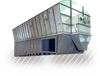
from Carrier Vibrating Equipment, Inc.
Carrier conventional fluid bed coolers can cool a variety of products without the aid of vibration. Our conventional fluid bed coolers pass air directly through a bed of solid material via a perforated plate, nozzles, or other fluidizing media, thereby lifting and mixing the solids. At a certain air... [See More]
- Application: Industrial; Plastics; Process
- Control Panel Features: Local; TempGauge
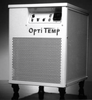
from DME Company
The “Cheater ”---Chiller/Heater combination mold temperature controller. One machine replaces the need for both a chiller and a heater. Single unit allows 30 ºF-190 ºF with less than a ±0.2 ºF variance. No external water source needed. Instantaneous changeover for... [See More]
- Application: Industrial; Plastics
- Cooling Capacity: 0.6 to 25.0
- Power Source: 115/60/1 (optional feature); 208-230/60/1 (optional feature); 208-230/60/3 (optional feature)
- Compressor Motor: 0.2500 to 7.5