
PLC Controller Web Controllers
Last Updated: April 1, 2025
Description
PLC Controller Web Controllers are specialized devices used to regulate various parameters in web processes. They receive inputs from sensors, execute control functions, and output control signals to manage processes such as tension, rate, or alignment. These controllers are equipped with advanced control strategies and can handle both linear and non-linear control types.
Working Principle
PLC Controller Web Controllers operate by receiving sensor inputs and processing these inputs through various control strategies to maintain desired process conditions. They utilize control types such as PID (Proportional, Integral, Derivative) control, which allows for automatic closed-loop operation. This involves continuously adjusting the control outputs based on the difference between the desired setpoint and the actual process variable. The use of advanced control strategies like adaptive gain and fuzzy logic enhances their ability to manage complex processes, making them highly useful in maintaining process stability and efficiency.
Applications
PLC Controller Web Controllers are widely used in industrial applications where precise control of web processes is required. For example, they are employed in the automation of industrial robots, where they help manage the independent operation of robots without the need for a master PLC, thus reducing costs for smaller companies. They are also used in processes that require the regulation of tension and alignment in materials such as paper, textiles, or films during manufacturing.
Advantages over other Web Controllers
One of the key advantages of PLC Controller Web Controllers is their versatility and adaptability to a wide range of operations. Unlike standard computer systems, PLCs offer broad I/O configurations, making them suitable for complex industrial environments. Their ability to integrate advanced control strategies such as fuzzy logic and neural networks provides superior control performance compared to simpler web controllers that may only use basic PID control.
Limitations
Despite their advantages, PLC Controller Web Controllers can have limitations such as increased complexity and cost compared to simpler control systems. The implementation of advanced control strategies may require specialized knowledge and training, which can be a barrier for some users. Additionally, the integration of these controllers into existing systems may involve significant initial setup and configuration efforts.
Considerations
When considering the use of PLC Controller Web Controllers, it is important to evaluate factors such as initial costs, operating expenses, and maintenance requirements. While these controllers offer high accuracy and durability, the initial investment can be substantial, especially for high-end models with extensive I/O capabilities. Operating expenses may include energy consumption and the need for regular software updates. Maintenance costs should also be considered, as these systems may require periodic calibration and component replacement to ensure optimal performance.

from ABB Measurement & Analytics
MC 400 covers most mechanical arrangements. This means the user only has to follow the step-by-step instructions in order to set up the controller and to have a correct strip tension calculated. Predefined standard measurement modes. Prepared to calculate true strip tension from all mechanical... [See More]
- Control: Limit; Linear; PID
- Form Factor: Chassis
- Features: PLC
- Interface: Digital Front Panel; Computer Programmable
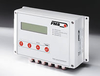
from FMS USA, Inc.
The CMGZ600 series controller integrates many functions into one compact housing. It offers selectable control of unwind brake or drive, intermediate drive, or winding drive. The CMGZ600 series controller is available in a 2 channel version offering 2 independent closed loops for tension control of... [See More]
- Features: PLC
- Interface: Digital Front Panel
- Form Factor: Chassis
- Inputs: 1