
Resistive / Potentiometer Input Web Controllers
Last Updated: April 1, 2025
Description
Resistive/Potentiometer Input Web Controllers are devices that allow users to remotely monitor and control systems by adjusting resistance levels through a web interface. These controllers are designed to interpret input from potentiometers, which are variable resistors, and convert this input into a digital signal that can be accessed and manipulated over the internet.
Working Principle
The working principle of resistive/potentiometer input web controllers is based on the functionality of potentiometers, which adjust resistance through the movement of a wiper across a resistive element. This movement changes the voltage output, which is then converted into a digital signal by the web controller. The digital signal can be accessed remotely, allowing for real-time monitoring and adjustments. This capability is particularly useful for applications requiring precise control over electrical parameters without the need for physical presence.
Applications
Resistive/potentiometer input web controllers are used in various applications where remote monitoring and control are essential. Specific examples include:
- Audio Systems: Adjusting volume and tone settings remotely in professional audio setups.
- Industrial Automation: Controlling machinery and equipment settings from a central location.
- Home Automation: Managing lighting and climate control systems via a web interface.
- Research Laboratories: Fine-tuning experimental setups without direct physical interaction.
Advantages over other Web Controllers
One of the primary advantages of resistive/potentiometer input web controllers is their ability to provide real-time, precise control over resistance levels, which is crucial in applications requiring fine adjustments. Unlike digital-only controllers, these devices can offer a more intuitive and direct method of control, especially in systems where analog input is preferred or required.
Limitations
A notable limitation of resistive/potentiometer input web controllers is their reliance on mechanical components, which can be subject to wear and tear over time. This can lead to potential inaccuracies in resistance measurement and control. Additionally, these controllers may not be suitable for applications requiring high-speed data processing or where digital-only solutions are more efficient.
Considerations
When considering the use of resistive/potentiometer input web controllers, several factors should be taken into account:
- Initial Costs: These controllers may have higher initial costs due to the integration of both mechanical and digital components.
- Operating Expense: Maintenance costs can be higher due to the potential need for replacing worn-out mechanical parts.
- Durability: The mechanical nature of potentiometers can affect the overall durability of the system, especially in harsh environments.
- Accuracy: While generally accurate, the mechanical components can introduce slight variances over time.
- Replacement and Maintenance Costs: Regular maintenance may be required to ensure long-term accuracy and functionality, potentially increasing the total cost of ownership.

from FMS USA, Inc.
The CMGZ309 tension controller responses to a broad range of missions. Its field of application is in production lines where moving web products are manufactured, processed or finished. As a plug & play unit a minimum of tuning tasks are required. Functions can be configured very easily via a... [See More]
- Type: DC Voltage Inputs; Resistive/ Potentiometer Inputs; Serial / Digital Input
- Form Factor: Chassis; DIN
- Control: PID
- Interface: Digital Front Panel
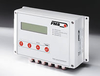
from FMS USA, Inc.
The CMGZ600 series controller integrates many functions into one compact housing. It offers selectable control of unwind brake or drive, intermediate drive, or winding drive. The CMGZ600 series controller is available in a 2 channel version offering 2 independent closed loops for tension control of... [See More]
- Type: DC Voltage Inputs; Resistive/ Potentiometer Inputs
- Form Factor: Chassis
- Features: PLC
- Interface: Digital Front Panel

from FMS USA, Inc.
Left, right, centre or line guiding. 4 keys / compass rose control panel. 3 housing /mounting types. 2 ms cycle time. Plug & play or utilize Ethernet connection [See More]
- Type: DC Voltage Inputs; Resistive/ Potentiometer Inputs; Serial / Digital Input
- Form Factor: Chassis; DIN
- Features: PC-Based
- Interface: Digital Front Panel