
Pulse / Frequency Web Controllers
Last Updated: April 1, 2025
Description
Pulse/Frequency Web Controllers are devices used to regulate various parameters in web processes, such as tension, rate, or alignment. They receive inputs from sensors, execute control functions, and output control signals to maintain the desired state of the web process. These controllers are integral in ensuring the smooth operation of web processes by managing the flow and behavior of materials.
Working Principle
Pulse/Frequency Web Controllers operate by using pulse width modulation (PWM) techniques to control the duration and frequency of signals. This modulation allows the controller to adjust the power delivered to a system, thereby controlling the speed and behavior of the process. The controllers can switch between high and low settings, adjusting the duty cycle to match the desired operational parameters. This ability to finely tune the process makes them useful for maintaining stability and precision in web operations.
Applications
Pulse/Frequency Web Controllers are used in a variety of applications, particularly in industries where precise control of material flow is critical. For example, they are employed in the manufacturing of textiles, where maintaining consistent tension and alignment is crucial for product quality. They are also used in the production of paper and plastic films, where they help in detecting breakage and ensuring uniformity in the final product.
Advantages over other Web Controllers
One of the main advantages of Pulse/Frequency Web Controllers is their ability to provide precise control over the process parameters through PWM. This allows for better management of the system's response to changes, leading to improved stability and performance. Additionally, these controllers can handle complex control strategies, such as adaptive gain and feed-forward control, which are not typically available in simpler web controllers.
Limitations
Despite their advantages, Pulse/Frequency Web Controllers have limitations. They can be complex to set up and require a thorough understanding of the system's dynamics to configure correctly. Additionally, they may not be suitable for applications requiring high torque at low speeds, as PWM drives are not designed for such conditions.
Considerations
When considering the implementation of Pulse/Frequency Web Controllers, several factors should be taken into account. Initial costs can be high due to the complexity of the system and the need for specialized components. Operating expenses may also be significant, as these controllers require regular maintenance to ensure accuracy and reliability. Durability is generally good, but the precision of the system can degrade over time if not properly maintained. Replacement and maintenance costs should be factored into the overall cost of ownership, as these can impact the long-term viability of the system.

from ABB Measurement & Analytics
MC 400 covers most mechanical arrangements. This means the user only has to follow the step-by-step instructions in order to set up the controller and to have a correct strip tension calculated. Predefined standard measurement modes. Prepared to calculate true strip tension from all mechanical... [See More]
- Control Signal: Analog Voltage Output; Current Loop Output; Switched Output; Pulse / Frequency; Serial / Digital; Network / Fieldbus Output
- Features: PLC
- Control: Limit; Linear; PID
- Form Factor: Chassis
from Andantex USA, Inc.
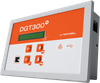
With MEROBEL ’s new DGT300+, Web Tension Control has never been so easy to manage. The DGT300+ is a digital controller dedicated to web tension and torque control. Overview. The newest Digital Controller from MEROBEL combines, in a smart and low profile front face enclosure, the most simple... [See More]
- Control Signal: Analog Voltage Output; Pulse / Frequency
- Type: DC Voltage Inputs
- Control: PID
- Web: Tension Indication/ Control