
Desktop CNC Controllers
Description
Desktop CNC controllers are compact devices that allow machine operators to control CNC equipment and processes from nearby locations. These controllers are typically configured as computer boards or housed in stand-alone cabinets, providing a user-friendly interface for managing CNC machines.
Working Principle
Desktop CNC controllers operate by interfacing with the machine tool’s servo system, often through a personal computer running CNC software. This software performs all the functions of a hardware-based CNC controller, including the human-machine interface (HMI) and input/output (I/O) control. The controllers use a programming language called G-code to execute precise movements and operations, allowing for the automation of complex machining tasks. This automation enhances consistency, reduces errors, and provides flexibility in manufacturing processes.
Applications
Desktop CNC controllers are used in a variety of applications, including rapid prototyping, model making, woodworking, and clock manufacturing. They are also employed in retrofitting applications, where older machines are upgraded with modern CNC capabilities to improve performance and extend their operational life.
Advantages over other CNC Controllers
Desktop CNC controllers offer several advantages over traditional CNC controllers. They are typically more compact and can be operated from separate, nearby offices, providing convenience and flexibility. Additionally, they often do not require specialized hardware such as programmable logic controllers (PLCs) or motion control cards, which can reduce costs and simplify setup.
Limitations
One limitation of desktop CNC controllers is that they may not be suitable for highly complex or large-scale industrial applications that require more robust and specialized equipment. Their compact size and simplified hardware may also limit the range of features and capabilities compared to larger, more advanced CNC controllers.
Considerations
When considering desktop CNC controllers, it is important to evaluate initial costs, which can vary widely depending on the features and capabilities of the controller. Operating expenses should also be considered, as well as the durability and accuracy of the controller in relation to the specific requirements of the application. Replacement and maintenance costs are additional factors to consider, as these can impact the long-term cost-effectiveness of the controller.
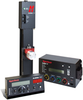
from Hypertherm, Inc.
Traditional torch height controls require operators to periodically adjust arc voltage to ensure proper cut height. Using Hypertherm ’s proprietary techniques, The ArcGlide THC continuously samples arc voltage and automatically adjusts arc voltage for proper torch height over the life of the... [See More]
- Configuration: Desktop
- Control Function: Torch Height Controls
- Applications: Torch Table
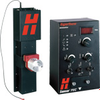
from Hypertherm, Inc.
The Sensor PHC offers easy installation on new or existing conventional plasma cutting tables with any CNC and a broad range of plasma systems. Available in several application-specific configurations, the Sensor PHC delivers improved performance at a reduced cost compared to other height control... [See More]
- Configuration: Desktop
- Control Function: Torch Height Controls
- Applications: Torch Table
from Hypertherm, Inc.
The Sensor THC is a full featured torch height control system specifically designed to integrate with Hypertherm Automation's shape cutting controls. [See More]
- Configuration: Desktop
- Motor: Servo
- Applications: Torch Table
- Control Function: Torch Height Controls