
Horizontal Mills CNC Controllers
Description
Horizontal Mills CNC Controllers are sophisticated devices that manage the operations of horizontal milling machines. These controllers are responsible for executing precise movements along multiple axes, ensuring that the milling process is carried out accurately and efficiently. They facilitate the automation of complex machining tasks by interpreting and executing programmed instructions.
Working Principle
Horizontal Mills CNC Controllers operate by receiving digital instructions from a computer-aided design (CAD) or computer-aided manufacturing (CAM) software. These instructions dictate the movement of the milling machine's components, such as the spindle and worktable, along the X, Y, and Z axes. The controller processes these instructions to control the cutting tool's path, speed, and depth, enabling the machine to perform precise cutting operations. The inclusion of a fourth axis, typically an indexing B axis, allows for more complex machining tasks, enhancing the machine's versatility and efficiency.
Applications
Horizontal Mills CNC Controllers are used in various industries for tasks that require precision and efficiency. Specific applications include the machining of complex parts with multiple faces, such as engine blocks and aerospace components. These controllers are particularly useful in scenarios where large volumes of material need to be removed or when working with parts that require machining on multiple sides in a single setup.
Advantages over other CNC Controllers
Horizontal Mills CNC Controllers offer several advantages over other types of CNC controllers. They provide enhanced versatility due to the presence of a fourth axis, allowing for more complex machining operations. This capability reduces the need for multiple setups and machine transfers, thereby increasing productivity. Additionally, horizontal mills are more suitable for removing large amounts of material, making them ideal for heavy-duty applications.
Limitations
One of the primary limitations of Horizontal Mills CNC Controllers is their higher cost compared to vertical milling machines. This is due to their increased complexity and the additional features they offer, such as the fourth axis and pallet changers. Additionally, horizontal mills may require more space and have higher maintenance requirements due to their complexity.
Considerations
When considering the purchase of a Horizontal Mills CNC Controller, several factors should be taken into account. Initial costs are typically higher due to the advanced features and capabilities of these machines. Operating expenses may also be elevated, as these machines often require more energy and maintenance. However, their durability and accuracy can lead to long-term savings by reducing the need for multiple machines and setups. Replacement and maintenance costs should also be considered, as the complexity of these machines can lead to higher service expenses.
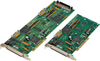
from Galil
The DMC-18x0 PCI motion controller is a member of the Optima Series, Galil's prior-generation, multi-axis motion controllers. The DMC-18x0 controller accommodates 1- through 8-axis formats and allows control of step or servo motors on any combination of axes. Any mode of motion can be programmed... [See More]
- Applications: Horizontal Mills; Vertical Mills; Lathes and Turning Centers; Grinders; Electro-Discharge Machine; Torch Table; Welding; Inspection
- Motor: Servo; Stepper
- Number of Axes: 1 Axis
- Configuration: Computer Board
from DR. JOHANNES HEIDENHAIN GmbH
Thanks to its flexible design and numerous programming features, the CNC PILOT always gives you optimum support. Regardless of whether you are manufacturing single parts or batches, simple or complex workpieces, the CNC PILOT always provides the right support. The CNC PILOT is characterized by its... [See More]
- Applications: Horizontal Mills; Vertical Mills; Lathes and Turning Centers
- Configuration: Rack Mount
- Number of Axes: 6+ Axes
- Communications: Ethernet
from Bosch Rexroth Corporation
Improve your productivity and flexibility with the CNC system controls from Rexroth - IndraMotion MTX. IndraMotion MTX family products provide an open, scalable, comprehensive CNC control systems to satisfy your most demanding cutting, forming and machining applications. Featuring a sophisticated... [See More]
- Applications: Horizontal Mills; Vertical Mills; Lathes and Turning Centers; Grinders
from DR. JOHANNES HEIDENHAIN GmbH
The iTNC 530 from HEIDENHAIN is a versatile, workshop-oriented contouring control for milling, drilling and boring machines as well as machining centers. The iTNC 530 is universal, and its broad and complex range of applications proves it.- Universal milling machines- High speed milling- Five-axis... [See More]
- Applications: Horizontal Mills; Vertical Mills; Lathes and Turning Centers
- Configuration: Rack Mount
- Number of Axes: 6+ Axes
- Communications: Ethernet; RS-232 / 422 / 485; Universal Serial Bus

from DR. JOHANNES HEIDENHAIN GmbH
The introduction of theMANUALplus 620extends the area of application to single-spindle CNC lathes. With the smart.Turn operating mode, HEIDENHAIN has made yet another step forward toward greater ease of use. Easily understandable program entry in forms, default setting for global values, selection... [See More]
- Applications: Horizontal Mills; Vertical Mills; Lathes and Turning Centers
- Configuration: Rack Mount
- Number of Axes: 6+ Axes
- Communications: Ethernet; Universal Serial Bus
from DR. JOHANNES HEIDENHAIN GmbH
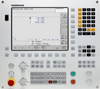
The TNC 128 is a compact but versatile straight-cut control for three servo axes and servo spindle. A further servo axis is an option. Thanks to its simple operation and scope of features, it is especially well suited for use on universal milling, drilling and boring machines for- series and... [See More]
- Applications: Horizontal Mills; Vertical Mills; Lathes and Turning Centers
- Configuration: Rack Mount
- Number of Axes: 3 Axes; 4 Axes (optional feature); 5 Axes (optional feature)
- Communications: Ethernet; RS-232 / 422 / 485
from DR. JOHANNES HEIDENHAIN GmbH
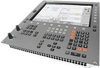
Thanks to its flexible operating concept - workshop-oriented programmability with HEIDENHAIN conversational programming or external programming - and its scope of features, it is especially suited for use on universal milling, drilling and boring machines for - series and single-part production-... [See More]
- Applications: Horizontal Mills; Vertical Mills; Lathes and Turning Centers
- Configuration: Rack Mount
- Number of Axes: 6+ Axes
- Communications: Ethernet; RS-232 / 422 / 485; Universal Serial Bus
from DR. JOHANNES HEIDENHAIN GmbH
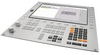
The TNC 620 is compact and easy to read. The TNC 620 is a compact but versatile contouring control for up to five controlled axes. Thanks to its flexible operating concept-workshop-oriented programmability with HEIDENHAIN conversational programming or offl ine programming-and its scope of features,... [See More]
- Applications: Horizontal Mills; Vertical Mills; Lathes and Turning Centers
- Configuration: Rack Mount
- Number of Axes: 6+ Axes
- Communications: Ethernet; RS-232 / 422 / 485; Universal Serial Bus
from DR. JOHANNES HEIDENHAIN GmbH
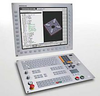
For more than 35 years, TNC controls from HEIDENHAIN have been proving themselves in daily use on milling, drilling and boring machines, as well as machining centers. While the controls have undergone continuous development during this period, the basic operational technique has remained the same. [See More]
- Applications: Horizontal Mills; Vertical Mills; Lathes and Turning Centers
- Configuration: Rack Mount
- Number of Axes: 6+ Axes
- Communications: Ethernet; RS-232 / 422 / 485; Universal Serial Bus