
Integral Display CNC Controllers
Description
Integral Display CNC Controllers are advanced control units that incorporate a display directly into the controller itself. These controllers are designed to manage and operate CNC machines by providing a user interface that allows operators to input commands, monitor machine status, and adjust settings directly from the controller. The integral display often includes touch screens, keypads, or touch pads, facilitating easy interaction and control over the CNC processes.
Working Principle
Integral Display CNC Controllers operate by interpreting coded instructions, typically in the form of G-code or M-code, which dictate the movements and operations of CNC machines. These controllers convert the coded instructions into electrical signals that guide the machine's motors and actuators to perform precise machining tasks. The integral display provides real-time feedback and control, allowing operators to make adjustments on the fly and ensuring high precision and efficiency in manufacturing processes. The integration of the display into the controller enhances usability by providing immediate access to machine data and control functions, reducing the need for separate monitoring equipment.
Applications
Integral Display CNC Controllers are used in a variety of CNC applications across different industries. They are commonly found in machine tools such as milling machines, lathes, and drilling machines. Specific examples include their use in precision grinding machines and electro-discharge machining (EDM) systems, where precise control and monitoring are crucial. These controllers are also employed in sheet metal working machines, including turret punching and riveting machines, as well as in fabrication equipment like flame cutting and welding machines.
Advantages over other CNC Controllers
One of the primary advantages of Integral Display CNC Controllers is their enhanced user interface, which simplifies machine operation and monitoring. The integrated display allows for immediate access to machine data and control settings, reducing the need for additional monitoring devices and improving workflow efficiency. This integration can lead to faster setup times and reduced operator errors compared to controllers without displays. Additionally, the ability to provide real-time feedback and control can enhance the precision and accuracy of machining operations.
Limitations
Despite their advantages, Integral Display CNC Controllers may have limitations such as higher initial costs compared to basic controllers without displays. The complexity of the integrated systems can also lead to increased maintenance requirements and potential for display-related failures. Additionally, the reliance on a single integrated unit for both control and display functions may pose challenges if either component requires repair or replacement, potentially leading to longer downtimes.
Considerations
When considering the implementation of Integral Display CNC Controllers, it is important to evaluate factors such as initial costs, which may be higher due to the advanced features and integrated display. Operating expenses should also be considered, as the complexity of these controllers might necessitate specialized maintenance and repair services. Durability and accuracy are generally enhanced with these controllers, but potential users should assess the specific requirements of their applications to ensure compatibility. Replacement and maintenance costs can vary, and it is advisable to consider the availability of support and parts for the specific controller model being used.
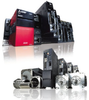
from Mitsubishi Electric Automation, Inc.
With the outstanding performance of the first CNC-dedicated CPU, and the expandability of the iQ-R platform, the C80 CNC controller opens up endless opportunities for production line machining worldwide. Key Benefits. CNC-dedicated CPU – Improved cycles times due to faster program processing... [See More]
- Applications: Lathes and Turning Centers; Complete Machine Retrofit
- Motor: Servo
- Number of Axes: 1 Axis; 2 Axes; 3 Axes; 4 Axes; 5 Axes; 6+ Axes
- Configuration: Stand Alone; Integral Display
from Messer-MG Systems and Welding, Inc.
Embedded process database, standard shapes included, up to 6 tool stations [See More]
- Applications: Torch Table; Welding
- Configuration: Pendant; Pedestal; Integral Display; Touch Screen
- Number of Axes: 6+ Axes
- Communications: Ethernet; Universal Serial Bus; Web-Enabled; Fiber Optic Bus

from Mitsubishi Electric Automation, Inc.
The Q173NCCPU enables CNC Control to be integrated with Sequence, Motion, and Robot automation systems. Also known as the C70 Series CNC Controller, an iQ CNC CPU system uses multi-purpose GOT1000 HMIs and on-rack I/O cards to minimize TCO on CNC line solutions. Key Features: Accelerated... [See More]
- Applications: Lathes and Turning Centers; Complete Machine Retrofit
- Motor: Servo
- Number of Axes: 1 Axis; 2 Axes; 3 Axes; 4 Axes; 5 Axes; 6+ Axes
- Configuration: Stand Alone; Integral Display
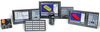
from Mitsubishi Electric Automation, Inc.
Vernon Hills, Illinois, July 10, 2013 - As an innovator of factory automation technology, Mitsubishi Electric Automation, Inc., continues to meet market demand for higher production output rates with the introduction of the M70V Series computer numerical controllers (CNC). The M70V Series, part of... [See More]
- Applications: Lathes and Turning Centers; Complete Machine Retrofit
- Motor: Servo
- Number of Axes: 1 Axis; 2 Axes; 3 Axes; 4 Axes; 5 Axes; 6+ Axes
- Configuration: Stand Alone; Integral Display