
Grinders CNC Controllers
Description
Grinders CNC Controllers are specialized devices used to control grinding machines. These controllers manage the operation of grinders, which use abrasive wheels as cutting tools to grind down parts. They are designed to facilitate high accuracy surface finishing and can handle larger volumes of metal depending on the specific application.
Working Principle
Grinders CNC Controllers operate by using a programming language called G-code, which is downloaded from the controller to operate the machine. This allows for precise control over the grinding process, including adjustments to the grinding wheel or abrasive product, workpiece, speed, applied load, and coolant or lubricant flow rate. The controllers can perform highly complex algorithms involving multiple axes of control, making them useful for producing complex shapes and achieving high precision in grinding tasks.
Applications
Grinders CNC Controllers are commonly used in applications requiring high accuracy surface finishing. They are particularly useful in industries where precision is critical, such as in the production of end mills, drills, step tools, and other cutting tools. Specific examples include the reconditioning of cutting tools and the grinding of complex tool shapes, such as spherical surfaces.
Advantages over other CNC Controllers
One of the main advantages of Grinders CNC Controllers over other types of CNC controllers is their ease of use. They are typically the easiest type of CNC machine to work with, which can be beneficial in environments where quick setup and operation are necessary. Additionally, their ability to handle complex shapes and high precision tasks makes them particularly valuable in industries requiring detailed and accurate work.
Limitations
While Grinders CNC Controllers offer many advantages, they also have limitations. The complexity of the programming and the need for precise calibration can be challenging for operators who are not well-versed in CNC technology. Additionally, the initial cost of these controllers can be high, which may be a barrier for smaller operations or those with limited budgets.
Considerations
When considering the use of Grinders CNC Controllers, it is important to evaluate several factors. Initial costs can be significant, so it is crucial to assess the potential return on investment. Operating expenses, including energy consumption and maintenance, should also be considered. Durability and accuracy are key factors, as these will impact the long-term performance and reliability of the controllers. Finally, replacement and maintenance costs should be factored into the decision-making process to ensure that the investment remains viable over time.
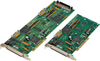
from Galil
The DMC-18x0 PCI motion controller is a member of the Optima Series, Galil's prior-generation, multi-axis motion controllers. The DMC-18x0 controller accommodates 1- through 8-axis formats and allows control of step or servo motors on any combination of axes. Any mode of motion can be programmed... [See More]
- Applications: Horizontal Mills; Vertical Mills; Lathes and Turning Centers; Grinders; Electro-Discharge Machine; Torch Table; Welding; Inspection
- Motor: Servo; Stepper
- Number of Axes: 1 Axis
- Configuration: Computer Board
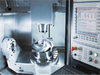
from Bosch Rexroth Corporation
Improve your productivity and flexibility with the CNC system controls from Rexroth - IndraMotion MTX. IndraMotion MTX family products provide an open, scalable, comprehensive CNC control systems to satisfy your most demanding cutting, forming and machining applications. Featuring a sophisticated... [See More]
- Applications: Horizontal Mills; Vertical Mills; Lathes and Turning Centers; Grinders