
Rack Mount CNC Controllers
Description
Rack Mount CNC Controllers are specialized devices designed to manage and control CNC machines. These controllers are configured to be mounted on vertical rails inside a standard rack, allowing for organized and efficient integration into existing systems. They serve as the "brain" of CNC machines, coordinating the various components and processes necessary for precise machining operations.
Working Principle
Rack Mount CNC Controllers operate by interfacing with the machine tool’s servo system, executing programmed instructions to control the movement and operation of the machine. They utilize electronic numeric control to manage the machine's axes, ensuring precise positioning and movement. This centralized control system allows for the automation of complex machining tasks, reducing human intervention and increasing consistency and quality in production. The controllers are equipped with features such as alarms, event monitoring, and multi-program storage, which enhance their functionality and reliability.
Applications
Rack Mount CNC Controllers are used in a variety of industries and applications. They are integral to the operation of machine tools such as milling machines, lathes, and drilling machines. Specific examples include their use in precision grinding machines, electro-discharge machining (EDM), and sheet metal working machines like turret punching machines. These controllers are also employed in fabrication equipment, including flame cutting and welding machines, as well as in inspection machines for checking three-dimensionally contoured components.
Advantages over other CNC Controllers
Rack Mount CNC Controllers offer several advantages over other types of CNC controllers. Their rack-mounted design allows for efficient space utilization and easy integration into existing systems. They provide robust control capabilities with features like simultaneous control and self-diagnostic functions, which enhance operational efficiency and reduce downtime. Additionally, their ability to store multiple programs and provide real-time feedback makes them highly adaptable to various machining tasks.
Limitations
One limitation of Rack Mount CNC Controllers is their dependency on a stable and secure rack installation, which may not be feasible in all environments. Additionally, the initial setup and configuration can be complex, requiring skilled personnel to ensure proper integration and operation. These controllers may also have limitations in terms of scalability, as expanding the system could require additional hardware and configuration adjustments.
Considerations
When considering Rack Mount CNC Controllers, it is important to evaluate the initial costs, which can be significant due to the need for compatible rack systems and potential customization. Operating expenses should also be considered, as these controllers require regular maintenance to ensure optimal performance. Durability and accuracy are key factors, with high-quality controllers offering long-term reliability and precision. Replacement and maintenance costs should be factored into the overall investment, as these can impact the total cost of ownership over time.
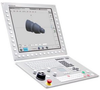
from DR. JOHANNES HEIDENHAIN GmbH
Thanks to its flexible design and numerous programming features, the CNC PILOT always gives you optimum support. Regardless of whether you are manufacturing single parts or batches, simple or complex workpieces, the CNC PILOT always provides the right support. The CNC PILOT is characterized by its... [See More]
- Configuration: Rack Mount
- Number of Axes: 6+ Axes
- Applications: Horizontal Mills; Vertical Mills; Lathes and Turning Centers
- Communications: Ethernet
from Messer-MG Systems and Welding, Inc.
Embedded process database, standard shapes included, up to 6 tool stations [See More]
- Configuration: Pendant; Pedestal; Rack Mount; Integral Display; Touch Screen
- Number of Axes: 3 Axes
- Applications: Torch Table; Welding
- Communications: Ethernet; Universal Serial Bus; Web-Enabled
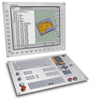
from DR. JOHANNES HEIDENHAIN GmbH
The iTNC 530 from HEIDENHAIN is a versatile, workshop-oriented contouring control for milling, drilling and boring machines as well as machining centers. The iTNC 530 is universal, and its broad and complex range of applications proves it.- Universal milling machines- High speed milling- Five-axis... [See More]
- Configuration: Rack Mount
- Number of Axes: 6+ Axes
- Applications: Horizontal Mills; Vertical Mills; Lathes and Turning Centers
- Communications: Ethernet; RS-232 / 422 / 485; Universal Serial Bus

from DR. JOHANNES HEIDENHAIN GmbH
The introduction of theMANUALplus 620extends the area of application to single-spindle CNC lathes. With the smart.Turn operating mode, HEIDENHAIN has made yet another step forward toward greater ease of use. Easily understandable program entry in forms, default setting for global values, selection... [See More]
- Configuration: Rack Mount
- Number of Axes: 6+ Axes
- Applications: Horizontal Mills; Vertical Mills; Lathes and Turning Centers
- Communications: Ethernet; Universal Serial Bus
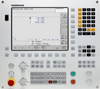
from DR. JOHANNES HEIDENHAIN GmbH
The TNC 128 is a compact but versatile straight-cut control for three servo axes and servo spindle. A further servo axis is an option. Thanks to its simple operation and scope of features, it is especially well suited for use on universal milling, drilling and boring machines for- series and... [See More]
- Configuration: Rack Mount
- Number of Axes: 3 Axes; 4 Axes (optional feature); 5 Axes (optional feature)
- Applications: Horizontal Mills; Vertical Mills; Lathes and Turning Centers
- Communications: Ethernet; RS-232 / 422 / 485