
Welding CNC Controllers
Description
Welding CNC controllers are specialized devices used to manage and control welding processes through computer numerical control (CNC) technology. These controllers are integral to automated or robotic welding systems, providing precise control over various welding parameters such as current, voltage, speed, and position. They ensure consistent and accurate welding operations by executing pre-programmed instructions.
Working Principle
Welding CNC controllers operate by interpreting G-code or other programming languages to control the welding process. These controllers manage the movement and operation of welding equipment, ensuring that the welding torch follows the specified path and maintains the correct parameters throughout the process. The use of CNC technology allows for high precision and repeatability, making these controllers particularly useful in applications requiring complex welds or high production volumes. The integration of error detection features further enhances their utility by alerting operators to issues such as tool breakage, allowing for timely intervention and minimizing downtime.
Applications
Welding CNC controllers are employed in a variety of welding processes, including inert metal gas (MIG) welding, tungsten inert gas (TIG) welding, plasma arc welding, and laser welding. They are particularly valuable in automated welding systems used in industries such as automotive manufacturing, aerospace, and shipbuilding, where precision and efficiency are critical. For example, in the automotive industry, these controllers are used to weld car body panels with high accuracy and consistency.
Advantages over other CNC Controllers
Welding CNC controllers offer several advantages over traditional CNC controllers. They are specifically designed to handle the unique requirements of welding processes, such as managing heat input and controlling weld bead formation. This specialization allows for more precise control over welding parameters compared to general-purpose CNC controllers. Additionally, welding CNC controllers often include features like weld current and voltage monitoring, which are essential for maintaining weld quality.
Limitations
One limitation of welding CNC controllers is their complexity, which can require specialized knowledge for programming and operation. Additionally, these controllers may have higher initial costs compared to simpler, manual welding setups. The need for regular maintenance and calibration to ensure accuracy and reliability can also be seen as a limitation, particularly in environments where resources for maintenance are limited.
Considerations
When considering the implementation of welding CNC controllers, several factors should be taken into account. Initial costs can be significant, especially for high-end systems with advanced features. Operating expenses may include energy consumption, maintenance, and the cost of consumables such as welding wire and shielding gas. Durability and accuracy are critical, as these factors directly impact the quality of the welds produced. Regular maintenance and calibration are necessary to maintain performance, and potential users should consider the availability of technical support and spare parts. Additionally, the complexity of programming and operation may require investment in training for operators and technicians.
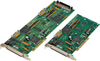
from Galil
The DMC-18x0 PCI motion controller is a member of the Optima Series, Galil's prior-generation, multi-axis motion controllers. The DMC-18x0 controller accommodates 1- through 8-axis formats and allows control of step or servo motors on any combination of axes. Any mode of motion can be programmed... [See More]
- Applications: Horizontal Mills; Vertical Mills; Lathes and Turning Centers; Grinders; Electro-Discharge Machine; Torch Table; Welding; Inspection
- Motor: Servo; Stepper
- Number of Axes: 1 Axis
- Configuration: Computer Board
from Messer-MG Systems and Welding, Inc.
Embedded process database, standard shapes included, up to 6 tool stations [See More]
- Applications: Torch Table; Welding
- Configuration: Pendant; Pedestal; Integral Display; Touch Screen
- Number of Axes: 6+ Axes
- Communications: Ethernet; Universal Serial Bus; Web-Enabled; Fiber Optic Bus