
Face Seal Flow Orifices and Flow Restrictors
Description
Face Seal Flow Orifices and Flow Restrictors are devices designed to control the flow of fluids through a system. They achieve this by providing a fixed restriction in the flow path, which helps in regulating the flow rate and maintaining desired pressure levels within the system.
Working Principle
These devices operate by introducing a constriction in the flow path, which creates a pressure drop across the orifice or restrictor. This pressure drop is used to control the flow rate of the fluid. The effectiveness of these devices is based on principles of fluid dynamics, where the flow rate is influenced by the size of the orifice and the pressure differential. They are useful because they provide a simple and reliable means of controlling fluid flow without the need for complex control systems.
Applications
Face Seal Flow Orifices and Flow Restrictors are used in a variety of applications. For instance, in water jet applications, they convert energy from pressure to velocity, producing an outgoing stream of water that travels at high speeds, often over twice the speed of sound. They are also used in atmospheric burners, where they ensure the correct gas flow by having holes that are small enough to provide the necessary velocity and suction.
Advantages over other Flow Orifices and Flow Restrictors
One advantage of these devices is their ability to provide precise control over flow rates in high-purity applications, such as semiconductor manufacturing. Additionally, some models are bi-directional, offering flexibility in installation and operation. Devices traceable to standards like those from the National Institute of Standards and Technology (NIST) and the American Society of Mechanical Engineers (ASME) ensure high reliability and accuracy.
Limitations
A specific limitation of Face Seal Flow Orifices and Flow Restrictors is their reliance on constant pressure, temperature, and viscosity to maintain accurate flow control. Variations in these parameters can lead to inaccuracies in flow regulation.
Considerations
When selecting these devices, it is important to consider initial costs, which can vary based on the complexity and materials used. Operating expenses are generally low due to their passive nature, but durability can be a concern in harsh environments. Accuracy is typically high, especially for devices adhering to recognized standards. Replacement and maintenance costs are generally minimal, but regular checks are recommended to ensure continued performance and to address any wear or clogging issues.
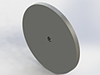
from O'Keefe Controls Co.
Precision orifice assemblies that adapt to common fittings used in process instruments and hydraulic systems are shown. Types K4, R4 and RG4 are used with nominal 1/4" tube fittings. Type BFS is for 45 ° flare fittings and Type CFJ is for 37 ° flare fittings. Type OD is a pipe adapter. [See More]
- Connection: Face Seal; 1/4" Face Seal
- Max Pressure: 100
- Orifice Diameter: 0.0102
- Max Liquid Flow: 0.1500 to 1.5
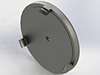
from O'Keefe Controls Co.
Precision orifice assemblies that adapt to common fittings used in process instruments and hydraulic systems are shown. Types K4, R4 and RG4 are used with nominal 1/4" tube fittings. Type BFS is for 45 ° flare fittings and Type CFJ is for 37 ° flare fittings. Type OD is a pipe adapter. [See More]
- Connection: Face Seal; 1/4" Face Seal
- Max Pressure: 100
- Orifice Diameter: 0.0102
- Max Liquid Flow: 0.1500 to 1.5