
Thermoplastic Flow Orifices and Flow Restrictors
Description
Thermoplastic flow orifices and flow restrictors are devices designed to control the flow rate of fluids within a system. They achieve this by providing a specific restriction to the flow, which can be adjusted by varying the diameter, length, and geometry of the orifice. These devices are typically made from thermoplastic materials, which offer certain benefits such as resistance to corrosion and chemical interactions.
Working Principle
The working principle of thermoplastic flow orifices and flow restrictors involves the manipulation of fluid dynamics to achieve desired flow characteristics. By altering the size and shape of the orifice, the designer can control the level of restriction imposed on the fluid flow. This restriction causes a pressure drop across the device, which is a function of the fluid's viscosity and the orifice's geometry. The pressure drop is crucial for controlling the flow rate, making these devices useful in systems where precise flow control is necessary.
Applications
Thermoplastic flow orifices and flow restrictors are used in a variety of applications. For example, they are employed in water jet applications to convert pressure energy into velocity, producing a high-speed stream of water. They are also used in atmospheric burners to regulate gas flow, ensuring the correct velocity and suction for efficient combustion. Additionally, these devices are utilized in particle counting systems as an inactive control method, relying on constant pressure, temperature, and viscosity to maintain accuracy.
Advantages over other Flow Orifices and Flow Restrictors
Thermoplastic flow orifices and flow restrictors offer several advantages over their metal counterparts. They are resistant to corrosion and chemical interactions, which makes them suitable for use in harsh environments. Their lightweight nature also makes them easier to handle and install. Furthermore, thermoplastics can be molded into complex shapes, allowing for more precise control over the flow characteristics.
Limitations
One limitation of thermoplastic flow orifices and flow restrictors is their susceptibility to clogging, especially when dealing with fluids containing contaminants or debris. This can lead to maintenance challenges and potential system downtime. Additionally, thermoplastics may not withstand high temperatures or pressures as well as metal devices, limiting their use in certain high-demand applications.
Considerations
When selecting thermoplastic flow orifices and flow restrictors, several considerations should be taken into account. Initial costs may be lower compared to metal devices, but operating expenses can vary depending on the application and maintenance requirements. Durability is generally good, but the devices may require more frequent replacement in high-temperature or high-pressure environments. Accuracy in flow control is typically high, but regular maintenance is necessary to prevent clogging and ensure consistent performance. Replacement and maintenance costs should be factored into the overall cost of ownership, as these can impact the long-term viability of using thermoplastic devices in specific applications.
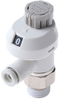
from RS Components, Ltd.
Elbow type meter-out flow controllers suitable for nylon, soft nylon, polyurethane, FEP and PFA tube. A numeric indicator gives quick and visual indication of the chosen flow setting reducing both errors and setting time and the large snap-lock handle makes changes and adjustments simple. Colour... [See More]
- Material: Plastic
- Connection: R 1/2 Male
- Max Pressure: 14.5 to 145
- Fitting / Connection Size: R 1/2 Male

from RS Components, Ltd.
Polysulphone bodied flowmeters. Open collector (NPN) pulse output proportional to flow rate. Non-metallic fittings, PVDF, available for pure water or aggressive chemicals. Robust sapphire bearings. ½ Inch BSP threads on the 30 l/min model also accepts 15mm Compression fittings (brass only). [See More]
- Material: Plastic
- Fitting Type: Non-Metallic Fitting
- Max Pressure: 218
- Connection: BSP 1/2 in, 15mm

from RS Components, Ltd.
Polysulphone bodied flowmeters. Open collector (NPN) pulse output proportional to flow rate. Non-metallic fittings, PVDF, available for pure water or aggressive chemicals. Robust sapphire bearings. ½ Inch BSP threads on the 30 l/min model also accepts 15mm Compression fittings (brass only). [See More]
- Material: Plastic
- Fitting Type: Non-Metallic Fitting
- Max Pressure: 218
- Connection: BSP 3/4 in, 15mm

from RS Components, Ltd.
In-Line Flow Regulator - Elbow, 6 mm - Pneumatic Adaptors, Fittings & Couplings - Pneumatic Flow Regulator & Restrictor Function Fittings [See More]
- Material: Plastic
- Fitting Type: Supply
- Max Pressure: -14.5 to 218

from RS Components, Ltd.
In-Line Flow Regulator - Elbow, 8 mm - Pneumatic Adaptors, Fittings & Couplings - Pneumatic Flow Regulator & Restrictor Function Fittings [See More]
- Material: Plastic
- Fitting Type: Supply
- Max Pressure: -14.5 to 218

from RS Components, Ltd.
In-Line Flow Regulator - Elbow, 4 mm - Pneumatic Adaptors, Fittings & Couplings - Pneumatic Flow Regulator & Restrictor Function Fittings [See More]
- Material: Plastic
- Fitting Type: Supply
- Max Pressure: -14.5 to 218

from RS Components, Ltd.
In-Line Flow Regulator - Elbow, 10 mm - Pneumatic Adaptors, Fittings & Couplings - Pneumatic Flow Regulator & Restrictor Function Fittings [See More]
- Material: Plastic
- Fitting Type: Supply
- Max Pressure: -14.5 to 218

from A. u. K. Müller GmbH & Co. KG
Flow regulators maintain a defined flow independent from the supplies pressure. They are recommended to ensure a uniform distribution of water also in case of pressure fluctuations. Pressure differences might be caused by level differences in multistorey buildings as well as if showers are taken... [See More]
- Material: Plastic
- Max Liquid Flow: 79.2 to 317
- Max Pressure: 14.5 to 145
- Media Temperature: ? to 149

from Air Logic
The Filtered Orifice Restrictors are designed for use in pneumatic control circuits. The orifice restrictor and a stainless steel filter are encased in a molded housing with barbs for 1/16" or 1/8" I.D. flexible tubing. The Dutch Weave wire screen is constructed of stainless steel. The filter is... [See More]
- Material: Stainless; Plastic
- Max Pressure: 100
- Orifice Diameter: 0.0070
- Flow Tolerance: 4

from Specialty Manufacturing Co. (The)
The Specialty Mfg. Co. is committed to providing quality, custom solutions which meet our customers ’ unique needs. We provide a highly valued experience for our customers and employees by making all our business partnerships enjoyable, professional and profitable. [See More]
- Material: Plastic
- Max Pressure: 125
- Orifice Diameter: 0.2500
- Fitting Type: Adapter

from A. u. K. Müller GmbH & Co. KG
Flow regulators maintain a defined flow independent from the supplies pressure. They are recommended to ensure a uniform distribution of water also in case of pressure fluctuations. Pressure differences might be caused by level differences in multistorey buildings as well as if showers are taken... [See More]
- Material: Plastic
- Max Liquid Flow: 7.8 to 143
- Max Pressure: 14.5 to 145
- Media Temperature: ? to 149
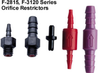
from Air Logic
The Orifice Restrictors are designed for use in pneumatic control circuits and are available in eleven color coded sizes. They are precision molded of polysulfone and are held to flow tolerances of ± 4%. The F-2815 Series are for inline installation with straight ports for 1/16" I.D. fleible... [See More]
- Material: Plastic
- Max Pressure: 100
- Orifice Diameter: 0.0040
- Flow Tolerance: 4

from A. u. K. Müller GmbH & Co. KG
Flow regulators maintain a defined flow independent from the supplies pressure. They are recommended to ensure a uniform distribution of water also in case of pressure fluctuations. Pressure differences might be caused by level differences in multistorey buildings as well as if showers are taken... [See More]
- Material: Plastic
- Max Liquid Flow: 7.8 to 143
- Max Pressure: 14.5 to 145
- Media Temperature: ? to 149

from Air Logic
The Preset Flow Control maintains a constant flow in one direction and full flow in the opposite direction. The operation of the Flow Control is based on the movement of a small disc. The disc shifts within the housing as the pressure differential changes from forward to reverse. An orifice... [See More]
- Material: Plastic; Silicone
- Max Pressure: 75
- Orifice Diameter: 0.0040
- Media Temperature: 40 to 120

from A. u. K. Müller GmbH & Co. KG
Flow regulators maintain a defined flow independent from the supplies pressure. They are recommended to ensure a uniform distribution of water also in case of pressure fluctuations. Pressure differences might be caused by level differences in multistorey buildings as well as if showers are taken... [See More]
- Material: Plastic
- Max Liquid Flow: 7.8 to 143
- Max Pressure: 14.5 to 145
- Media Temperature: ? to 149

from A. u. K. Müller GmbH & Co. KG
Flow regulators maintain a defined flow independent from the supplies pressure. They are recommended to ensure a uniform distribution of water also in case of pressure fluctuations. Pressure differences might be caused by level differences in multistorey buildings as well as if showers are taken... [See More]
- Material: Plastic
- Max Liquid Flow: 63.6 to 79.2
- Max Pressure: 14.5 to 145
- Media Temperature: ? to 194
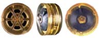
from A. u. K. Müller GmbH & Co. KG
Flow regulators maintain a defined flow independent from the supplies pressure. They are recommended to ensure a uniform distribution of water also in case of pressure fluctuations. Pressure differences might be caused by level differences in multistorey buildings as well as if showers are taken... [See More]
- Material: Plastic
- Max Liquid Flow: 48 to 348
- Max Pressure: 14.5 to 145
- Media Temperature: ? to 208