
NDT - Flaw / Crack Detection Ultrasonic Transducers

from Evident Scientific
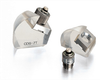
Angle beam probes are used with a wedge to transmit a refracted shear or longitudinal wave into a test piece. Designed for a wide range of applications, they can be used to vary the refracted beam angle or the skew of the beam, depending on the probe orientation. [See More]
- Application: Flaw, Crack, Void and Inclusion Detectors
- Beam Angle: 30 to 70
- Transducer Style: Array; Integrated Wedge
- Measurement Range: 6.35 to 19
from Evident Scientific
The 30-70-70 crack detection technique uses a single element transducer with a CDS wedge for detection and sizing of ID connected cracks. This technique uses a combination of three waves for sizing flaws of different depths. An OD creeping wave creates a 31.5 degree indirect shear, (red in diagram... [See More]
- Application: Flaw, Crack, Void and Inclusion Detectors
- Transducer Style: Angle Beam

from Evident Scientific
Advantages: Provides versatility by offering removable delay line, protective wear cap, and protective membrane. When the transducer is used alone (without any of the options), the epoxy wear face provides good acoustic impedance matching into plastics, many composites, and other low impedance... [See More]
- Application: Flaw, Crack, Void and Inclusion Detectors; Material, Section or Wall Thickness
- Features & Format: Protected Element
from Evident Scientific
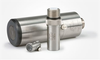
Advantages: Heavily damped broadband design provides excellent time resolution. Short wavelengths for superior flaw resolution capabilities. Focusing allows for very small beam diameters. Frequencies range from 20 MHz to 225 Mhz [See More]
- Application: Flaw, Crack, Void and Inclusion Detectors; Material, Section or Wall Thickness
- Transducer Style: Contact (optional feature); Delay Line; Immersible (optional feature)

from Evident Scientific
Advantages: The immersion technique provides a means of uniform coupling. Quarter wavelength matching layer increases sound energy output. Corrosion resistant 303 stainless steel case with chrome-plated brass connectors. Proprietary RF shielding for improved signal-to-noise characteristics in... [See More]
- Application: Flaw, Crack, Void and Inclusion Detectors
- Transducer Style: Immersible

from Evident Scientific
Advantages: The immersion technique provides a means of uniform coupling. Quarter wavelength matching layer increases sound energy output. Corrosion resistant 303 stainless steel case with chrome-plated brass connectors. Proprietary RF shielding for improved signal-to-noise characteristics in... [See More]
- Application: Flaw, Crack, Void and Inclusion Detectors
- Transducer Style: Immersible

from Evident Scientific
Advantages: The immersion technique provides a means of uniform coupling. Quarter wavelength matching layer increases sound energy output. Corrosion resistant 303 stainless steel case with chrome-plated brass connectors. Proprietary RF shielding for improved signal-to-noise characteristics in... [See More]
- Application: Flaw, Crack, Void and Inclusion Detectors
- Transducer Style: Immersible

from Evident Scientific
Advantages: The immersion technique provides a means of uniform coupling. Quarter wavelength matching layer increases sound energy output. Corrosion resistant 303 stainless steel case with chrome-plated brass connectors. Proprietary RF shielding for improved signal-to-noise characteristics in... [See More]
- Application: Flaw, Crack, Void and Inclusion Detectors
- Transducer Style: Immersible
from Evident Scientific
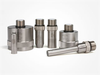
V391-SU. Larger element diameter increases near field length [See More]
- Application: Flaw, Crack, Void and Inclusion Detectors
- Transducer Style: Immersible

from Evident Scientific
The internal rotary inspection system (IRIS) probes are well suited for petrochemical and balance-of-plant (BOP) tube inspections. They use an ultrasonic beam to scan the internal surface of the tube in helicoidal patterns, ensuring that the full length of the tube is tested. The IRIS probes operate... [See More]
- Application: Flaw, Crack, Void and Inclusion Detectors; Material, Section or Wall Thickness
- Features & Format: Rotating / IRIS
- Transducer Style: Immersible; Tubing, Bolt Hole or Inner Diameter Probe

from Evident Scientific
IRIS transducers are focused immersion transducers with an external diameter of 3/8 in. (9.53 mm) and an element diameter of 1/4 in. (6.35 mm). They are available in 3 different central frequencies and 2 focal lengths. [See More]
- Application: Flaw, Crack, Void and Inclusion Detectors; Material, Section or Wall Thickness
- Features & Format: Rotating / IRIS
- Transducer Style: Immersible

from Evident Scientific
Features: Ideal for honeycomb composite skin-to-core disbonds. Works well to detect disbonds in crushed core conditions. Sensitive to smaller defects. Allows for easy identification of repaired (potted) areas over disbonds. Suitable for continuous scanning. Available in a variety of probe castings. [See More]
- Application: Flaw, Crack, Void and Inclusion Detectors

from Evident Scientific
The RollerFORM ™ phased array wheel probe is used to inspect composites and other smooth-surfaced materials. An affordable and easy-to-implement replacement for full 2D encoding systems, the RollerFORM scanner is a viable alternative to immersion techniques.The RollerFORM tire's unique... [See More]
- Application: Flaw, Crack, Void and Inclusion Detectors; Material, Section or Wall Thickness
- Transducer Style: Wheel Probe

from Evident Scientific
Features. Ideal for honeycomb composite skin-to-core disbonds. High sensitivity and crisp signal and response. Detects near side and far side defects in most applications. Compatible with pitch-catch RF, IMPULSE or SWEPT methods. Ergonomic design and easy configurations. No couplant required. [See More]
- Application: Flaw, Crack, Void and Inclusion Detectors
from Evident Scientific
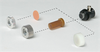
Advantages: Provides versatility by offering removable delay line, protective wear cap, and protective membrane. When the transducer is used alone (without any of the options), the epoxy wear face provides good acoustic impedance matching into plastics, many composites, and other low impedance... [See More]
- Application: Flaw, Crack, Void and Inclusion Detectors; Material, Section or Wall Thickness; High Temperature Inspections, and Inspection of Plates, Billets, Bars, and Forgings
- Features & Format: Protected Element
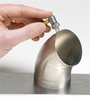
from Evident Scientific
Advantages: Heavily damped transducer combined with the use of a delay line provides excellent near surface resolution. Higher transducer frequency improves resolution. Improves the ability to measure thin materials or find small flaws while using the direct contact method. Contouring available to... [See More]
- Application: Flaw, Crack, Void and Inclusion Detectors; Material, Section or Wall Thickness
- Transducer Style: Contact; Delay Line
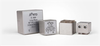
from Evident Scientific
RTD Transducers are well known in the nuclear industry for inspection of critical weld areas in pipes and pressure vessels. We are the exclusive North American Representative for this special line of transducers manufactured by RTD in the Netherlands. The realm of applications for these transducers... [See More]
- Application: Flaw, Crack, Void and Inclusion Detectors; Weld Inspection Probe
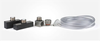
from Evident Scientific
Immersion special transducers refer to a variety of transducers that conduct many specific applications such as measuring wall thickness, inspection of aluminum plating, or multi-element array flaw detection.This group contains the following transducer types: side looking case, paintbrush, i-R style... [See More]
- Application: Flaw, Crack, Void and Inclusion Detectors; Material, Section or Wall Thickness; Inspection of Aluminum Plating, Multi-element Array Flaw Detection
- Transducer Style: Immersible
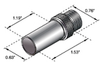
from Evident Scientific
Advantages: The immersion technique provides a means of uniform coupling. Quarter wavelength matching layer increases sound energy output. Corrosion resistant 303 stainless steel case with chrome-plated brass connectors. Proprietary RF shielding for improved signal-to-noise characteristics in... [See More]
- Application: Flaw, Crack, Void and Inclusion Detectors
- Transducer Style: Immersible

from Danatronics Corporation
Danatronics offers a wide variety of dual transducers from .5-10 Mhz including high temperature options. Consult Danatronics or one of our authorized representative for the proper use and recommendation for your application. [See More]
- Application: General Purpose; Flaw, Crack, Void and Inclusion Detectors; Material, Section or Wall Thickness
- Features & Format: Sliding Probe
- Transducer Style: Dual
from UE Systems, Inc.
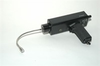
Bend this probe to odd angles to locate sound sources in hard to reach areas. [See More]
- Application: Flaw, Crack, Void and Inclusion Detectors

from SONOTEC Ultraschallsensorik Halle GmbH
Our ergonomically-designed angle beam probes for non-destructive testing (NDT), part of the SONOSCAN probe series, are designed to check for cracks and occlusions in metals. They are used primarily in the metalworking industry for the inspection of weld seams. SONOSCAN probes are efficient, robust... [See More]
- Application: Flaw, Crack, Void and Inclusion Detectors; Weld Inspection Probe
- Transducer Style: Angle Beam

from Danatronics Corporation
Danatronics offers a wide variety of single element transducers from .5-10 Mhz, including contact, composite, delay line and angle beam transducers. Consult Danatronics or one of our authorized representative for the proper use and recommendation for your application. [See More]
- Application: General Purpose; Flaw, Crack, Void and Inclusion Detectors; Material, Section or Wall Thickness
- Features & Format: Sliding Probe

from UE Systems, Inc.
Magnetically mounted contact probe with cable for testing consistency and for hard to reach test points. Must be used with remote access module (RAM) shown below. [See More]
- Application: Flaw, Crack, Void and Inclusion Detectors
from UE Systems, Inc.
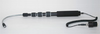
Extend and Bend this probe to odd angles to locate sound sources in hard to reach areas. (up to 56 in / 1.4 m) [See More]
- Application: Flaw, Crack, Void and Inclusion Detectors