
Low Voltage CMOS Logic Multiplexers
Description
Low Voltage CMOS Logic Multiplexers are digital circuits that select one of several input signals and forward the chosen input into a single line. They are designed to operate at lower voltage levels, which makes them suitable for modern electronic devices that require efficient power consumption.
Working Principle
Low Voltage CMOS Logic Multiplexers work by using complementary metal-oxide-semiconductor (CMOS) technology to control the flow of data from multiple inputs to a single output. The selection of the input is determined by address inputs, which dictate which data line is connected to the output. The use of CMOS technology allows these multiplexers to have low power dissipation and high noise immunity, making them reliable in various digital applications. Their ability to quickly switch between inputs is crucial for real-time data processing, enhancing the efficiency of systems that require rapid data handling.
Applications
Low Voltage CMOS Logic Multiplexers are used in a variety of applications, including digital signal processing, data routing in communication systems, and as part of the control logic in microprocessors. They are particularly useful in space flight applications where radiation tolerance is critical, as they can handle single event effects and total ionizing dose without significant performance degradation .
Advantages over other Logic Multiplexers
One of the main advantages of Low Voltage CMOS Logic Multiplexers is their low power consumption due to the CMOS technology, which is more efficient compared to other logic families like TTL. Additionally, they offer faster address transition times, which is essential for applications requiring real-time data processing .
Limitations
A limitation of Low Voltage CMOS Logic Multiplexers is their susceptibility to single event latch-up (SEL) and single event burnout (SEB) in high-radiation environments, which can interrupt normal function. Although these issues can sometimes be mitigated by power cycling, they pose a risk of immediate or latent damage .
Considerations
When considering Low Voltage CMOS Logic Multiplexers, it is important to evaluate the initial costs, which can be higher due to the advanced technology used. Operating expenses are generally lower due to reduced power consumption. Durability is enhanced by their radiation tolerance, but accuracy can be affected by threshold shifts in high-radiation environments. Replacement and maintenance costs should account for potential failures due to radiation exposure, especially in critical applications like space missions .
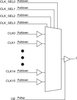
from Integrated Device Technology
The 850S1061I is a low skew16:1 Single-ended Clock Multiplexer and is a member of the HiPerClockS ™ family of High Performance Clock Solutions from IDT . The 850S1061I has 16 selectable single-ended clock inputs and 1 single-ended clock output. The device operates up to 250MHz and is packaged... [See More]
- Logic Family: LVCMOS; LVCMOS
- Package Type: TSSOP; TSSOP 4.4 MM 0.65MM PITCH
- Supply Voltage: 2.5V; 3.3V
- Number of Pins: 24
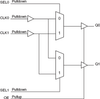
from Integrated Device Technology
The 83052I-01 is a 2-bit, 2:1, Single-ended Multiplexer and a member of the family of High Performance Clock Solutions from IDT . The 83052I-01 has two selectable single-ended clock inputs and two single-ended clock outputs. The output has a VDDO pin which may be set at 3.3V, 2.5V, or 1.8V, making... [See More]
- Logic Family: LVCMOS; LVCMOS
- Package Type: TSSOP; TSSOP 4.4 MM 0.65MM PITCH
- Supply Voltage: 2.5V; 3.3V
- Number of Pins: 16

from Integrated Device Technology
The 83052I is a low skew, 2:1, Single-ended Multiplexer and a member of the family of High Performance Clock Solutions from IDT . The 83052I has two selectable single-ended clock inputs and one single-ended clock output. The output has a VDDO pin which may be set at 3.3V, 2.5V, or 1.8V, making the... [See More]
- Logic Family: LVCMOS; LVCMOS
- Package Type: TSSOP; TSSOP 4.4 MM 0.65MM PITCH
- Supply Voltage: 2.5V; 3.3V
- Number of Pins: 8
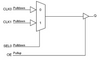
from Integrated Device Technology
The 8CA3052I is a low skew, 2:1, Single-ended Multiplexer. The 8CA3052I has two selectable single-ended clock inputs and one single-ended clock output. The output has a VDDO pin which may be set at 3.3V, 2.5V, or 1.8V, making the device ideal for use in voltage translation applications. An output... [See More]
- Logic Family: LVCMOS; LVCMOS
- Package Type: TSSOP; TSSOP 4.4 MM 0.65MM PITCH
- Supply Voltage: 2.5V; 3.3V
- Number of Pins: 8
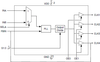
from Integrated Device Technology
The ICS581 -01 is a glitch free, Phase Locked Loop ( PLL ) based clock multiplexer (mux) with zero delay from input to output. It has have four low skew outputs which can be configured as a single output, three outputs,or four outputs. The ICS581 -01 allows user control over the mux switching. The... [See More]
- Logic Family: LVCMOS; LVCMOS
- Package Type: TSSOP; TSSOP 4.4 MM 0.65MM PITCH
- Supply Voltage: 3.3V
- Number of Pins: 16