
Electronics Elastomer and Rubber Shapes
Description
Electronics elastomer and rubber shapes are specialized materials designed to provide essential properties such as flexibility, elasticity, and durability. These materials are available in various forms, including bars, films, plates, profiles, rods, and shims, with diverse cross-sectional shapes like square, spherical, angular, rectangular, hexagonal, tubular, I-shaped, and T-shaped. They are engineered to meet specific dimensional criteria, including overall thickness, width, length, and inner diameter, to suit different engineering needs .
Working Principle
Elastomers and rubber shapes work by leveraging their inherent viscoelastic properties, which allow them to stretch and return to their original shape. This characteristic makes them ideal for applications requiring sealing and damping solutions. Their ability to absorb shock and reduce vibrations is due to their high elasticity and compliance, which are crucial for maintaining the integrity of electronic components. Additionally, some elastomers offer excellent thermal conductivity and insulation properties, making them suitable for managing heat in electronic devices .
Applications
Electronics elastomer and rubber shapes are used in a variety of specific applications. For instance, they are employed in the manufacturing of medical devices, motorcycle seats, and computer keyboard wrist rests due to their shock absorption and damping characteristics . They are also integral in electronic devices such as smartphones and tablets, where they provide thermal management and insulation .
Advantages over other Elastomer and Rubber Shapes
Silicone rubber, a type of elastomer, offers several advantages over other elastomeric materials. It provides superior performance in high-temperature environments and maintains its properties in harsh conditions. Silicone rubber is also available in medical-grade, self-lubricating, and conductive forms, which can be tailored to meet specific application requirements. This versatility makes it a preferred choice for industrial seals and other demanding applications .
Limitations
One limitation of elastomer and rubber shapes is their susceptibility to degradation over time, especially when exposed to extreme environmental conditions. For example, vulcanized rubber, while harder and less elastic, can become brittle and lose its flexibility, which may limit its use in applications requiring sustained elasticity .
Considerations
When selecting elastomer and rubber shapes for electronic applications, several factors should be considered. Initial costs can vary depending on the material and form factor chosen. Operating expenses may include maintenance and replacement costs, particularly if the material is prone to wear and tear. Durability is a critical factor, as materials that degrade quickly may require frequent replacement, increasing long-term costs. Additionally, the accuracy of the material's dimensions and properties should be evaluated to ensure they meet the specific requirements of the application .
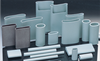
from Fujipoly® America Corp.
Fujipoly ® tube-shaped thermal interface covers provide an easy way to improve transistor cooling while streamlining your manufacturing process. Sarcon ® tubes and sleeves are available in several standard sizes to fit many common transistor types and can be custom ordered to your exact... [See More]
- Industry: Electronics; Semiconductors or IC Packaging
- Thickness: 1.18 to 3.35
- Form / Shape: Hollow or Tubular Stock
- Length: 0.9843 to 1.38

from Pexco
Pexco manufactures a wide range of elastomer extrusions, including dense and sponge profiles, cords, and tubing engineered for sealing, cushioning, insulation, and vibration damping. Elastomers offer exceptional flexibility, durability, and chemical resistance, making them ideal for demanding... [See More]
- Industry: Aerospace; Electronics; Electrical Power or High Voltage; Sanitary; Optical (optional feature); Repair or Construction; OEM or Industrial; Semiconductors or IC Packaging
- Form / Shape: Profile or Structural Shape
- Chemical System: Silicone; Thermoplastic; EPDM, Neoprene, Nitrile, SBR, Polyisoprene, Thermoplastic Elastomer
- Features: Electrical Insulation; Flame Retardant (optional feature)

from National Rubber Corporation
National Rubber produces profiles in all standard and custom designed elastomers and are used in a number of industrial and commercial applications. Our custom profiles are produced to your exact specifications from your print or sample. Extruded parts are shaped by forcing softened raw materials... [See More]
- Industry: Aerospace; Automotive; Electronics; Sanitary; Repair or Construction; OEM or Industrial; Chemical processing
- Form / Shape: Hollow or Tubular Stock; Profile or Structural Shape
- Chemical System: Butyl; Silicone; EPDM, Fluroelastomers, Neoprene, Natural Rubber, Nitrile, SBR, Viton, Sponge

from Wacker Chemical Corp.
ELASTOSIL ® Film is a completely novel development from WACKER. This ultrathin, high-precision film of crosslinked silicone rubber is available in various thicknesses of 20 μm to 400 μm as roll stock and is manufactured under cleanroom condition entirely without solvents. The technology is... [See More]
- Industry: Electronics; Energy Conversion (Battery / Fuel Cell); Sanitary; Semiconductors or IC Packaging
- Filler: Unfilled
- Chemical System: Silicone; Thermally cured
- Form / Shape: Sheet or Film