
White / Low Melting (UNS L) Ingots and Casting Stock
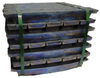
from MarsMetal
Mars Metal is your source for ingot lead. Lead ingots have managed to acquire a variety of industry specific names. Ingot lead can also be known as lead pigs, bullion or bar lead and range in size from 10 LB ice cube tray ingots to 70 LB large ingots. For more information please see the dimensioned... [See More]
- Nonferrous: LowMelting; Lead
- Specifications: ASTM / ASME
- Type: Metal; Non-ferrous
- Processing, Temper & Finish: Continuous, Centrifugal or Other Casting Process

from Indium Corporation
Gallium is a by-product of aluminum extracted during the processing of bauxite into alumina. It can also occasionally be found in Zn ore. We are a refiner and supplier of gallium materials. Indium Corporation supplies gallium: in the form of shot and ingot, in the form of sputtering targets, after... [See More]
- Nonferrous: LowMelting; Miscellaneous Nonferrous Metal or Alloy
- Specialty / Other Types: Specialty; Gallium
- Type: Metal; Non-ferrous
- Applications: Semiconducting Applications
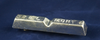
from Belmont Metals, Inc.
Lead Alloys. Featuring 99.99% Lead in a variety of forms, Pb-Base Babbitt and casting alloys for jewelry and ornamental products, and Pb-Base Solders. Lead has been commonly used for thousands of years because it is widespread, easy to extract and easy to work with since it is highly malleable as... [See More]
- Nonferrous: LowMelting; Lead
- Applications: Babbitt Alloys, Casting Alloys, Lead Weights, Bricks for Radiation Protection, Acoustical Sheet, Fusible Alloys
- Type: Non-ferrous

from Indium Corporation
Germanium is extracted from germanium bearing zinc ores or from certain coal ores, collecting the flue dusts after the burning process. It can occasionally be found in copper ores. We refine germanium at our facility in the USA. [See More]
- Nonferrous: LowMelting; Miscellaneous Nonferrous Metal or Alloy
- Specialty / Other Types: Specialty; Germanium
- Type: Metal; Non-ferrous
- Applications: Fiber Optics, Semiconductors

from Belmont Metals, Inc.
Babbitt Metals. Featuring tin-base and lead-base babbitts to ASTM, SAE, government, Navy specifications; special and custom alloys. The use of bearing materials to reduce bearing friction can be traced at least back to the Roman chariot days. Soft metals such as Tin and Lead were unsuccessfully... [See More]
- Nonferrous: LowMelting; Tin
- Specifications: ASTM / ASME; SAE; ASTM B-23 Grade 2
- Type: Non-ferrous

from Indium Corporation
Indium metal has played a key role in technology advances since it was first investigated by Dr. William S. Murray in 1924 in Utica, NY, and with the creation of the Indium Corporation in 1934, the two have been tied together, leading, and supporting the advancement of technologies that we all rely... [See More]
- Nonferrous: LowMelting; Indium
- Tensile Modulus: 1537
- Type: Metal; Non-ferrous
- Applications: Soldering, Bonding, Thin Films
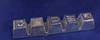
from Belmont Metals, Inc.
Pewter. Featuring Lead Free Pewter and Lead Free Pewter alloyed with Silver, Indium, and Bismuth, as well as Brittania, and Genuine Pewter. Pewter is a malleable metal alloy, traditionally 85 -95% Tin, with the remainder consisting of Copper, Antimony, Bismuth and sometimes, less commonly today,... [See More]
- Nonferrous: LowMelting; Lead; Tin
- Applications: Decorative objects: collectible statuettes and figurines, game figures, aircraft and other models
- Type: Non-ferrous

from Indium Corporation
Typical Indium Analysis. 99.9%. PPMWT. Fe : 10-20. Ni : 5-20. Cu : 5-30. Cd : 50-100. Pb : 200-300. Sn : 50-200. Ti : 100-300. Analysis by OES. * Please note that these are typical ppm levels, and do not represent maximum, minimum, or lot specific levels. If you have specific requirements for one or... [See More]
- Nonferrous: LowMelting; Indium
- Specifications: ICI, ASTM, or Other Casting Grade
- Type: Metal; Non-ferrous
- Thickness: 0.7500

from Belmont Metals, Inc.
Featuring 99.99% Indium and Indium-Based Low Melting Alloys. Indium was discovered by the German chemists Ferdinand Reich and Hieronymus Richter in 1863. Reich and Richter had been looking for traces of the element thallium in samples of Zinc order, when they saw a brilliant indigo line in the... [See More]
- Nonferrous: LowMelting; Indium
- Applications: Bearings or Bearing Quality; Electronics or semiconductors
- Type: Non-ferrous

from Indium Corporation
Typical Indium Analysis. 99.9%. PPMWT. Fe : 10-20. Ni : 5-20. Cu : 5-30. Cd : 50-100. Pb : 200-300. Sn : 50-200. Ti : 100-300. Analysis by OES. * Please note that these are typical ppm levels, and do not represent maximum, minimum, or lot specific levels. If you have specific requirements for one or... [See More]
- Nonferrous: LowMelting; Indium
- Specifications: ICI, ASTM, or Other Casting Grade
- Type: Metal; Non-ferrous
- Thickness: 0.5140

from Belmont Metals, Inc.
White Metals. Featuring Aluminum, Lead, Pewter, Solders, Jewelry, Sculpture, Tin, Zinc Alloys in a variety of forms for many applications. White metals are any of several light-colored alloys used as a base for plated silverware, ornaments or novelties, as well as any of several lead-based or... [See More]
- Nonferrous: LowMelting; Tin
- Specialty / Other Types: LightAlloy
- Type: Non-ferrous
- Specifications: ICI, ASTM, or Other Casting Grade

from Indium Corporation
Typical Indium Analysis. 99.99%. PPMWT. Fe : 1-2. Ni : 2-6. Cu : 2-6. Cd : 5-10. Pb : 10-30. Sn : 10-25. Ti : 1-4. Analysis by OES. * Please note that these are typical ppm levels, and do not represent maximum, minimum, or lot specific levels. If you have specific requirements for one or two... [See More]
- Nonferrous: LowMelting; Indium
- Specifications: ICI, ASTM, or Other Casting Grade
- Type: Metal; Non-ferrous
- Thickness: 0.7500

from Belmont Metals, Inc.
Tin Alloys. Featuring jewelry alloys, Sn anodes for plating, Sn shot for gray iron and titanium alloy additions, Grade A and 99.99% Sn, Sn-base babbitts, 5% phosphor Sn, Pewter, Sn-base solders, Sn powder, Sn oxide powder, Sn granular. All types of Sn and Sn alloys for additions, alloying, casting... [See More]
- Nonferrous: LowMelting; Tin
- Applications: Chemical or material processing; Casting, Plating, Solder, Babbitt Alloys, Bronze Alloys
- Type: Non-ferrous

from Indium Corporation
Typical Analysis. 99.99% Indium. PPMWT. Fe : 1-2. Ni : 2-6. Cu : 2-6. Cd : 5-10. Pb : 10-30. Sn : 10-25. Ti : 1-4. Analysis by OES. * Please note that these are typical ppm levels, and do not represent maximum, minimum, or lot specific levels. If you have specific requirements for one or two... [See More]
- Nonferrous: LowMelting; Indium
- Specifications: ICI, ASTM, or Other Casting Grade
- Type: Metal; Non-ferrous
- Thickness: 0.5140
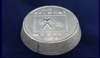
from Belmont Metals, Inc.
Low Melting (Fusible) Alloys. Featuring 158 °F, 203 °F radiation shielding alloys, pipe bending alloys, and low temperature solders. Eutectic: melting points from 117 ° – 281 °F.Non-eutectic: melting points from 107 ° – 338 °F.Mellottes metal, Rose metal, Wood... [See More]
- Nonferrous: LowMelting; Bismuth
- Specialty / Other Types: FusibleAlloy
- Type: Non-ferrous
- UTS: 8000

from Indium Corporation
Typical Indium Analysis. 99.999%. PPMWT. Fe : 0.5. Ni : 1.0. Cu : 1.0. Cd : 1.0. Pb : 2.0. Sn : 2.5. Ti : 1.0. Analysis by OES. * Please note that these are typical ppm levels, and do not represent maximum, minimum, or lot specific levels. If you have specific requirements for one or two elements,... [See More]
- Nonferrous: LowMelting; Indium
- Specifications: ICI, ASTM, or Other Casting Grade
- Type: Metal; Non-ferrous
- Thickness: 0.7500

from Indium Corporation
Typical Indium Analysis. 99.999%. PPMWT. Fe : 0.5. Ni : 1.0. Cu : 1.0. Cd : 1.0. Pb : 2.0. Sn : 2.5. Ti : 1.0. Analysis by OES. * Please note that these are typical ppm levels, and do not represent maximum, minimum, or lot specific levels. If you have specific requirements for one or two elements,... [See More]
- Nonferrous: LowMelting; Indium
- Specifications: ICI, ASTM, or Other Casting Grade
- Type: Metal; Non-ferrous
- Thickness: 0.5140

from Indium Corporation
Indium Corporation is a leading global supplier of pure tin, tin alloys, and compounds. Tin metal is primarily obtained from the mineral cassiterite (SnO2) and is extracted by roasting cassiterite in a furnace with carbon. Rigorous quality standards and advanced analytical instrumentation, such as... [See More]
- Nonferrous: LowMelting; Tin
- UTS: 2100
- Type: Metal; Non-ferrous
- Applications: Soldering, Bonding, Thin Films