
Products & Services
See also: Categories | Featured Products | Technical Articles | More Information-
Supplier: Indium Corporation
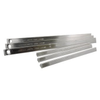
Description: Features AuSn (gold-tin) alloy provides great joint strength AuSn alloy offers superior resistance to corrosion and superior thermal conductivity when compared to standard solders AuSn alloy is compatible with precious metals AuSn is RoHS compliant When to Use AuSn Eutectic
- Solder Alloy: Lead Free
- Features: Other
- Product Form: Preform
-
Supplier: Newark, An Avnet Company
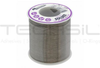
Description: GC Electronics Eutectic Solder, Alloy Tin/Lead: 63/37, Diameter: .032 , Spool Size: 1/2 lb, Length: 200 feet, Melting Point: 361 Deg F
-
Supplier: SAE International
Description: This specification covers a tin-lead alloy in the form of bars, ingots, pellets, ribbon, and round wire.
-
-
Supplier: Accuris
Description: Tin - Lead Alloy Eutectic Solder 63Sn - 37Pb (UNS L13630)
-
Supplier: Indium Corporation
Description: days after freezing, has proven to be a useful property in many processes. Fusible Alloys are classified as either eutectic or non-eutectic. In eutectic alloys, the melting point coincides with the freezing point. Non- eutectic alloys exhibit a range between the melting
-
Supplier: Accuris
Description: SOLDER, EUTECTIC LOW DROSS
-
Supplier: Accuris
Description: Solder, Tin - Lead, Eutectic 63Sn - 37Pb
-
Supplier: Accuris
Description: SOLDER, TIN - LEAD, EUTECTIC 63Sn - 37Pb
-
Supplier: SAE International
Description: Technical Standard
-
Supplier: Indium Corporation
Description: days after freezing, has proven to be a useful property in many processes. Fusible Alloys are classified as either eutectic or non-eutectic. In eutectic alloys, the melting point coincides with the freezing point. Non- eutectic alloys exhibit a range between the melting
- Overall Thickness: 1 inch
- Overall Length: 4.25 inch
- Tensile Strength (UTS, Break): 6,300 psi
- Shape / Form: Bar Stock, Semi-finished Shape / Mill Stock
-
Supplier: Indium Corporation
Description: Indium5.7LT is an air reflow, halogen-free, no-clean solder paste designed for assembly processes using eutectic SnBi and SnBiAg alloys. This paste is a moderate residue product with exceptional wetting capabilities. The low activation temperature of Indium5.7LT, in combination with
- Solder Alloy: Lead Free
- Features: Other
- Product Form: Paste
-
Supplier: MacDermid Alpha Electronics Solutions
Description: also results in shinier solder joints compared to traditional lead-free alloy alternatives. Product Features Controls the Grain Structure within the Solder Joint K100LD is a eutectic tin/copper alloy with controlled metallic dopants that control the grain structure within the
- Solder Alloy: Lead Free
-
Supplier: MacDermid Alpha Electronics Solutions
Description: Product Overview ALPHA CVP-520 is designed for near-eutectic low-temperature alloys such as SnBi0.4Ag, enabling peak reflow profiles between 155°C and 190°C. The flux residue is clear, colorless, and provides excellent electrochemical reliability. The carefully selected alloy in ALPHA CVP-520
- Solder Alloy: Lead Free
- Product Form: Paste
-
Supplier: Allied Electronics, Inc.
Description: that SN100C offers high-throughput and the lowest cost of ownership as compared to any other lead-free solder alloy. Features: Does Not Contain Silver or Bismuth Eutectic Alloy Bridge-Free and Icicle-Free Soldering Smooth, Bright, Well-Formed Fillets, Free of Gross Micro-Cracks,
-
Supplier: Lake Shore Cryotronics, Inc.
Description: This is a low melting point solder, nearly identical to what is commonly called Wood’s Metal. An alloy of bismuth, tin, lead, and cadmium, it is an eutectic alloy with a sharply defined melting point of 343.16 K (70 °C). Ostalloy® 158 has proven itself in production processes – there
-
Supplier: Techsil Limited
Description: MG Chemicals 4886 is an electronic grade solder wire. It uses the eutectic tin-to-lead alloy ratio which is complemented with a RA-like flux core. This range of solders is one of the easiest to work with because it offers a low-melting temperature with a sharp
- Features: Flux Cored Wire, Solid Wire
- Solder Alloy: Tin-Silver (Sn-Ag)
-
Supplier: Techsil Limited
Description: MG Chemicals 4884 is an electronic grade solder wire. It uses the eutectic tin-to-lead alloy ratio which is complemented with a RA-like flux core. This range of solders is one of the easiest to work with because it offers a low-melting temperature with a sharp
- Features: Flux Cored Wire, Solid Wire
- Solder Alloy: Tin-Silver (Sn-Ag)
-
Supplier: Allied Electronics, Inc.
Description: that SN100C offers high-throughput and the lowest cost of ownership as compared to any other lead-free solder alloy. Features: Does Not Contain Silver or Bismuth Eutectic Alloy Bridge-Free and Icicle-Free Soldering Smooth, Bright, Well-Formed Fillets, Free of Gross Micro-Cracks,
-
Supplier: Allied Electronics, Inc.
Description: that SN100C offers high-throughput and the lowest cost of ownership as compared to any other lead-free solder alloy. Features: Does Not Contain Silver or Bismuth Eutectic Alloy Bridge-Free and Icicle-Free Soldering Smooth, Bright, Well-Formed Fillets, Free of Gross Micro-Cracks,
-
Supplier: Allied Electronics, Inc.
Description: that SN100C offers high-throughput and the lowest cost of ownership as compared to any other lead-free solder alloy. Features: Does Not Contain Silver or Bismuth Eutectic Alloy Bridge-Free and Icicle-Free Soldering Smooth, Bright, Well-Formed Fillets, Free of Gross Micro-Cracks,
-
Description: determining the solderability and resistance of soldering heat to lead-free solder alloys. This standard provides standard procedures for determining the solderability, dissolution of metallization and resistance of soldering heat to solder alloys which are eutectic or near
-
Description: alloys, which are eutectic or near eutectic tin lead (Pb), or lead-free alloys. The procedures in this standard include the solder bath method and soldering iron method. The objective of this standard is to ensure that component lead or termination solderability meets the
-
Supplier: CSA Group
Description: alloys, which are eutectic or near eutectic tin lead (Pb), or lead-free alloys. The procedures in this standard include the solder bath method and soldering iron method. The objective of this standard is to ensure that component lead or termination solderability meets the
-
Description: applications using solder alloys, which are eutectic or near eutectic tin lead (Pb), or lead-free alloys. The procedures in this document include the solder bath method and soldering iron method. The objective of this document is to ensure that component lead or
-
Supplier: MacDermid Alpha Electronics Solutions
Description: Product Overview The Entek Plus HT process provides a superior lead-free final finish and maintains exceptional solderability through multiple lead-free processing steps, delivering the highest reliability in Ball Grid Array (BGA) solder joint strength. This production-proven process meets
- Type: Cleaner / Cleaning Agent, Surface Treatment
- Industry Applications: Electrical / Electronics
-
Supplier: CSA Group
Description: IEC 60068-2-58:2015 outlines test Td, applicable to surface mounting devices (SMD). This standard provides procedures for determining the solderability and resistance to soldering heat of devices in applications using solder alloys, which are eutectic or near eutectic tin lead
-
Description: constituted with eutectic or near-eutectic tin/lead solders. This test method is also applicable to fluxes for use with lead-free solders. However, the soldering temperatures may be adjusted with agreement between tester and customer.
-
Supplier: CSA Group
Description: constituted with eutectic or near-eutectic tin/lead solders. This test method is also applicable to fluxes for use with lead-free solders. However, the soldering temperatures may be adjusted with agreement between tester and customer.
-
Supplier: SAE International
Description: finishes and/or Pb-free BGAs, i.e., assembling Pb-free parts using eutectic/near-eutectic SnPb processes (also known as mixed metallurgy). b COTS products: COTS products likely built with Pb-free materials and assembly processes. c Pb-free design and assembly: Products designed and
-
Supplier: ASTM International
Description: temperatures below their melting points; blocking for support and removable borders; radiation shielding; fusible plugs; fuses; tube bending; and punch setting. This specification shall include those alloys having liquidus temperature not exceeding the melting point of the tin lead eutectic,
-
Description: applications using solder alloys, which are eutectic or near-eutectic tin-lead (Pb), or lead-free alloys. The printed boards materials for this organic rigid printed boards are epoxide woven E-glass laminated sheets that are specified in IEC 61249-2 (all parts). The objective of
-
Supplier: Advanced Interconnections Corp.
Description: Using our exclusive, field-proven eutectic solder ball terminal design, the SMT Adapter from Advanced provides a reliable solution for mounting or socketing LGA or re-worked BGA devices. Use in connection with our BGA Sockets for LGA to BGA conversion or board to board applications.
- Number of Contacts: 4 to 1,936
- Contacts Pitch: 0.8 to 1.27 mm
- Socket Type: BGA, LGA, Test / Prototyping Socket
- Contact Plating: Gold Plating
-
Supplier: MacDermid Alpha Electronics Solutions
Description: Water-soluble, high-activity paste flux that offers excellent wetting on tough finishes and low voiding performance. Product Overview ALPHA WS-698 water-soluble flux is engineered for soldering a variety of lead-free and tin-lead eutectic alloys onto area array packages. The flux is highly
-
Supplier: Belmont Metals, Inc.
Description: Low Melting (Fusible) Alloys Featuring 158°F, 203°F radiation shielding alloys, pipe bending alloys, and low temperature solders. Eutectic: melting points from 117° – 281°F.Non-eutectic: melting points from 107° – 338°F.Mellottes metal, Rose metal, Wood’s metal, and others.
- Tensile Strength (UTS, Break): 8,000 psi
- Shape / Form: Bar Stock, Ingot, Semi-finished Shape / Mill Stock, Strip, Wire / Shaped Wire
- Features: Bismuth / Bismuth Alloys, Fusible Alloy, Non-ferrous, Other
- Type: White / Low Melting (UNS L)
-
Supplier: Cree, Inc.
Description: a Lambertian radiation pattern. Additionally, these LEDs are die attachable with conductive epoxy, solder paste or solder preforms, as well as the eutectic method









Find Suppliers by Category Top
Featured Products Top
-
 bump-on-polymer processes Single and multiple layer Cu redistribution with several polymer repassivation material choices Eutectic Sn/Pb, Pb-free and high-Pb solder alloys Design services and custom test vehicle fabrication Downloads (read more)
Browse IC Interfaces Datasheets for Micross Components, Inc.
Conduct Research Top
-
Gold Tin Eutectic Solder - High Reliability
Gold tin eutectic solder (AuSn20, or 80%gold, 20%tin by weight) is used in a variety of applications requiring a high reliability, high melting solder joint. This includes die-attach and even lid-attach for hermetically-sealed ceramic packages. When used as a die-attach solder alloy for LED or RF
-
Solder Reflow Recommendation
), melting and eutectic temperatures also change, requiring modification to the solder reflow profile
-
High Melting Lead-Free Mixed BiAgX (R) Solder Paste System
Although lead-free soldering has been main stream in the industry since 2006 with the replacement of the eutectic SnPb system by the SnAgCu system, the development of drop-in lead-free alternatives for high melting high lead solder alloys is still far from mature.
-
Achieving High-Reliability Low-Cost Lead-Free SAC Solder Joints via Mn Doping
In this study, the reliability of low-Ag SAC alloy doped with Mn (SACm (R)) was evaluated under JEDEC drop, dynamic bending, thermal cycling, and cyclic bending test conditions and compared to eutectic SnPb, SAC105, and SAC305 alloys.
-
Tech Tip 12 - Compatible Metallization
Silver epoxy adhesives (ECAs) have been widely used in semiconductor and electronic packaging industries since the 1960s, as a reliable connection method instead of soldering or eutectic joining of metals.
-
Direct Bonded Copper Ceramic Substrates
DBC ceramic substrate, short for Direct Bonded Copper Ceramic substrate, is an advanced material composed of a ceramic substrate (typically Al2O3 or AlN) and copper, tightly joined together through a hypo-eutectic process. This unique combination of materials results in a substrate with exceptional
More Information Top
 Indicates content that may require registration and/or purchase.

-
Solder Joint Technology
Wetting Reaction of Pb-Free Eutectic Solders on Thick Cu UBM...........................................................................
-
Lead-Free Electronic Solders
For exam- ple, McCormack and coworkers [40, 41] modified the Sn–3.5Ag binary eutectic solder with 0.5–2.0 wt.% Zn additions, and noted substantial refinement of the microstructure; in particular, they observed a decrease in the incidence of b-Sn …
-
Lead-free Solders: Materials Reliability for Electronics
Tsai, J.Y., Chang, C.W., Ho, C.E. et al. (2006) Microstructure evolution of gold-tin eutectic solder on Cu and Ni substrates.
-
Lead-free Electronics
After soldering the same components with tin-lead eutectic solder , the lead-free materials were used with a reflow temperature of 245"C, which again was well below the 260°C expected peak.
-
Principles of Soldering
The authors have com- pared the spreading characteristics, as a function of excess temperature above the melting point (“superheat”), of all combinations of the elements bismuth, indium, lead, silver, and tin when used as eutectic solders on “ideal” substrates [Humpston and Jacobson …
-
A Guide to Lead-free Solders
As-cast Microstructures of Solder Alloys..........................................73 3.4.1 SnPb Euctectic..........................................................................74 3.4.2 SnAg Eutectic Solder ...............................................................74 3.4.3 SnAgCu Ternary Solders.........................................................75 3.5 .
-
Lead-Free Solder Interconnect Reliability
and Q.J. Yang, A New Constitutive Creep Constitutive Model for Eutectic Solder Al- .
-
Advanced Flip Chip Packaging
It has also been utilized to form a hybrid joint, uniting high lead with eutectic solder for joining die onto organic substrates.
-
Micro- and Opto-Electronic Materials and Structures: Physics, Mechanics, Design, Reliability, Packaging
Reliability of Pb-Free Solder Joints in Comparison to Sn-Pb Eutectic Solder Joints .
-
Lead-Free Soldering
This approach is eminently logical: the new standard Pb-free alloy replaces Sn-Pb eutectic solder in a wide variety of board designs and microelectronics applications.