
Products & Services
See also: Categories | Featured Products | Technical Articles | More Information-
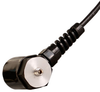
Supplier: Wilcoxon Sensing Technologies
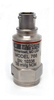
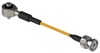
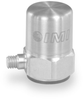
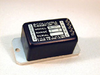
Description: High frequency accelerometer, 10 mV/g sensitivity, ±10% tolerance, ring type, side exit integral cable, 8-32 mounting thread
- Acceleration: 600 g
- Frequency Range: 0.5 to 29,000 Hz
- Operating Temperature: -67 to 248 F
- Sensor Outputs: Acceleration
-
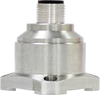
Supplier: Wilcoxon Sensing Technologies
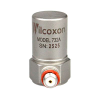
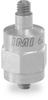
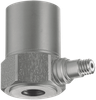
Description: High frequency accelerometer, 100 mV/g sensitivity, ±5% tolerance, top exit 3 pin bayonet connector, case isolated
- Acceleration: 80 g
- Frequency Range: 0.6 to 15,000 Hz
- Operating Temperature: -58 to 248 F
- Sensor Outputs: Acceleration
-
Supplier: Allen-Bradley / Rockwell Automation
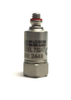
Description: High Frequency Accelerometer,Top Exit, 50 mV/g, 20 kHz
-
-
Supplier: Hottinger Brüel & Kjær A/S
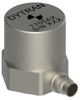
Description: The Dytran 3211B1-XX is a hermetically sealed, base-isolated IEPE accelerometer designed for high-frequency vibration measurements. It features a shear ceramic sensing element housed in titanium for durability and corrosion resistance.
- Acceleration: 500 g
- Frequency Range: 1 to 10,000 Hz
- Operating Temperature: -59.8 to 212 F
- Features: Other
-
Supplier: Wilcoxon Sensing Technologies
Description: Miniature, high frequency accelerometer, 10 mV/g high sensitivity, ±5% tolerance, side exit microdot connector, case grounded
- Acceleration: 500 g
- Frequency Range: 0.5 to 25,000 Hz
- Operating Temperature: -58 to 248 F
- Sensor Outputs: Acceleration
-
Supplier: Wilcoxon Sensing Technologies
Description: Miniature, high frequency accelerometer, 10 mV/g high sensitivity, ±5% tolerance, top exit microdot connector, case grounded
- Acceleration: 500 g
- Frequency Range: 0.5 to 25,000 Hz
- Operating Temperature: -58 to 248 F
- Sensor Outputs: Acceleration
-
Supplier: PCB Piezotronics, Inc.
Description: High freq. laboratory ceramic shear ICP® accel, 100 mV/g, 0.8 to 20k Hz, 316L SS case, side exit, 10-32 conn., frequency sweep ISO 17025 accredited calibration
- Acceleration: 50 g
- Maximum Shock: 5,000 g
- Sensor Mounting: Stud or Bolt-on
-
Supplier: PCB Piezotronics, Inc.
Description: High freq ceramic shear ICP® accelerometer, 10 mV/g, 1.6 to 30k Hz, SS case, top exit, 5-44 connector, frequency sweep ISO 17025 acc cal
- Acceleration: 500 g
- Maximum Shock: 10,000 g
- Sensor Mounting: Stud or Bolt-on
-
Supplier: PCB Piezotronics, Inc.
Description: High-freq., industrial, ceramic shear ICP® accel, 10 mV/g, 0.8 to 15k Hz, top exit, 2-pin conn., frequency sweep ISO 17025 accredited calibration
- Acceleration: 500 g
- Maximum Shock: 5,000 g
- Sensor Mounting: Stud or Bolt-on
-
Supplier: Hottinger Brüel & Kjær A/S
Description: MEMS element, combined as a single output, to create the widest frequency response bandwidth in the industry, from DC (0 Hz) to 10 kHz. Unique ELF3 technology combines the most desirable features of piezoelectric sensors (excellent high frequency response) with those of variable
- Acceleration: 20 g
- Frequency Range: 0 to 10,000 Hz
- Operating Temperature: -58 to 248 F
- Sensor Technology: MEMS
-
Supplier: Hottinger Brüel & Kjær A/S
Description: The Dytran series 7600 is a high precision variable capacitance (VC) accelerometer, designed to be used as a drop-in replacement for piezoresistive units in new or existing zero-to-medium frequency instrumentation applications. Available with up to a 200g range, the Dytran
- Acceleration: 25 g
- Frequency Range: 0 to 900 Hz
- Operating Temperature: -40 to 248 F
- Features: Linear Accelerometer, Other
-
Supplier: Kistler Group
Description: The side connector Type 8703A... and top connector accelerometer Type 8705A... utilizes Kistler’s unique PiezoStar seismic element that provides both wide operating frequency and ultra low temperature coefficient of sensitivity of 0,004 %/°C. The accelerometer family operates
- Acceleration: 50 to 250 g
- Frequency Range: 0.5 to 10,000 Hz
- Maximum Shock: 2,000 g
- Operating Temperature: -320.8 to 329 F
-
Supplier: Hottinger Brüel & Kjær A/S
Description: The Dytran series 3316 is an ultra high temperature piezoelectric accelerometer, designed to reliably operate in temperatures up to +1100°F (+593°C) with charge mode capabilities. Featuring a unique single crystal charge mode sensing element mounted in a hermetically sealed, miniature
- Frequency Range: 4 to 10,000 Hz
- Operating Temperature: -58 to 899.6 F
- Features: Other
- Sensor Technology: Piezoelectric
-
Supplier: Silicon Designs, Inc.
Description: SDI's Premium Models 2470 and 2476 High-Performance Three-Axis MEMS DC Accelerometers are rugged plug-and-play measurement devices that provide enhanced performance over temperature for use in zero to medium frequency applications experiencing large or rapid temperature
- Acceleration: 2 to 400 g
- Frequency Range: 0 to 4,200 Hz
- Maximum Shock: 2,000 to 5,000 g
- Operating Temperature: -67 to 257 F
-
Supplier: Kistler Group
Description: The side connector Type 8703A... and top connector accelerometer Type 8705A... utilizes Kistler’s unique PiezoStar seismic element that provides both wide operating frequency and ultra low temperature coefficient of sensitivity of 0,004 %/°C. The accelerometer family operates
- Acceleration: 50 to 250 g
- Frequency Range: 0.5 to 10,000 Hz
- Maximum Shock: 2,000 g
- Operating Temperature: -320.8 to 329 F
-
Supplier: Columbia Research Labs, Inc.
Description: The Columbia Models SA-107B and SA-107BHP Servo Accelerometers offer the superior performance of force balance technology and are configured for general purpose and high performance applications respectively. These sensors are ideal for DC and low frequency measurements. The
- Acceleration: -10 to 10 g
- Frequency Range: 0 to 50 Hz
- Minimum Accuracy: 0.05 +/-% FS
- Maximum Shock: 1,500 g
-
Supplier: Kistler Group
Description: charge amplifier. Kistler’s shear technology assures high immunity to base strain, thermal transients and transverse accelerations. A unique connector design features a ceramic insulator for long-term stability even at extended operating temperatures. Additional features include high
- Acceleration: 1,000 to 2,000 g
- Frequency Range: 5 to 4,000 Hz
- Maximum Shock: 5,000 g
- Operating Temperature: -94 to 482 F
-
Supplier: Silicon Designs, Inc.
Description: SDI's Premium Models 2220 and 2276 High-Performance Single Axis MEMS DC Accelerometers are rugged plug-and-play measurement devices that provide enhanced performance over temperature for use in zero to medium frequency applications experiencing large or rapid temperature
-
Supplier: Silicon Designs, Inc.
Description: The SDI Model 2290 Single-Axis MEMS DC Precision Reference Calibration Accelerometer offers a precise, reliable, and accurate means of determining the sensitivity and frequency response characteristics of unknown MEMS DC accelerometers during end-to-end calibrations and related
- Acceleration: 5 to 50 g
- Frequency Range: 0 to 1,800 Hz
- Maximum Shock: 2,000 to 5,000 g
- Operating Temperature: -67 to 257 F
-
Supplier: Silicon Designs, Inc.
Description: The high-performance Models 2240 and 2480 Specialty Hermetic MEMS DC Test & Measurement Accelerometer Modules from Silicon Designs (SDI) provide enhanced performance over temperature in zero to medium frequency applications experiencing large or rapid temperature variations or
-
Supplier: LORD MicroStrain Sensing Systems
Description: Wireless Accelerometer Node Overview The G-Link® -LXRS™ Wireless Accelerometer Node features on-board triaxial ±2 g or ±10 g MEMS accelerometers and an internal temperature sensor. G-Link® -LXRS™ can be employed to measure vibration or acceleration, or as a tilt sensor or
- Acceleration: -10 to 10 g
- Frequency Range: 1 to 512 Hz
- Operating Temperature: -4 to 140 F
- Sensor Outputs: Acceleration, Temperature
-
Supplier: PCB Piezotronics, Inc.
Description: High frequency, ceramic shear ICP® accel., 10 mV/g, 5 to 60k Hz, 5-44 top conn. This miniature accelerometer model achieves extremely high frequency response from 5 Hz to 60 kHz, and incorporates a LP filter to avoid saturation of the output signal to to excessive
- Acceleration: 500 g
- Frequency Range: 5 to 60,000 Hz
- Maximum Shock: 5,000 g
- Features: Other
-
Supplier: Jewell Instruments, LLC
Description: Jewell Instruments AKA Series Accelerometers are an excellent choice for cost to performance trade-off. The AKA is based on silicon micro-machined MEMS Capacitive Accelerometer technology and designed for low power and high stability. • Triaxial Configuration • Measuring ranges
- Acceleration: 2 to 40 g
- Frequency Range: 500 Hz
- Maximum Shock: 100 g
- Maximum Vibration: 20 g
-
Supplier: OMEGA Engineering, Inc.
Description: The ACC101 accelerometer is low cost yet extremely durable. These accelerometers are constructed using high strength aluminum, has a rugged strain relief, rugged ¼-28 stud mounting, an epoxy seal, and uses the kind of dependable components usually found only in higher priced
- Acceleration: 70 to 80 g
- Frequency Range: 3 to 5,000 Hz
- Minimum Accuracy: 10 +/-% FS
- Maximum Shock: 5,000 g
-
Supplier: Jewell Instruments, LLC
Description: Jewell Instruments DMA Series Accelerometers are an excellent choice for cost to performance trade off. The DMA is based on silicon micro-machined MEMS Capacitive Accelerometer technology and designed for low power and high stability. Features Single, Dual and Triaxial
- Acceleration: -40 to 40 g
- Frequency Range: 400 Hz
- Minimum Accuracy: 0.1 to 0.6 +/-% FS
- Maximum Shock: 100 g
-
Supplier: Shenzhen Rion Technology Co., Ltd
Description: features of high precision,high shock resistance,broad measurement range and excellent overload capacity. flexible quartz accelerometer is one of the most essential devices in the inertial navigation and guidance system.A flexible quartz accelerometer consists of a gauge
- Operating Temperature: -40 to 266 F
- Device Category: Sensor / Transducer
-
Supplier: Columbia Research Labs, Inc.
Description: Columbia Models SA-107LN and SA-107LNC Servo Accelerometers are highsensitivity, low noise sensors designed for use in seismic and low level, low frequency motion studies. The accelerometers are self-contained and provide a high level, low impedance output. No signal
- Acceleration: -2 to 2 g
- Frequency Range: 100 to 200 Hz
- Minimum Accuracy: 0.1 +/-% FS
- Maximum Shock: 200 g
-
Supplier: OMEGA Engineering, Inc.
Description: service. Additional features include high shock protection (to protect from dropping or mishandling), cross wire protection (protects against miswiring), and up to 1000 volt static discharge protection. The ACC102 has a high 100 mV/g output and measures across wide frequency and
- Acceleration: 40 to 75 g
- Frequency Range: 3 to 5,000 Hz
- Minimum Accuracy: 5 +/-% FS
- Maximum Shock: 5,000 g
-
Supplier: Sherborne Sensors
Description: The A600 range of Solid State Accelerometers measure vector acceleration with high accuracy using a micromachined (MEMS) silicon sensor incorporating an air damping feature. Unlike fluid damped devices the air damping employed is essentially independent of temperature. The transducer
- Acceleration: -20 to 20 g
- Frequency Range: 0 to 600 Hz
- Maximum Shock: 200 g
- Operating Temperature: -40 to 185 F
-
Supplier: Honeywell Test & Measurement
Description: The Model MAQ13 charge output miniature accelerometer is designed to be used in Industrial test and automation environments; including laboratory testing, modal studies and test cells where high temperatures are likely to be encountered and where space is limited and small size is
- Operating Temperature: -70.6 to 480.2 F
-
Supplier: OMEGA Engineering, Inc.
Description: The OMEGAROMETER™ Series accelerometers are designed for industrial vibration measurements. These accelerometers feature a hermetically sealed 316L stainless steel case suitable for harsh environments. The ACC793 is a high performance accelerometer with a top cable exit.
- Acceleration: 80 g
- Frequency Range: 0.5 to 15,000 Hz
- Minimum Accuracy: 5 +/-% FS
- Maximum Shock: 500 g
-
Supplier: MonoDAQ
Description: High performance IEPE accelerometers are the basis for high quality vibration measurement with MonoDAQ 1xACC amplifiers. DJB A/123 is a miniature IEPE accelerometer available in three versions with different sensitivity. Specifications Voltage sensitivity (+-10%): 5 mV/g
- Frequency Range: 1 to 12,000 Hz
- Minimum Accuracy: 5 +/-% FS
- Maximum Vibration: 1,000 g
- Operating Temperature: -58 to 365 F
-
Supplier: Columbia Research Labs, Inc.
Description: The Model 966 Piezoelectric Accelerometer is designed for the measurement of high frequency, moderate to high-level shock and vibration. It incorporates a hybrid electronic assembly within a rugged, welded, double-wall stainless steel body to enhance its operation in
- Acceleration: 500 g
- Frequency Range: 2 to 20,000 Hz
- Maximum Shock: 2,000 g
- Maximum Vibration: 1,000 g










Find Suppliers by Category Top
Featured Products Top
-
 to 30µg/√Hz. And MEMS accelerometers are designed to operate in harsh environments such as high temperature and dust. Piezoelectric is a technology used for decades by accelerometer sensors designed for vibration measurement of industrial rotative equipment. Over the (read more)
Browse Vibration Measurement Instruments and Vibration Analyzers Datasheets for Tronics Microsystems -
. GYPRO4300 gyros are ideally complemented by high performance Tronics AXO®300 digital accelerometers that share the same SMD J (read more)
Browse Gyroscopes Datasheets for Tronics Microsystems -
accelerometer for table control Three additional accelerometer input channels available Two high temperature thermocouples with six foot cable: one for product, one for air Four additional thermocouple input channels available Eight user state relays (USR (read more)
Browse Environmental Test Chambers and Rooms Datasheets for ESPEC North America Inc | Qualmark Products and Services -
wide selection of isolated analog input and output functions. Analog inputs include voltage and current in narrow and wide bandwidths, thermocouple, RTD, accelerometer, potentiometer, strain gage, frequency, and 2-wire transmitter (read more)
Browse Datasheets for Dataforth Corporation -
modules addressing a wide range of functions such as but not limited to Accelerometer, Frequency, True RMS, Matched Pair, Digital, Thermistor, Thermocouple, RTD, Strain Gage, Voltage, Current, Potentiometer, or User Programmable to design your needed solution. Dataforth was established in 1984 to (read more)
Browse Datasheets for Dataforth Corporation -
detection ranges in challenging environments, WISE-2460 features an ARM Cortex-M7 processor, a high-detection-range Z-axis accelerometer, and a temperature sensor, all enclosed in a robust IP68-rated enclosure. The device simplifies configuration and alarm threshold management through the user (read more)
Browse I/O Modules and Instruments Datasheets for Advantech -
Using the traditional arm resonance measurement method, the accelerometer was fixed at the front end of the headshell for vertical sweep-frequency recording from 0 to 20 kHz. The results showed that the overall rigidity of this partition was higher and its resonance performance was more stable (read more)
Browse Aluminum Oxide and Alumina Ceramics Datasheets for Xiamen Innovacera Advanced Materials Co., Ltd. -
The Q1 Laser Radar by Ommatidia offers high-precision measurements and advanced contactless vibrometry. With its 128 parallel channels, it delivers metrology-grade results for distances of up to 50 meters. Additionally, the Q1 features imaging vibrometry (read more)
Browse LiDAR Sensors Datasheets for Ommatidia LiDAR
Conduct Research Top
-
How High in Frequency Are Accelerometer Measurements Meaningful
resonances of 100s. of KHz to above 1 MHz. The original intent of this design (Model. 7270) was to create an accelerometer with a resonant frequency. high enough that it would not be excited in metal-to-metal impact. or explosive environments. These types of environments are. generally described
-
PT 101: Accelerometers Measure Slow Speed Rollers and Detect High Frequencies
accelerometers are the sensor of choice for accurately measuring the broad range of frequencies and low amplitudes occurring in slow speed roller bearing installations. Wilcoxon accelerometers are specially designed to maximize sensitivity to low level vibrations. Their low electronic noise floor is needed
-
Accelerometer Mounting Considerations
An accelerometer is an instrument that senses the motion of a surface to which it is attached, producing an electrical output signal precisely analogous to that motion. The ability to couple motion, (in the form of vibration or shock), to the accelerometer with high fidelity, is highly dependent
-
Introduction to LIVM Accelerometers
Low Impedance Voltage Mode (LIVM) accelerometers are designed to measure shock and vibration phenomena over a wide frequency range. They contain integral IC electronics that converts the high impedance signal generated by the piezo crystals to a low impedance voltage that can drive long cables
-
Selecting Accelerometers for and Assessing Data from Mechanical Shock Measurements
After first clarifying what mechanical shock is and why we measure it,. basic requirements are provided for all measurement systems that. process transient signals. High- and low-frequency dynamic models for. the measuring accelerometer are presented and justified. These models. are then used
-
Bridge Monitoring Based on a Network of High Performance Triaxial MEMS Accelerometers
An efficient MEMS transducer network has been developed specifically to check the structural health of bridges starting from the acceleration measurement to monitor the frequency and speed variations.
-
Why is MEMS the Preferred Technology for High Shock Measurement?
associated with high-amplitude,. high-frequency mechanical shock. An unsung hero, a chemist named. Ralph Plumlee at Sandia National Labs, researched this phenomenon. In 1971 Plumlee issued a 73 page report distributed to manufacturers. of shock accelerometers detailing the dipole switching mechanisms
-
Development of a Damped Piezoresistive MEMS High Shock Sensor
Piezoresistive (PR) silicon accelerometers with micro-electromechanical systems (MEMS) technology are preferred in many high shock impact measurements. These devices exploit the strength of single crystal silicon (SCS) along with the minimal zero shifting associated with PR sensors. However
More Information Top
 Indicates content that may require registration and/or purchase.

-
IES Recommended Practice 012.1
For high frequency ac- celerometers to be located on external (and often internal) structures, a mix of uni-directional (or uniaxial) and sets of three orthogonal hi-directional (or triaxial) accelerometers is usually selected with most of the uniaxial accelerometers sensing the…
-
MARCO MESSINA
DESIGN AND OPTIMIZATION OF A NOVEL
TRI-AXIAL MINIATURE EAR-PLUG
PIEZORESISTIVE ACCELEROMETER WITH
NANOSCALE PIEZORESISTORS
…seen from the formula of the resonant frequency that as the mass decreases the natural frequency increases which is good for the measurement, but a small mass typically determine a lower sensitivity and this is true for most high frequency accelerometers [34].
-
High Shock, High Frequency Characteristics of a Mechanical Isolator for a Piezoresistive Accelerometer, the ENDEVCO 7270AM6*
I, B. D. Hansche, and O. M. Solomon, “Use of a Laser Doppler Vibrometer for High Frequency Accelerometer Characterizations,” Proceedings of the 66~ Shock aqd Vibration Symposium, Vol. I, Biloxi, MS, November 1995.
-
Avionics Systems Development for Small
Unmanned Aircraft
This design also guarantees -40 dB/decade slope for the transfer function from acceleration to pitch estimate error, thus rejecting high frequency accelerometer errors.
-
Experimental Study of Damage and Defect Detection during
Drilling of CFRP Composites
310 Table A. 4 Technical specifications of high frequency accelerometers ……………..………..
-
Fractional-Order Complementary Filters for Small Unmanned Aerial System Navigation
Zimmermann and Sulzer [53] used low frequency data from an inclinometer and high frequency accelerometer data to measure orientation.
-
Signal Transmissibility of Railcar Bearing Vibrations
Three high frequency accelerometers on the rail that the defective bearing traverses .
-
In-Axis and Cross-Axid Accelerometer Response in Shock Environments
V.I. Bateman, B. D. Hansche, and O. M. Solomon, “Use of a Laser Doppler Vibrometer for High Frequency Accelerometer Characterizations,” .