
Products & Services
See also: Categories | Featured Products | Technical Articles | More Information-
Supplier: Accuris
Description: HYDROGEN LEAK DETECTOR
-
Supplier: H2scan, Corp.
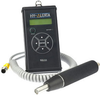
Description: H2scan recognizes the importance of detecting and locating hydrogen leaks as quickly as possible. H2scan's HY-ALERTA™ 500 Handheld Hydrogen Leak Detector is the industry's most versatile, portable hydrogen leak detector able to respond to the widest range of
- Operating Temperature: 32 to 113 F
- Application: Ambient Air Monitoring
- Features: Audible or Visual Alarms
- Gas Types: Combustible Gas, Hydrogen (H2)
-
Supplier: Accuris
Description: Hydrogen Leak Detector
-
-
Supplier: SAE International
Description: This study examines the types of hydrogen leaks that can support combustion. Hydrogen, methane, and propane diffusion flames on round burners and leaky compression fittings were observed. Measurements included limits of quenching and blowoff for round burners with diameters of
-
Supplier: SAE International
Description: feasible for automotive hydrogen because the available additives can poison the fuel cell catalyst. Additionally, the lower flammability limit of hydrogen is lower, and the flammability range wider, than fuels such as gasoline. For these reasons, hydrogen leaks must be
-
Supplier: ams
Description: The HLS-442 Hydrogen Leak Sensor is an accurate, fast-responding sensor designed for installation in vehicles and hydrogen fueling stations.
- Operating Temperature: -40 to 185 F
- Gas Types: Hydrogen (H2)
-
Supplier: ams
Description: The HLS-440P Hydrogen Leak Sensor is an accurate, fast responding sensor designed for installation in harsh environments such as fuel cell exhausts, for example. The HLS-440P Hydrogen Leak Sensor features reduced power consumption, provides increased packaging
- Operating Temperature: -40 to 194 F
- Gas Types: Hydrogen (H2)
-
Supplier: ams
Description: The HLS-440P Hydrogen Leak Sensor is an accurate, fast responding sensor designed for installation in harsh environments such as fuel cell exhausts, for example. The HLS-440P Hydrogen Leak Sensor features reduced power consumption, provides increased packaging
- Operating Temperature: -40 to 194 F
- Gas Types: Hydrogen (H2)
-
Supplier: SAE International
Description: Hydrogen concentration during combustion in a confined space with a ceiling was investigated. The results indicated that steady-state hydrogen concentration was highest at the ceiling surface for all hydrogen flow rates. When hydrogen concentration was 10-20%, weak flame
-
Supplier: Hy-Lok USA, Inc.
Description: Hy-Lok USA, Inc. is the American master distributor of Hy-Lok Corporation, a global industry-leading provider of valve and fitting solutions. Hy-Lok USA is proud to offer solutions to deal the danger of gas leaks. Our proprietary D’Tec Liquid Leak Detectors for quick, accurate
-
Supplier: MSA Safety
Description: pressurized gas leaks at the speed of sound utilizing Gassonic technology ANN technology distinguishes real gas leak noise from background noise, suppressing false alarm sources Does not require in-field training, fully operational after installation Detects gas leaks from 2 BAR
- Operating Temperature: -40 to 140 F
- Output Options: Analog Current
- Local Interface: Computer Interface
- Display Type: Digital Readouts
-
Supplier: Linde North America, Inc.
Description: pressures. Hydrogen is ideal here as it is supplied at higher pressures than other fuel gases. In the glass industry, hydrogen is used to form the rim on glasses. Hydrogen has a vast application spectrum beyond its value as a fuel gas. It is used in the production of carbon
- Application / Function: Electronic and Semiconductor
- Product Form: Gas
- Industrial Gases: Hydrogen
- Supply Options: Other
-
Supplier: Restek
Description: one-year warranty, the Restek® leak detector is the industry standard for performance and affordability in handheld leak detectors. Leak Detector Specifications Detectable Gases: Helium, nitrogen, argon, carbon dioxide, hydrogen Battery: Rechargeable lithium ion internal
- Operating Temperature: 32 to 120 F
- Operating Humidity: 0 to 97 %
- Display: Analog
- Features: Audible or Visual Alarms, Other
-
Supplier: Electro Optical Components, Inc.
Description: Hydrogen (H2) can be dangerous because it is flammable & explosive. Hydrogen has NFPA 704’s highest rating of 4 on the flammability scale. For safety it is important to have a Hydrogen Specific monitor in many industries where hydrogen can be generated. Now there are
- Response Time: 60 seconds
- Operating Temperature: -4 to 122 F
- Operating Humidity: 0 to 95 %
- Measurement Type: %Volume, Trace
-
Supplier: Busch Vacuum Solutions
Description: TAPIR leak detectors have been specially designed to avoid all these problems. They can locate and quantify leaks precisely. Thus, improving the output quality, efficiency and reliability of the entire process. In almost every industry, from automotive to oil and gas. There are
- Local Interface: Digital Front Panel
- Display Type: Digital Readouts
- Leak Test Method: Electronic Gas Detection
-
Supplier: Hydrogen Sense Technology Co., Ltd
Description: The H2SENSE Model 4000 is designed specially for exclusive monitoring of hydrogen gas leak in a most reliable and precise way. With our patent solid state thin-film palladium alloy hydrogen sensor technology, the Model 4000 is hydrogen specific and do not have cross
- Operating Temperature: -4 to 140 F
- Operating Humidity: 0 to 95 %
- Response Time: 60 seconds
- Measurement Type: %Volume
-
Supplier: H2scan, Corp.
Description: H2scan's HY-ALERTA™ 1600 Intrinsically Safe Area Hydrogen Monitor provides hydrogen-specific leak detection and measurement for hydrogen concentrations as low as 4000 ppm and can be scaled to any concentration up to 5% hydrogen by volume, a range representing 10%
- Operating Temperature: -4 to 104 F
- Operating Humidity: 0 to 95 %
- Response Time: 60 seconds
- Measurement Type: %Volume, Leakage
-
Supplier: Restek
Description: 100 or 175 psig (690 or 1,200 kPa) Automatic safety feature shuts the generator down if a hydrogen leak is detected. Compact unit, requires only one square foot of bench space.
- Outlet Pressure: 100 to 175 psi
- Generator Type: Hydrogen
-
Supplier: Advanced Test Concepts, Inc. (ATC, Inc.)
Description: High Flow measurements 25 to 10,000 LPM. Precision Transfer Standard to calibrate other flow meters. Constriction/Blockage testing. Measurement of gas mixtures, hydrogen and natural gas options. Pressure range from barometric to 100 psig.
- Operating Temperature: 50 to 113 F
- Display Type: Digital Readouts
- Leak Test Method: Mass Extraction
- Computer Interface Options: Serial Interface
-
Supplier: SAE International
Description: results of the experiments show that hydrogen concentration distribution is kept at a constant level throughout each location in the simulated space, depending on the opening area and hydrogen leakage rate. It was also found that the diffusivity of hydrogen in air is extremely
-
Supplier: H2scan, Corp.
Description: H2scan's 2620 Explosion Proof Area Hydrogen Monitor provides hydrogen-specific leak detection and measurement for hydrogen concentrations as low as 4000 ppm and can be scaled to any concentration up to 5% hydrogen by volume, a range representing 10% to 125% of
- Operating Temperature: 39.2 to 140 F
- Response Time: 60 seconds
- Measurement Type: %Volume, Leakage
- Application: Ambient Air Monitoring
-
Supplier: H2scan, Corp.
Description: H2scan's HY-ALERTA™ 600B/610B Fixed Area Hydrogen Monitors will provide hydrogen-specific leak detection and measurement for hydrogen concentrations as low as 4000 ppm and can be scaled to any concentration up to 5% hydrogen by volume, a range representing 10% to
- Operating Temperature: -4 to 104 F
- Operating Humidity: 0 to 95 %
- Response Time: 60 seconds
- Measurement Type: %Volume, Leakage
-
Supplier: Senscient Inc.
Description: Reliable, open path detection of hydrogen chloride at levels low enough to provide early warning for leakage of this highly toxic gas. Detection Limits for hydrogen chloride leak detection are orders of magnitude lower than any other OPGD product. Specific detection of
- Operating Temperature: -40 to 149 F
- Operating Humidity: 0 to 100 %
- Number of Channels: 1
- Response Time: 3 seconds
-
Supplier: RKI Instruments, Inc.
Description: No Description Provided
- Response Time: 10.00000000000002 seconds
- Operating Temperature: 32 to 104 F
- Application: Ambient Air Monitoring, Personal Exposure Monitoring
- Gas Types: Arsine (AsH3), Combustible Gas, Diborane (B2H6), Hydrogen (H2), Phosphine (PH3), Silane (SiH4), Toxic Gas
-
Supplier: Lee Co. (The)
Description: This threadless, cartridge-style one-way valve is made with an elastomeric seat for improved checked direction leakage performance. The valve features 316L stainless steel construction with a ceramic ball which provides compatibility with a wide range of aggressive fluids and gases, like
- Valve Size: 0.312992295 inch
- Pressure Rating: 5,801.508 psi
- Valve Type: Check Valves
-
Supplier: Lee Co. (The)
Description: This threadless, cartridge-style one-way valve is made with an elastomeric seat for improved checked direction leakage performance. The valve features 316L stainless steel construction with a ceramic ball which provides compatibility with a wide range of aggressive fluids and gases, like
- Valve Size: 0.235039497 inch
- Pressure Rating: 5,801.508 psi
- Valve Type: Check Valves
-
Supplier: CO2Meter.com
Description: gas it makes it very important to adopt detection to ensure individual safety. Hydrogen sensors can constantly detect the amount of Hydrogen present in any working environment and block hydrogen generation if it detect an amount greater than the safety threshold. The most common
- Features: Other
- Number of Gases Monitored: Single Gas
-
Supplier: Lee Co. (The)
Description: This cartridge-style, non-return valve is made with an elastomeric seat for improved checked direction leakage performance. The valve features 316L stainless steel construction with a ceramic ball which provides compatibility with a wide range of aggressive fluids and gases, like hydrogen.
- Valve Size: 0.233858394 inch
- Valve Type: Check Valves
-
Supplier: LECO Corporation
Description: The ONH836 Oxygen/Nitrogen/Hydrogen Elemental Analyzer is designed for wide-range measurement of oxygen, nitrogen, and hydrogen content of inorganic materials, ferrous and nonferrous alloys, and refractory materials using the inert gas fusion technique. The instrument features a custom
- Test Media / Material Analyzed: Ferrous Metal (Steel, Cast Iron), Inorganic Material, Nonferrous (Copper, Aluminum)
- Elements Analyzed: Hydrogen (H), Nitrogen (N) / Protein, Oxygen (O)
- Analysis Method / Detection Technology: Inert Gas Fusion (IGF), Infrared Detector (IR Cell), Thermal Conductivity Detector
-
Supplier: Shenzhen Jewellok Technology Co., Ltd.
Description: automated purging and leak detection to prevent accidental exposure during gas delivery. When these cabinets are integrated with a Wet Scrubber System, any bypass or process exhaust is immediately treated at the source. For Ammonia (NH3) and Hydrogen Chloride (HCL) control, the
- Efficiency: 99 %
- Process Type: Dry, Wet
- Pollutants Scrubbed: Other Pollutants
- Scrubber Type: Skid / Base Plate Mounted
-
Supplier: ODG (Origin Data Global)
Description: HYDROGEN LEAK SENSOR
-
Supplier: ASME Standards and Certification
Description: View Additional Information This interim report is intended to address priority topical areas with pressure technology applications for hydrogen infrastructure development. The scope of this interim report includes addressing standardization issues related storage tanks, transportation tanks,
-
Supplier: ASME
Description: View Additional Information This interim report is intended to address priority topical areas with pressure technology applications for hydrogen infrastructure development. The scope of this interim report includes addressing standardization issues related storage tanks, transportation tanks,
-
Supplier: DigiKey
Description: HYDROGEN LEAK DETECTOR (HLD) , 2
- Operating Temperature: -40 to 185 F
-
Supplier: InspectorTools
Description: Bacharach's Leakator 10 is a low maintenance combustible gas leak detection unit, small enough to be operated with one hand, yet loaded with the kind of advanced features and technology professionals demand. Powered for up to 30 hours of continuous operation by alkaline C-cell batteries, the














Find Suppliers by Category Top
Featured Products Top
-
 Take a closer look at the challenges posed by hydrogen leaks, the risks involved and the need for precautionary measures to ensure the safe adoption of hydrogen technologies. Hydrogen (H2), the lightest and most abundant element, exhibits key properties that (read more)
Browse Gas Sensors Datasheets for MSA Safety -
Hazards of hydrogen leaks are present in many areas of semiconductor manufacturing facilities. While the need to continuously monitor is essential, proper selection & placement of hydrogen sensors requires careful consideration. Learn more. (read more)
Browse Gas Sensors Datasheets for Control Instruments Corp. -
The Vital Role of Sealing in the Hydrogen Odyssey Imagine a world powered by the most abundant element in the (read more)
Browse Gaskets and Gasketing Datasheets for Technetics Group -
energy, semiconductor fabrication, and chemical processing, safety systems must evolve to meet new operational challenges. Hydrogen offers significant advantages as a clean and efficient industrial gas, but its unique physical characteristics make leak detection a critical component of facility safety (read more)
Browse Gas Sensors Datasheets for DOD Technologies Inc. -
At high temperatures (up to 65 °C), the electrolyte of a traditional H2S sensor will either dry out in low humidity or leak out in high humidity to affect the sensor's performance and life span. With the new (read more)
Browse Gas Sensors Datasheets for Electro Optical Components, Inc. -
The Vital Role of Sealing in the Hydrogen Odyssey Imagine a world powered by the most abundant element in the (read more)
Browse Rupture Discs and Burst Discs Datasheets for Technetics Group -
almost every industry, from automotive to oil and gas. There are different ways to detect leakage with our TAPIR. The so-called spray test, that is suitable for components under vacuum. And the sniffing leak detection for components under pressure. The means of detection is the tracer gas helium or hydrogen. (read more)
Browse Leak Testing Equipment Datasheets for Busch Vacuum Solutions -
Real-time gas monitoring to minimize wafer loss and maximize thermocouple life Conax Technologies is introducing LeakDefender™ brand thermocouples. These exclusive Conax TCs are used in (read more)
Browse Thermocouple Temperature Transmitters Datasheets for Conax Technologies -
systems, minimize risks, and ensure that your application runs smoothly without worrying about unexpected leaks. Designed to offer unmatched performance in environments where hydrogen leaks could pose a significant safety hazard, this advanced monitor is the ideal solution for ensuring the safe operation (read more)
Browse Gas Sensors Datasheets for Angst+Pfister Sensors and Power -
environmental control. However, even small leaks can pose significant risks. Hydrogen, oxygen, (read more)
Browse Gas Sensors Datasheets for DOD Technologies Inc.
Conduct Research Top
-
Hydrogen Monitoring of CVD Process Tools
Hydrogen and the hazards of hydrogen leaks are present in many areas of semiconductor manufacturing facilities. While the basic need to continuously monitor hydrogen leaks is clear, the proper selection and placement of hydrogen sensors requires careful consideration. Hydrogen, the lightest
-
Gas Leak Detector-Application Note: COMPRESSOR STATIONS
compressor equipment to high. stresses. For example, vibration and heat from. nearby machinery can produce cracks on seals and. flanges. Hydrogen sulfide, liquids, and undesirable. particles in the natural gas stream can corrode. pipelines and degrade components. Over time,. prolonged exposure
-
Detecting Hydrogen Sulfide and Understanding Its Danger in the Field
Many oil fields, especially mature ones, can produce high levels of Hydrogen Sulfide (H2S), which is deadly at even low concentrations. As drilling and completions are often in remote locations, getting to the nearest hospital in time to respond to an exposure event could be impossible
-
The detection of Total Organic Chloride and/or Hydrogen Chloride
Halogenated hydrocarbons and hydro halogenated compounds are found in a wide variety of chemical, petrochemical and refinery processes. Interest in detecting the total of these types of compounds arises in monitoring ambient air for leaks, spills or personnel protection and in. monitoring feed
-
Flammable Gas Sensors: Which is the Best?
Flammable gas sensors monitor ambient air for flammable gases like propane, methane, butane, isopropanol, hydrogen or any of over a dozen gases that can easily ignite in air. Even though you don't see them, flammable gas sensors are everywhere. They are used to check for gas leaks in home gas
-
Fluid Catalytic Cracker (FCC) (.pdf)
and environmental groups. As a result, releases of pollutants caused by corrosion leaks are becoming a high consequence event. The Clean Air Act of 1990 has forced refiners to implement a number of costly measures to reduce their impact on the environment, both with the types of products they produce
More Information Top
 Indicates content that may require registration and/or purchase.

-
Analyses to support development of risk-informed separation distances for hydrogen codes and standards.
26 4.3 Hydrogen Leak Frequency Model .....................................................................
-
Global Technical Regulation on Hydrogen and Fuel Cell Vehicles.
The GTR specifies that each Contracting Party will use its existing national crash tests where vehicle crash tests are required, but and will use the agreed upon maximum allowable level of hydrogen leakage as the crash test leakage requirement.
-
Hydrogen Fuel Cell Vehicle Safety in Buildings
Computational fluid dynamic (CFD) modeling was used to analyze a limited set of hydrogen leak scenarios inside the four types of facilities.
-
2011 Annual Progress Report: DOE Hydrogen and Fuel Cells Program (Book)
1110 VIII.14 Intelligent Optical Systems, Inc.: Hydrogen Leak Detection System Development . . . . . . . . . . . .
-
2009 Annual Progress Report: DOE Hydrogen Program, November 2009 (Book)
Users and maintainers of these systems require a safety monitoring system, as hydrogen leaks present an explosion risk, especially in early devices as hydrogen containment technology is still being proven.
-
Direct-hydrogen-fueled proton-exchange-membrane fuel cell system for transportation applications. Hydrogen vehicle safety report
Further computeranalysiswould be requiredto more accuratelydeterminethe risk fiom a major hydrogen leak in a tunnel.