
Products & Services
See also: Categories | Featured Products | Technical Articles | More Information-
Supplier: Restek
Description: ASTM D5836 and OSHA 42 are test methods for determining 2,4-toluene diisocyanate (2,4-TDI) and 2,6-TDI in the workplace atmosphere. OSHA 47 is for 4,4′-methylenediphenyl isocyanate (4,4′-MDI) in indoor air, and NIOSH Method 5522 is an analysis for 2,4-TDI, 2,6-TDI, 4,4′-MDI, and
- Form & Features: Liquid / Solution
- Features: Other
- Function: Reference / Chemical Standard
-
Supplier: Wintersun Chemical
Description: Chlorosulfonyl Isocyanate
- State of Matter: Liquid / Solution
-
Supplier: Accuris
Description: Polyurethane - Isocyanate
-
-
Supplier: Accuris
Description: Polyurethane Isocyanate
-
Supplier: Accuris
Description: Isocyanate component
-
Supplier: Accuris
Description: CURING AGENTS, DIMERYL-DI-ISOCYANATE AND ISOPHORONE DI-ISOCYANATE
-
Supplier: Pfaltz & Bauer, Inc.
Description: Octyl Isocyanate
-
Supplier: TCI America
Description: Phenyl Isocyanate / Isocyanic Acid Phenyl Ester HPLC is used extensively as a means of detecting and determining trace components. In particular, it is effective in the case of non-volatile trace components in complex matrices such as biological substances. Labeling objective substances for
-
Supplier: Pfaltz & Bauer, Inc.
Description: Triglycidyl isocyanate
-
Supplier: Pfaltz & Bauer, Inc.
Description: Isopropyl Isocyanate 98%
-
Supplier: Pfaltz & Bauer, Inc.
Description: O-Methoxyphenyl Isocyanate
-
Supplier: TCI America
Description: 1-Naphthyl Isocyanate / Isocyanic Acid 1-Naphthyl Ester HPLC is used extensively as a means of detecting and determining trace components. In particular, it is effective in the case of non-volatile trace components in complex matrices such as biological substances. Labeling objective
-
Supplier: Gelest, Inc.
Description: Safety Packaging Under Nitrogen
- Boiling Point: 188.6 to 192.2 F
- Flash Point: 109.4 F
-
Supplier: TCI America
Description: p-Toluenesulfonyl Isocyanate / Tosyl Isocyanate Mass spectrometry (MS) is the method for determining the mass-to-charge ratio (m/z) of a molecule or an atom and obtaining information such as a molecular weight. To determine m/z, first it is necessary to ionize target analytes. Electron
-
Supplier: TCI America
Description: 3-(Triethoxysilyl)propyl Isocyanate / (3-Isocyanatopropyl)triethoxysilane Silane coupling agents are organosilicone compounds having two functional groups with different reactivity. One of the two functional groups reacts with organic materials and the other reacts with inorganic materials.
-
Supplier: Medical Isotopes, Inc.
Description: Phenyl-d 5 Isocyanate
-
Supplier: Scientific Polymer Products, Inc.
Description: NCO content by weight 31.5%
- Viscosity: 185 cP
- Chemical System: Polyethylene
- Type: Thermoplastic
-
Supplier: Medical Isotopes, Inc.
Description: n-Hexyl-d 13 Isocyanate
-
Supplier: Medical Isotopes, Inc.
Description: p-Tolyl-d 7 Isocyanate
-
Supplier: ASTM International
Description: 1.1 These test methods measure the isocyanate content of aromatic isocyanates used as polyurethane raw materials. 1.1.1 Test Method A-Unheated toluene-dibutylamine determines the amount of toluene diisocyanate in refined toluene-2,4-diisocyanate and toluene-2,6-diisocyanate, or
-
Supplier: ASTM International
Description: 1.1 These test methods are used to measure the isocyanate content of aromatic isocyanates used as polyurethane raw materials. 1.1.1 Test Method A-Unheated toluene-dibutylamine determines the toluene diisocyanate content, the amine equivalent and the isocyanate content of refined
-
Supplier: SAE International
Description: This specification covers a two-component, polytetrafluoroethylenefilled polyurethane coating material supplied in kit form.
-
Supplier: SynQuest Laboratories, Inc.
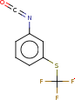
Description: Molecular Weight: 219.18 TSCA: Not listed on TSCA inventory; for R&D use only
- Boiling Point: 113 F
-
Supplier: SAE International
Description: This specification covers a two-component, polytetrafluoroethylene-filled polyurethane coating material supplied in kit form.
-
Supplier: SynQuest Laboratories, Inc.
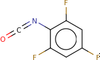
Description: Molecular Weight: 173.09 TSCA: Not listed on TSCA inventory; for R&D use only
- Purity: 85 %
-
Description: ISO 14896:2009 specifies two methods for the measurement of the isocyanate content of aromatic isocyanates used as polyurethane raw materials. Method A is primarily applicable to refined toluene diisocyanate (TDI), methylene-bis-(4-phenylisocyanate) (MDI) and their prepolymers. Method
-
Supplier: CSA Group
Description: ISO 14896:2009 specifies two methods for the measurement of the isocyanate content of aromatic isocyanates used as polyurethane raw materials. Method A is primarily applicable to refined toluene diisocyanate (TDI), methylene-bis-(4-phenylisocyanate) (MDI) and their prepolymers. Method
-
Supplier: FORREST Technical Coatings
Description: A single-component, high-performance, high-gloss acrylic polysiloxane finish coat. Provides a polyurethane-like finish with outstanding weatherability, gloss and color retention. Isocyanate-free formulation makes it safer to use than conventional two-component polyurethanes. Less than 1.0
- Coverage: 500.00000000000006 to 1,219.0000000000002 ft²
- Substrate: Aluminum, Metal, Plastic, Steel
- Features: Chemical / Oil Resistant, Coating, Corrosion Inhibiting / Rust Preventive, Other, Paint, Protective, Touch-Up, Wear Resistant (Abrasion / Erosion), Weather / UV Resistant
- Location / Orientation: Exterior, Interior
-
Supplier: AMPP Resources
Description: You are purchasing a downloadable pdf of this Standard. This technology update defines and distinguishes various isocyanate structures, and describes their role in the formulation of coatings and coatings raw materials. It also illustrates potential health hazards associated with the handling
-
Description: ISO 10283:2007 specifies a gas-chromatographic method for determining monomeric diisocyanates such as toluene diisocyanate, hexamethylene diisocyanate, isophorone diisocyanate, diphenylmethane diisocyanate and other diisocyanates in isocyanate resins and in solutions prepared from such
-
Description: Plastics -- Aromatic isocyanates for use in the production of polyurethane -- Determination of acidity
-
Supplier: CSA Group
Description: ISO 15028:2014 specifies a method for the determination of the hydrolysable-chlorine content of toluene-2,4-diisocyanate, toluene-2,6-diisocyanate or mixtures of the two. This test method may also be applied to other isocyanates of suitable solubility, such as crude or refined polymeric
-
Supplier: CSA Group
Description: ISO 26603:2017 specifies the determination of the total chlorine content of aromatic isocyanates used in the preparation of polyurethanes. The difference between the total chlorine content and the hydrolyzable chlorine content (see ISO 15028) is a measure of the process solvents left in the
-
Description: ISO/TR 17737 provides industrial hygienists, employers and workers with a broad overview of isocyanates, their uses in industry, methods of measurement and guidance on choosing the appropriate sampling strategy. While not all issues can be addressed here in detail, ISO/TR 17737 discusses












Find Suppliers by Category Top
Featured Products Top
-
 The IsoSense TDI Detection Kit is specifically designed for personal exposure evaluations, area surveys, and emergency response. Samples are taken by placing a pretreated test strip in a specially designed test strip holder. Once the sampling is complete, remove the test strip and compare the color change with the dose estimator (included) to determine the concentration. The IsoSense Sampling Kit includes an IsoSense pump unit, sample head, concentration calculator, flow test kit, 20 test... (read more)
Browse Gas Instruments Datasheets for DOD Technologies Inc. -
Takelec A525S. The solvent based adhesive TAKELAC A-525S is a polyester polyol with a low coating weigh of 3.0-4.0g/m2. It is bis-phenol A and organotin compound free. TAKELAC A-525S is used in conjunction with the co-reactant, TAKENATE A-50, an isocyanate terminated hardener, to produce a two-component polyurethane adhesive used for dry lamination, such as PET/Al/CPP, PET/Ny/Al/CPP, PET/Al/Ny/CPP, PET/Ny/CPP or Ny/CPP. TAKELAC A-670A. Solvent free adhesive TAKELAC A-670A is a polyester polyol... (read more)
Browse Polyurethane Adhesives and Sealants Datasheets for Mitsui Chemicals America, Inc. -
interconnects. Dual-Cure Processing Flexibility. The material cures in seconds upon exposure to UV or visible light and includes a secondary heat-cure mechanism for shadowed areas. This dual-cure feature ensures complete polymerization even in dense assemblies or under components, improving overall reliability and throughput. Process and Performance Advantages. The one-part formulation simplifies dispensing and eliminates mixing or pot-life concerns. Formulated without solvents or isocyanates... (read more)
Browse Encapsulants and Potting Compounds Datasheets for Dymax -
. For CLPx replacement parts/accessories, please click here. In a bind or want to try-before-you-buy? Check out our short-term loaner program today!. For more information on isocyanates and OSHA standards, please click here. Follow us on: Facebook. YouTube. LinkedIn. DOD Technologies. The Leader In Low-Level Gas Detection. Manufacturer of low-level gas detection systems and solutions. Our product portfolio includes colorimetric, electrochemical, catalytic bead, FTIR, and PID technologies to detect... (read more)
Browse Gas Instruments Datasheets for DOD Technologies Inc. -
of gas hazards. We also offer routine maintenance and repair, product loaner options, and on-site field service support. In a bind or want to try-before-you-buy? Check out our short-term loaner program today!. For more information on isocyanates and OSHA standards, please click here. (read more)
Browse Gas Sensors Datasheets for DOD Technologies Inc. -
with relay & analog outputs, and can also be integrated digitally. Please click here for ChemLogic CL1 Replacement Cassette options. Please click here for CL1 / CL2 Replacement Parts & Accessory options. For more information on isocyanates and OSHA standards, please click here. Foam Manufacturing. Foam produced from polyurethane is used in so many facets of today 's everyday life we tend to take it for granted. From mattresses to adhesives to packaging to children 's toys, foam is all around us... (read more)
Browse Datasheets for DOD Technologies Inc. -
with relay & analog outputs, and can also be integrated digitally. Please click here for ChemLogic CL1 Replacement Cassette options. Please click here for CL1 / CL2 Replacement Parts & Accessory options. For more information on isocyanates and OSHA standards, please click here. Foam Manufacturing. Foam produced from polyurethane is used in so many facets of today 's everyday life we tend to take it for granted. From mattresses to adhesives to packaging to children 's toys, foam is all around us... (read more)
Browse Datasheets for DOD Technologies Inc. -
WHAT IS REACTION INJECTION MOLDING?. Reaction injection molding (RIM) is a thermoset plastic molding technique where two liquid reactants - an isocyanate component and a polyol resin mixture - are injected into a metal mold at relatively high temperatures and pressure. The mold is composed of two halves that are separated once the material reaction has taken place inside. Reaction time is typically just minutes long, making for more efficient part production. WHAT IS PLASTIC PRODUCT DESIGN... (read more)
Browse Datasheets for Osborne Industries, Inc. -
effects of polyurethane foam in homes and workplaces. Consumers, builders, and industries want accurate information about potential health risks. Questions often focus on whether polyurethane foam releases harmful chemicals and if everyday exposure could affect long-term health. Understanding Polyurethane Foam Composition. A chemical reaction between isocyanates and polyols produces polyurethane foam, which has a solid structure. The density, flexibility, and resilience of the foam are influenced... (read more)
Browse Foams and Foam Materials Datasheets for General Plastics Manufacturing Co.
Conduct Research Top
-
Isolating the Best Pumping Option for Isocyanates
The Bhopal disaster demonstrated the hazards involved with handling isocyanates. In today's manufacturing environment, particularly in the polyurethane industry, isocyanates are one of the most important compounds within the production process. Many short- and long-term risks are involved
-
Using In-process Viscometry Measurements to Predict Prepolymer Molecular Weight and to Control the Molecular Weight of Polyurethanes (.pdf)
Polyurethanes, which are prepared by the reaction of an isocyanate with a polyol, are commonly employed in a broad range of applications such as paints and inks. The physical properties and the performance characteristics of the polyurethane that is formed depend on the synthetic route
More Information Top
 Indicates content that may require registration and/or purchase.

-
Wiley Guide to Chemical Incompatibilities 3rd Edition Complete Document
… ammonia; aliphatic amines, bromine, caustic materials, chlorine, ketones, halogens, hydrogen cyanide; hydrogen sulfide, isocyanates , oxidizers, phenols, phosphorus.
-
Organic Coatings: Science and Technology
MF Resin Reactions with Carboxylic Acids, Urethanes, Carbamates, and Malonate-Blocked Isocyanates / 227 .
-
https://openaccess.leidenuniv.nl/bitstream/handle/1887/18270/main%20text_PhD%20Thesis_TJ%20Mooibroek_2011_.pdf?sequence=15
Towards a sustainable synthesis of aromatic isocyanates .
-
Asthma in the Workplace
… levels of exposure laboratory animal proteins in a pharmaceutical company (104), platinum (105), isocyanates (106, 107) and …
-
Polyurethanes
Isocyanates and Polyols .
-
Handbook of Adhesive Chemical and Compounding Ingredients
… strong oxidizing agents, alcohols; avoid contact with copper or copper alloys; contamination of isocyanates with water could …
-
Pesticides and Intermediates
The economics of each route, including the manufacture of the inter- mediates methyl isocyanate and methallyl chloride …
-
Polyurethanes
Isocyanate Reactions .