
Products & Services
See also: Categories | Featured Products | Technical Articles | More Information-
Description: General Polymers 4880 Polyurea Joint Sealant is a two component, high solids, rapid cure polyurea for control joints and cracks. 4880 Polyurea Joint Sealant has a unique combination of hardness and flexibilityy which supports heavy loads while minimizing (reducing)
- Operating / Use Temperature: -20 to 140 F
- Features: Coating, Wear Resistant (Abrasion / Erosion)
- Substrate: Concrete / Masonry
- Location / Orientation: Floor
-
Description: CoroBond™ FLEXIBLE JOINT SEALANT is a 2 component polymer hybrid containing both urethane and epoxy resins in order to provide a resilient filler for horizontal expansion joints. This chemistry allows excellent flexural strength and elongation while maintaining impressive
- Applied Thickness / Gap Fill: 0.25 to 1 inch
- Viscosity: 200 to 550 cP
- Use Temperature: -40 to 200 F
- Elongation: 80 %
-
Supplier: Wacker Chemical Corp.
Description: One-component, acid-curing, high-performance silicone sealant for sealing of joints in food-contact applications, and for container construction. ELASTOSIL® 4710 cures at room temperature under the action of atmospheric moisture to give a permanently flexible silicone rubber. Special
- Use Temperature: -40 to 356 F
- Tensile Strength (Break): 87.0221036143182 psi
- Elongation: 250 %
- Features: Caulk / Grout, Gap Filling Sealant / FIP Gasket, Other
-
-
Supplier: Gardico, Inc.
Description: Expanded PTFE extruded: pH 0-14, temperature to 600, pressure to 3000 psi Seals with low bolt loads, resists cold flow and has good torque retention vs other PTFE materials 1/8" to 1"
-
Supplier: Accuris
Description: JOINT SEALANTS
-
Description: ArmorSeal®FLEXIBLE JOINT SEALANT is a 2 component polymer hybrid containing both urethane and epoxy resins in order to provide a resilient filler for horizontal expansion joints. This chemistry allows excellent flexural strength and elongation while maintaining impressive
- Viscosity: 20,000 to 55,000 cP
- Use Temperature: -40 to 200 F
- Elongation: 80 %
- Substrate Compatibility: Concrete / Masonry
-
Supplier: Accuris
Description: Hot applied joint sealants - Part 7: Function testing of joint sealants
-
Supplier: Phelps Industrial Products
Description: A radically different form of PTFE fluorocarbon material, although very strong and tough, it is soft and "marshmallowy" in character, permitting it to conform easily to irregular surfaces and to compress to a thin, wide ribbon under pressure. Because it is 100% PTFE fluorocarbon, it can be used in
- Use Temperature: -450 to 600 F
- Features: Gap Filling Sealant / FIP Gasket, Non-corrosive Cure, Specialty / Other
- Industry: OEM / Industrial
-
Supplier: Palmetto, Inc.
Description: Transmission cases Manways Reactor vessels Towers Compressor housings Glass joints Drum lids Heat exchangers Portholes Sight glasses Flanges Domes Ducts Solar heaters Joints Evaporators Tanks Pump cases Columns Digesters
-
Supplier: Accuris
Description: Hot applied joint sealants \x96 Part 7: Function testing of joint sealants
-
Supplier: Accuris
Description: Cold applied joint sealants - Test methods - Part 9: Function testing of joint sealants
-
Supplier: Wacker Chemical Corp.
Description: One-component, acid-curing, silicone sealant for general-purpose sealing. ELASTOSIL® 5000 cures at room temperature under the action of atmospheric moisture to give a permanently flexible silicone rubber. Special features non-sag ready gunnability at low (+5 °C) and high (+40 °C) temperatures
- Use Temperature: -40 to 212 F
- Tensile Strength (Break): 101.5257875500379 psi
- Elongation: 250 %
- Industry: Building / Construction
-
Supplier: Wacker Chemical Corp.
Description: resistance Application ELASTOSIL® 8510 has been specially developed for natural substrates such as marble, granite, sandstone and quartzite. In contrast to ordinary silicone sealants, contact with these construction materials causes no staining of joint edges. Moreover, ELASTOSIL® 8510
- Tensile Strength (Break): 72.5184196785985 psi
- Elongation: 250 %
- Industry: Building / Construction, Medical / Food (Sanitary / FDA)
- Features: Caulk / Grout, Gap Filling Sealant / FIP Gasket, Other
-
Supplier: Titebond
Description: Titebond Self-Leveling Concrete Floor Joint Sealant is a one-component, self-leveling, premium grade, high performance advanced polymer sealant which is specifically engineered for contraction/expansion joints and cracks in concrete decks and floors. Self-Leveling
- Viscosity: 110,000 cP
- Features: Specialty / Other
-
Supplier: Newark, An Avnet Company
Description: Fixmaster(R) Flexible Joint Sealant
-
Supplier: Henkel Corporation - Industrial
Description: Loctite® Fixmaster® Flexible Joint Sealant is a two-component, urethane-based sealant with high chemical resistance, excellent tensile strength, adheson, flexibility, and elongation. Expansion Joints Expansion joints, or transverse joints, prevent cracks in
- Viscosity: 17,000 cP
- Use Temperature: 65 to 400 F
-
Supplier: Daemar Inc.
Description: Chemcord 100% expanded virgin PTFE joint sealant. Maximum performance gasket material. FDA approaved. Temp: to 600ºF (315ºC) pH: 0 - 14 Pressure: to 3000 psi (pump service)
- Cross Sectional Size: 0.1875 inch
- Specialty Application: Pump / Rotating Equipment Packing
-
Supplier: ASTM International
Description: Stnadard Specification for Elastomeric Joint Sealants
-
Supplier: Fosroc Limited
Description: Cold Applied, High Performance, Pitch Free, Pavement Joint Sealant.
-
Supplier: ASTM International
Description: bridges. A sealant qualifying under this specification shall be classified as to type, grade, class and use as follows: type S - a single-component sealant, type M - a multicomponent sealant, grade P - a pourable or selfleveling sealant, grade NS - a nonsag or gunnable
-
Supplier: Adhesives.org
Description: This specification covers the properties of a cured single- or multicomponent cold-applied elastomeric joint sealant for sealing, caulking, or glazing operations on buildings, plazas, and decks for vehicular or pedestrian use, and types of construction other than highway and airfield
-
Supplier: Adhesives.org
Description: installation of the components of a sealed joint. It presents guidelines for the use and application of the various materials, design of a sealant joint for a specific application, and environmental conditions and effects that are known to detrimentally affect a sealant
-
Supplier: Triangle Fluid Controls Ltd.
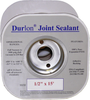
Description: Durlon® Joint Sealant is a highly fibrillated expanded PTFE form-in-place sealant for gasketed joints. Supplied on spools, it is not dependent on flange dimensions. Durlon® Joint Sealant comes in various thicknesses with a high quality adhesive backing to
-
Supplier: Adhesives.org
Description: This test method covers four types of laboratory tests to determine if a joint sealant has a probability of staining a porous substrate (such as marble, limestone, sandstone, and granite). The tests are on compressed samples and include (1) storage under standard laboratory conditions,
-
Supplier: Adhesives.org
Description: This test method describes a laboratory procedure for measuring modulus, tear, joint movement ability and adhesion properties of applied, Precured Elastomeric Joint Sealants, hereinafter referred to as "applied seal" and if not applied, hereinafter referred to as "seal," on
-
Description: This International Standard specifies a method for the determination of the resistance to flow of sealants, by loss of cohesion under their own weight. These sealants are used in joints in vertical surfaces in building construction.
-
Supplier: CSA Group
Description: This International Standard specifies a method for the determination of the resistance to flow of sealants, by loss of cohesion under their own weight. These sealants are used in joints in vertical surfaces in building construction.
-
Supplier: CSA Group
Description: This International Standard specifies the types and classes of sealants used in building construction according to their applications and performance characteristics. The requirements and respective test methods for the different classes are also given.
-
Description: This International Standard specifies the types and classes of sealants used in building construction according to their applications and performance characteristics. The requirements and respective test methods for the different classes are also given.
-
Description: This International Standard specifies a method for the determination of the elastic recovery of sealants after maintained extension.
-
Supplier: Acoustiblok, Inc.
Description: Acoustiblok Sound Sealant is a fire-rated caulk with superior acoustical isolation properties, formulated to bond to Acoustiblok material. All joints and penetrations in Acoustiblok material must be sealed, to obtain rated sound reduction values. Available in 10 oz & 29 oz tubes, and
- Industry: Building / Construction
- Features: Caulk / Grout, Other
- Substrate Compatibility: Dissimilar Substrates
- Cure / Technology: Room Temp. Cure / Vulcanizing, Single Component System
-
Supplier: Fosroc Limited
Description: Sealant for Use with Nitokit System
- Features: Caulk / Grout, Leveling / Filling Compound
-
Description: ISO 8394-1:2010 specifies a method for determining the extrudability of sealants. The method is for use in testing the extrudability of a sealant.
-
Supplier: Radwell International
Description: JOINT SEALANT, 3/4 INCH WIDTH, 30 FOOT LENGTH. FREE 2 YEAR RADWELL WARRANTY
-
Supplier: CSA Group
Description: This International Standard specifies a method for the determination of the adhesion/cohesion properties of sealants with predominantly plastic behaviour which are used in joints in building construction.









Find Suppliers by Category Top
Featured Products Top
-
 Sealing Screw or Sealant?. When choosing sealing options for equipment, engineers sometimes ask if adhesives applied to fasteners work as well as sealing screws and bolts. The short answer is no. Let 's delve into why. What 's the difference?. A sealant is a material used to fill and seal gaps, joints, or seams to prevent passage of liquids or gases. It is often applied to surfaces or between plates in a liquid or paste form and then cures or hardens over time to create a protective barrier... (read more)
Browse Self-sealing Fasteners Datasheets for ZAGO Manufacturing Company, Inc. -
A comprehensive industry-authored guide detailing the type and function of adhesives and sealants used in bodies and cabs (body-in-white, BIW) of light vehicles and heavy trucks, common test methods, and selection considerations for OEM 's. Topics covered include: Adhesives and Sealants Used. Structural Bonding, Joining Dissimilar Materials, Hem Flange Bonding. Anti-flutter Adhesives & Expandable Sealants. Adhesive & Sealant Chemistries. Joint Design Considerations. Adhesive... (read more)
Browse Standards and Technical Documents Datasheets for Adhesives.org -
A comprehensive industry-authored guide detailing the typical applications of adhesives and sealants in OEM automotive and heavy truck paint and assembly shops, design and selection considerations, common test methods and much more. Topics covered include: Adhesives and Sealants Used. Sealing: Automotive, Commercial Vehicle, Test & Validation. Adhesives: Post-Prime - Pre-Topcoat Structural Bonding and Other Materials. Body Trim and Assembly - PSAs, Corrosion Control, Body Trim Assembly, Glazing... (read more)
Browse Standards and Technical Documents Datasheets for Adhesives.org -
Metal-to-metal midlock compression seal fittings. Conax Technologies ' MK midlock fittings seal a single tube or probe. Featuring a metal-to-metal seal rather than our standard soft sealant technology, MK fittings are used where a joint must be opened and resealed in the same setting. Their unique design forms the seal well within the body housing to provide superior performance in high vibration applications. The MK fitting uses compression to deform a stainless steel ferrule against the tube... (read more)
Browse Sealing Glands Datasheets for Conax Technologies -
fittings seal a single tube or probe. Featuring a metal-to-metal seal rather than our standard soft sealant technology, MK fittings are used where a joint must be opened and resealed in the same setting. Their unique design forms the seal well within the body housing to provide superior performance in high vibration applications. The single ferrule is self-aligning to eliminate the risk of lost pieces. Electrode series fittings. Model EG series single electrode compression seal feedthroughs... (read more)
Browse Sealing Glands Datasheets for Conax Technologies -
types of ductwork and leaking sites. 1. Mastic Sealant. Mastic is a thick, flexible paste which is applied to duct joints and seams to form an airtight seal. It sticks easily to metal surfaces, making it suitable for stationary ductwork and rigid connections. Once dried, it forms a strong barrier against air leaks, increasing HVAC efficiency. 2. Foil Tape And Mastic Tape. Foil and mastic tapes offer a quick and simple solution for minor ductwork leaks. Unlike standard duct tape, these UL-listed... (read more)
Browse Datasheets for Petersen Products Co. -
environments. In multi-joint robotic arms, it also helps to reduce noise and micro-vibrations, optimizing dynamic performance during high-speed movement. From a material performance perspective, high-quality thermal potting adhesives offer a well-balanced combination of thermal conductivity, electrical insulation, and adhesion strength. Depending on the application, products with thermal conductivity ranging from 0.8 to 3.0 W/m .K can be selected. They typically cure at room temperature or with mild heat... (read more)
Browse Silicone Adhesives and Sealants Datasheets for Dongguan Sheen Electronic Technology Co., Ltd. -
Compression Limiters are used to preserve a threaded joint 's integrity. As the bolt is tightened to achieve the required friction between threads, the plastic is compressed. Without a Compression Limiter, plastic will either crack or creep, resulting in the loosening and eventual failure of the joint. The Compression Limiter absorbs the load when the bolt is tightened to its recommended value. The plastic is isolated from excessive compressive loads and plastic integrity is maintained... (read more)
Browse Compression Limiters Datasheets for SPIROL
Conduct Research Top
-
Channel Drain Joint Sealant
Whether you 're needing to comply with local code requirements, provide protection at a joint expansion/contraction point, or protect the environment from accidental chemical seepage, you may need to seal your channel drain beyond concrete encasement, to guard against leaks. To accomplish this, you
More Information Top
 Indicates content that may require registration and/or purchase.

-
Olin's Construction: Principles, Materials, and Methods, 9th Edition
If the control joint is to be exposed to the weather or to view, a recess should be provided to receive a joint sealant by rak- ing the mortar out to a depth of about ¾ in. (19 mm) after it has …
-
CONCRETE PAVEMENT REPAIR MANUALS OF PRACTICE
In designing the dimensions of a joint sealant and the sealant reservoir, two major items must be determined: the shape factor and the expected joint movement.
-
Construction Waterproofing Handbook, Second Edition > SEALANTS
When envelope components are involved that are not permeable, such as glass or metal, sealant joints can be designed using secondary seal systems to act as a backup barrier to the primary joint sealant material.
-
Recent Developments in the Design of Sealant Joints for Movement and Other Effects
"C1193-91", Standard Guide for Use of Joint Sealants ", Annual Book of ASTM Standards, Volume 04.07, ASTM, Philadelphia, 1994.