
Products & Services
See also: Categories | Featured Products | Technical Articles | More Information-
Supplier: Schmalz Inc.
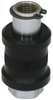
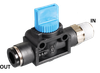
Description: Vacuum valve for manual switching of vacuum or compressed air circuits Robust construction permits high switching frequencies For use in vacuum gripping systems and handling devices May be installed in any orientation
- Valve Size: 0.2755907 inch
- Actuation: Manual / Hand
- Features: Other
-
Supplier: Schmalz Inc.
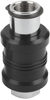
Description: Vacuum valve for manual switching of vacuum or compressed air circuits Robust construction permits high switching frequencies For use in vacuum gripping systems and handling devices May be installed in any orientation
- Valve Size: 0.3149608 inch
- Actuation: Manual / Hand
- Features: Other
-
Supplier: Schmalz Inc.
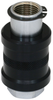
Description: Vacuum valve for manual switching of vacuum or compressed air circuits Robust construction permits high switching frequencies For use in vacuum gripping systems and handling devices May be installed in any orientation
- Valve Size: 0.4724412 inch
- Actuation: Manual / Hand
- Features: Other
-
-
Supplier: Schmalz Inc.
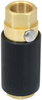
Description: Vacuum valve for manual switching of vacuum or compressed air circuits Robust construction permits high switching frequencies For use in vacuum gripping systems and handling devices May be installed in any orientation
- Valve Size: 0.9448824 inch
- Actuation: Manual / Hand
- Features: Other
-
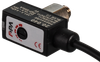
Supplier: FIPA Inc.
Description: Switch outputs a digital signal when a specific vacuum level is reached Vacuum level is manually set with a potentiometer screw Hysteresis is fixed Red LED indicates set level reached Space-saving installation on ejectors thanks to very small design
- Vacuum Switch Set point Range: -744.6969631679992 to 0.0022879679996563583 torr
- Operating Temperature: 32 to 140 F
- Switched Current: 0.01 amps
- Features: Other
-
Supplier: FIPA Inc.
Description: Switch outputs a digital signal when a specific vacuum level is reached Vacuum level is manually set with a potentiometer screw Hysteresis is fixed Red LED indicates set level reached Space-saving installation on ejectors thanks to very small design
- Vacuum Switch Set point Range: 1,509.2999999999997 to 760 torr
- Operating Temperature: 32 to 122 F
- Switched Current: 0.08 amps
- Signal Output: Analog Voltage
-
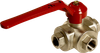
Supplier: FIPA Inc.
Description: Switching on/off individual suction cups in vacuum systems Blow-off and ventilation of suction cups Valve type with L-bore
- Port Size / OD: 0.25 to 1.5 inch
- Valve Actuation: None / Manual
- Features: Specialty / Other
-
Supplier: Inductotherm Group
Description: CVD / CVI. Consarc offers offer top or bottom loading induction heating furnaces Vacuum induction heating furnaces utilise a static cylindrical induction coil with graphite susceptor and carbon based insulation. Features Vacuum induction heating furnaces utilize a static cylindrical
- Process Temperature: 1,400 to 2,500 C
- Height: 1,500 to 2,000.0000000000002 mm
- Width / Tube O.D.: 1,220.0000000000002 to 2,500.0000000000005 mm
- Application: Heat Treating
-
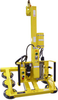
Supplier: Wood's Powr-Grip Co., Inc.
Description: Standard Features: Green lift light Vacuum gauge Vacuum reserve tank Vacuum line filter Spring-mounted vacuum pads Industrial grade switches Twist-lock electrical plug Blow-off for quick release
- Maximum Load Capacity: 0.375 tons
- Use: General Industrial, Sheet / Plate
- Product Type: Lifter, Vacuum Lifter
- Features: Other
-
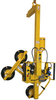
Supplier: Wood's Powr-Grip Co., Inc.
Description: Standard Features: Green lift light Vacuum gauge Vacuum reserve tank Vacuum line filter Spring-mounted vacuum pads Industrial grade switches Twist-lock electrical plug Blow-off for quick release
- Maximum Load Capacity: 0.25 tons
- Use: General Industrial, Sheet / Plate
- Product Type: Lifter, Vacuum Lifter
- Features: Other
-
Supplier: Wood's Powr-Grip Co., Inc.
Description: Standard Features: Green lift light Vacuum gauge Vacuum reserve tank Vacuum line filter Spring-mounted vacuum pads Industrial grade switches Twist-lock electrical plug Blow-off for quick release
- Maximum Load Capacity: 0.25 tons
- Use: General Industrial, Sheet / Plate
- Product Type: Lifter, Vacuum Lifter
- Features: Other
-
Supplier: Wood's Powr-Grip Co., Inc.
Description: Standard Features: Green lift light Vacuum gauge Vacuum reserve tank Vacuum line filter Spring-mounted vacuum pads Industrial grade switches Twist-lock electrical plug Blow-off for quick release
- Maximum Load Capacity: 0.35 tons
- Use: General Industrial, Sheet / Plate
- Product Type: Lifter, Vacuum Lifter
- Features: Other
-
Supplier: PAC Machinery Group
Description: The PVT MED validatable tabletop vacuum pouch sealer is ideal for those medical packagers with limited space, budget or production requirements, or where the security of a medical vacuum sealer is needed. Available in three sealbar lengths, the PVT MED comes with a Temperature
- Packaging: Bag / Pouch
- Goods: Consumer Packaging
- Closing Method: Heat Seal
- Type: Manual
-
Supplier: Terra Universal, Inc.
Description: override vacuum timer. Other standard features include a jaw-closing/heat-only safety circuit; vacuum-seal sequence switch, seal only switch, and vacuum gauge. The Backflush model includes a gas-vacuum-seal sequence switch and gas pressure regulator and gauge. Requires
- Features: Aseptic / Sanitary, Other
- Packaging: Bag / Pouch
- Goods: Consumer Packaging
- Industry: Electronics / Semiconductor, Industrial / General Use
-
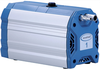
Supplier: VACUUBRAND, Inc.
Description: lab work. The PTFE diaphragm and valves are rugged and provide good chemical resistance. (See our ME 1C pump if working with less aggressive reagents.) An optional manual regulator valve with dial gauge enables variable fine adjustment of the pumping speed and ultimate vacuum.
- Ultimate Operating Vacuum: 75.0283824473074 torr
- Pumping Speed: 0.4116 to 0.4998 CFM
- Operating Temperature: 50 to 104 F
- Motor Power: 0.0536088153961128 HP
-
Supplier: FIPA Inc.
Description: Switching on/off individual suction cups in vacuum systems Blow-off and ventilation of suction cups
- Port Size / OD: 0.125 to 0.5 inch
- Valve Actuation: None / Manual
- Features: Specialty / Other
-
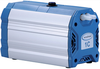
Supplier: VACUUBRAND, Inc.
Description: work. The PTFE diaphragm and valves are rugged and provide good chemical resistance. (See our ME 1C pump if working with less aggressive reagents.) An optional manual regulator valve with dial gauge enables variable fine adjustment of the pumping speed and ultimate vacuum.
- Ultimate Operating Vacuum: 75.0283824473074 torr
- Pumping Speed: 0.4116 to 0.4998 CFM
- Operating Temperature: 50 to 104 F
- Motor Power: 0.0536088153961128 HP
-
Supplier: BUCHI Corporation
Description: Vacuum Controller V-850/855 - the smart way to regulate a vacuum The vacuum controllers are the result of close collaboration with customers during development to adapt the controllers even more precisely to the needs of day-to-day work in the laboratory. Only a defined,
- Power Source: Electric
- Application: Research and Development
- Type: Vacuum Distillation
-
Supplier: Kalamazoo Industries, Inc.
Description: pre-tensioned one lever belt change…FAST !! Dimensions: L12″ x W14″ x H60″, Weight: 500 lbs. Models: # S612-1 No vacuum, 1 phase/220 volt # S612-3 No vacuum, 3 phase 220 or 440 volt # S612V-1 Vacuum base, 1 phase/220 volt # S612V-3 Vacuum base, 3 phase 220 /440 volt
- Type: Sander
-
Supplier: Busch Vacuum Solutions
Description: variable speed drive, Aqua version available Mink MV claw vacuum pumps are the result of continuous further development in claw vacuum technology by the market leader in dry claw vacuum pumps. Decades of experience in countless applications have led to substantial improvements
- Ultimate Operating Vacuum: 30 torr
- Pumping Speed: 23.5 to 47 CFM
- Operating Temperature: 32 to 104 F
- Motor Power: 2.8 HP
-
Supplier: Millibar, Inc.
Description: The Millibar Manual Tool Changer allows operators to effortlessly change tools for high mix, low volume production applications. Without any tools, quickly switch between adaptive grippers, vacuum grippers, camera calibration stylus, and more. Simply release the locking lever and slide
- Pay Load or Weight: 110.25 lbs
-
Supplier: Fuji Impulse America Corp.
Description: collect within the body of the machine foreign objects such as liquid and powder that were taken in from the bag. Although the ejector-vacuum method does not achieve as high a vacuum rate as using the vacuum pump. Its advantage is the very high speed of de-airing. The
- Packaging: Bag / Pouch
- Closing Method: Heat Seal
- Industry: Industrial / General Use
- Goods: Liquid, Powder / Granular
-
Supplier: SemiProbe
Description: SA-8VP Semiautomatic Vacuum Probing System The ONLY vacuum probing system designed to grow with your requirements and your business Easily customized to meet a variety of applications and budgets Ideal for MEMS, Sensors, Switches, Microbolometers, or any product that is
- Maximum Wafer / Part Size: 200 mm
- Measurements: Area Mapping, Electrical Test - Parametric / In-line
- Mounting / Loading: Manual Loading
- Technology: Optical / Imaging System
-
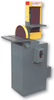
Supplier: Kalamazoo Industries, Inc.
Description: S460V 4″ Belt Sander, Vacuum Base 4″ x 60″ belt 1 HP, 1 PH, or 3 PH 4″ pulley, 3450 RPM, 3600 SFPM, Direct drive Reversible platen 4″ x 17″ Cast iron table 4″ x 6″ Full OSHA guard, Easy tracking , Quick belt change ! DCV-6 Vacuum base 400 CFM Dimensions: L 18″ x W 26″ x H 60″, WT. 485
- Type: Sander
-
Supplier: Charles Ross & Son Company
Description: capacity Stainless steel wetted parts Ribbon agitator for center discharge Designed for vacuum operation 80 grit finish on interior and exterior stainless steel surfaces Bolted cover with inlet connections for charging of raw materials with neoprene O-ring Safety limit switches to
- Capacity: 0.467881911952645 to 514.2690615090929 cubic feet
- Motor Speed: 15 to 100 rpm
- Motor Power: 0.75 to 50 HP
- Mixer Type: Agitator, Ribbon
-
Supplier: Newport MKS
Description: wiring can also damage the controller. Connecting Vacuum Compatible LTA-V6 Vacuum Compatible Versions The LTA series actuators also come in two standard stepper motor models specifically designed for vacuum applications up to 10-6 hPa and are readily available from stock.
- Stroke or X-Axis Travel: 0.9842525 inch
- Rated Speed: 0.009842519685039375 in/sec
-
Supplier: Newport MKS
Description: The Vacuum Compatible LTAHSPPV6 High Speed Motorized Actuator is optimized for high-speed applications and provides a 50 mm travel range. LTA actuators are designed to fit into other vacuum compatible manual stages and opto-mechanical components as direct replacements for
- Stroke or X-Axis Travel: 1.968505 inch
- Rated Speed: 0.01968503937007875 in/sec
-
Supplier: Charles Ross & Son Company
Description: surfaces Neoprene O-ring Designed for vacuum operation Cover includes (2) 3" sight and charge ports and (1) 6" charge port, all with quick disconnect clamps Safety limit switch to prevent operation when cover is raised Dual post hydraulic lift to raise and lower cover Cone includes a 15 psi
- Capacity: 1 cubic feet
- Motor Speed: 100 rpm
- Motor Power: 0.5 HP
- Applications / Industry: Adhesives Processing, Chemical Processing, Cosmetics Processing, Paint / Coating Processing, Pharmaceutical Processing, Plastic / Rubber Processing, Water / Wastewater Treatment
-
Supplier: Infineon Technologies AG
Description: refer to the REF-Vacuum-C101-2ED User Manual for more information. Summary of Features Input voltage 18~30V DC Maximum 25A 600W at 24V DC power input with on board cooling fan Anti-reverse connection protection VSP speed command potentiometer 3 digital Hall interface User UART for
- Category: Development Board
- Features: Other
-
Supplier: Newport MKS
Description: a wide variety of linear stages, mirror mounts, and OEM applications. Vacuum compatible to 10-6 Torr. Note: The connector supplied with the actuator is not vacuum compatible due to various feed-through configurations and customer preferences. Please contact Newport for vacuum
- Stroke or X-Axis Travel: 0.4724412 inch
- Rated Speed: 0.0078740157480315 in/sec
-
Supplier: Newport MKS
Description: designed for vacuum applications up to 10-6 Torr and are readily available from stock. They can be used to upgrade Newport's vacuum compatible mirror mounts to an automated vacuum compatible solution. Hard Coated Actuator Tip TRA actuators also feature a hard-coated steel ball
- Stroke or X-Axis Travel: 0.9842525 inch
- Rated Speed: 0.0078740157480315 in/sec
-
Supplier: Cole-Parmer
Description: • Electric Pump Generates Pressure to 150 psi • The 330 comes in 3 ranges of 30 PSI, 150 PSI and 300 PSI. The 300 PSI version uses a manually operated handpump. • The compact, rugged design operates on eight (8) standard AA Alkaline batteries. • Performs approximately 300 calibration cycles to 150
- Operating Temperature: -50 to 122 F
- Calibrator Style: Battery Powered, Hand Held
- Environmental Properties: Pressure / Vacuum
-
Supplier: Edwards Vacuum
Description: The Edwards GV range of stainless steel bellows sealed gate valves are designed for applications requiring overall leak tightness and a minimum of hydrocarbon in the residual atmosphere. These superior quality valves offer high vacuum integrity coupled with maximum conductance. This product
- Port Size / OD: 2.00000108 inch
- Operating / Bake-out Temperature: 212 to 482 F
- Features: Actuator Shaft / Stem Bellows, High Conductance
- Valve Seat Seal: Elastomeric Seal / O-ring
-
Supplier: PTB Sales, Inc.
Description: The Varian VacIon controllers includes the MiniVac and MultiVac for various power and interfacing needs. PTB sells each ion pump controller cleaned, tested and with properly functioning lights and switches. Go to Varian for current user manuals.
-
Supplier: Labconco Corporation
Description: pull-down with manual override switches; hot gas defrost and switch; retractable collector drain line; 3" diameter port for connection of drying accessory; power switch; rear-mounted electrical receptacle for vacuum pump connection (pump not included); 3/4" OD vacuum
- Operating Temperature: -58 F
- Equipment Type: Freeze Dryer
- Applications / Materials Handled: Solutions / Liquids













Find Suppliers by Category Top
Featured Products Top
-
 Compact, versatile vacuum switch suited to numerous applications. Features efficient Nega-Rate (R) Belleville disc spring for stable set points and is field adjustable through the pressure port. Once adjustments are made and switch is installed, it becomes tamper proof. Electrical: Snap action electrical switch recognized by Underwriters ' Laboratories, Inc. and CSA International. Electrical Connection: 1/2 NPT male conduit connection with PVC insulated 18 AWG, 18" long leads. Pressure... (read more)
Browse Vacuum Switches Datasheets for Neo-Dyn -
Ultra low pressure and vacuum to pressure crossover switch. Unique construction using efficient Nega-Rate® Belleville disc spring for stable set points and high proof pressure. Explosion proof enclosure and wide range of wetted materials makes this switch especially well suited for hazardous or corrosive atmospheres. Specifications. Electrical: Snap action electrical switch listed by Underwriters' Laboratories, Inc., FM Approval and CSA International. Electrical Connection: 1/2 NPT male conduit... (read more)
Browse Vacuum Switches Datasheets for Neo-Dyn -
Series VTBS3000 Fixed Set Point Vacuum Switches convert a negative (vacuum) pressure signal to an electrical output. In response to a change in pressure, movement of an elastomeric diaphragm opens or closes an electrical circuit based on a predetermined pressure set point. Fixed set point style switches are widely used where basic on/off switching is required. Tecmark Series V4000 Vacuum Switches convert a negative pressure signal to an electrical output. In response to a change in negative... (read more)
Browse Vacuum Switches Datasheets for Tecmark Corporation -
OEM Pressure Switches for Air, Gas, and Liquids. Tecmark Pressure Switches are available in various configurations for air, gas and liquid sensing applications. Tecmark switches can sense pressures as low as 2" w.c. up to 100 PSIG with electrical ratings up to 25 amps. Multiple sample fitting configurations and diaphragm materials are available without the need for custom manufacturing. Tecmark (R). Tecmark (R) designs, develops and manufactures pressure switches, vacuum switches, air switches... (read more)
Browse Pressure Switches Datasheets for Tecmark Corporation -
vacuum switches, air switches and other electrical components, including level sensors, thermostats, timers, spa side controls and more. For years, our specialty in air switch and pressure switch controls has helped us deliver hundreds of product variations to market segments worldwide. We provide options for OEMs with interchangeable components allowing for design flexibility. Quality control at every step of the process, with an emphasis on rigorous product testing. Tecmark is certified to ISO... (read more)
Browse Air Switches Datasheets for Tecmark Corporation -
vacuum switches, air switches and other electrical components, including level sensors, thermostats, timers, spa side controls and more. For years, our specialty in air switch and pressure switch controls has helped us deliver hundreds of product variations to market segments worldwide. We provide options for OEMs with interchangeable components allowing for design flexibility. Quality control at every step of the process, with an emphasis on rigorous product testing. Tecmark is certified to ISO... (read more)
Browse Pressure Switches Datasheets for Tecmark Corporation -
develops and manufactures pressure switches, vacuum switches, air switches and other electrical components, including level sensors, thermostats, timers, spa side controls and more. For years, our specialty in air switch and pressure switch controls has helped us deliver hundreds of product variations to market segments worldwide. We provide options for OEMs with interchangeable components allowing for design flexibility. Quality control at every step of the process, with an emphasis on rigorous... (read more)
Browse Pump Controllers Datasheets for Tecmark Corporation -
OEM Pressure Switches for Air, Gas, and Liquids. Tecmark Pressure Switches are available in various configurations for air, gas and liquid sensing applications. Tecmark switches can sense pressures as low as 2" w.c. up to 100 PSIG with electrical ratings up to 25 amps. Multiple sample fitting configurations and diaphragm materials are available without the need for custom manufacturing. Tecmark (R). Tecmark (R) designs, develops and manufactures pressure switches, vacuum switches, air switches... (read more)
Browse Pressure Switches Datasheets for Tecmark Corporation -
under full mechanical, electrical and thermal loads. Series TBS3000 & VTBS3000. Series TBS3000 fixed set point pressure switches and VTBS3000 fixed set point vacuum switches convert a pressure signal to an electrical output. In response to a change in pressure, movement of an elastomeric diaphragm opens or closes an electrical circuit based on a predetermined pressure set point. Fixed set point style switches are widely used where basic on/off switching is required. The non adjustable fixed set... (read more)
Browse Pressure Switches Datasheets for Tecmark Corporation -
The Telemecanique Sensors XMLBM05A2S11 is an industrial electromechanical vacuum-pressure switch from the XM pressure sensor range. Designed for control-circuit applications, it monitors fluid pressure and changes the state of its electrical contact when the pressure reaches an adjusted switching threshold. The device can therefore start, stop, enable, disable, or alarm connected control equipment without requiring a separate electronic pressure transmitter. With a nominal pressure rating of 5... (read more)
Browse Electromechanical Relays Datasheets for ERSAELECTRONICS PTE. LTD.
Conduct Research Top
-
Vacuum Switch Selection Guide
Vacuum Switch Selection Guide
-
Pressure/Vacuum Switch Selection Guide
Pressure/Vacuum Switch Selection Guide
-
Current Chopping a Simple Explanation, and Calculations to Determine Transient Voltages When Using Vacuum Interrupters
Current chopping is a term that came to our vocabulary with the advent of vacuum. switching which was commercially started back in the 1950's. Earlier switching means in. air or oil are in terms of dielectric recovery rate relatively slow and as the main contacts. would part the arc would go
-
Power Switching
The ability of a vacuum relay to switch both resistive and inductive loads greatly simplifies the problems of the systems engineer. In power switching applications non-isolated relays (which includes all relays not identified as ground isolated) must be used with caution when the relay mounting
-
Sealing the Package: Potting and the Flat Ribbon in Switches and Relays
Last time, we talked about the importance of achieving a vacuum-tight glass to metal seal in electronic products. Similarly, a method known as potting (also called encapsulation) is often used in manufacturing to create a tightly sealed package for electronic switching devices, including the flat
-
RF Switching
The primary reasons for using vacuum relays in RF applications are their exceptional insulating qualities and their low RF contact resistance-as low as .03 ohms at 30 MHz. This low RF resistance remains stable throughout the service life of the relay because of the advantages provided by the vacuum
-
Linear vs. Switching Power Supplies: Look at the Facts Before You Leap to Conclusions
Ask almost any engineer about linear power supplies, and his or her instinctive reaction likely is, "Sorry, I can't use them - they're too inefficient." Any consideration of using a linear supply usually ends right there; it is as if they are being asked to go back to a vacuum tube AM radio. Still
-
required many years of painstaking research. Before transistors, computers relied on slow, inefficient vacuum tubes and mechanical switches to process information. In 1958, engineers (one of them Intel co-founder Robert Noyce) managed to put two transistors onto a silicon crystal and create the first
More Information Top
 Indicates content that may require registration and/or purchase.

-
Patrick Air Force Base integrated resource assessment. Volume 2, Baseline detail
The undergroundsystem has limited manual sectionalizationprovided by vacuum switches on each feeder.
-
Relay setup for 220v Vacuum pump - Self Help Forums
If you want a manual switch to stop the vacuum pump, it could be put in any ONE of these places: .
-
Engineers' Illustrated Thesaurus
B- Manual operation of a vacuum switch with Bowden wire; .
-
NOVEL CHAMBER DESIGN FOR AN IN-VACUUM CRYO-COOLED MINI-GAP UNDULATOR.
station, a 13 /4”-port for the RGA, a 2”-port for the manual switch of in- vacuum glow-discharge device (Figure 12), a 4”-port for the ZrFeV-based NEGTM cartridge, a 6"-port for the 550 L/s ion pump (Star .
-
Poster Presentations
The synthesizer’s vacuum pump with additional manual switch is used to empty the bag after the hot-cells radiation interlock allows operator access.
-
IEEE Guide for Assessing, Monitoring, and Mitigating Aging Effects on Class 1E Equipment Used in Nuclear Power Generating Stations
…actuation Turbine stop valve closure Turbine control valve fast closure Reactor vessel low water level Main steam line isolation Reactor trip discharge volume high water level Main steam line high radiation Main condenser low vacuum Mode switch in shutdown Manual operator action .
-
Management of radioactive waste gases from PET radiopharmaceutical synthesis using cost effective capture systems integrated with a cyclotron safety system
Valve position B directs the module’s exhaust line to the hot-cell ven- tilation along with the capture bag to the module’s vacuum pump via a manual toggle switch (figure 6).
-
Design and control of a self-sensing piezoelectric reticle assist device
We use two manual ball valves for switching the vacuum supplied to the reticle clamp and the assist device clamp.