
Products & Services
See also: Categories | Featured Products | Technical Articles | More Information-
Supplier: Mahr Inc.
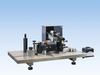
Description: RPM measuring device for the measurement of diameter, roundness, runout or segment gap of e.g. commutator shaft, turbocharger shaft or precision shaft in electric motors.
- Form Parameters: Roundness, Runout
-
Supplier: Lingto Electronic Limited
Description: BLDC MOTOR COMMUTATOR/CONTROLLER
-
Supplier: Acme Chip Technology Co., Limited
Description: BLDC MOTOR COMMUTATOR/CONTROLLER
- Operating Temperature: -40 to 125 C
-
-
Supplier: C.I. Takiron Corporation
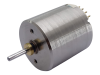
Description: Description of Brushless motors ●What is a brushless motor? Brushless motors are designed without the brushes and commutators found in brush motors (such as coreless motors), instead incorporating an electrical control mechanism. To operate, they require a
- Other DC Voltage: 4.8 VDC
- Other Output Power: 0.0037660192815769243 HP
- Continuous Current: 0.17 amps
- Continuous Torque: 0.05265486725663714 In-lbs
-
Supplier: GE Power Conversion
Description: Engineered to perform, built to last Our direct current motors set the standard in the DC motor industry. We offer comprehensive solutions supporting a large installed base of DC industrial motors. Our motors are a reliable lifeline to driven equipment and the backbone
- Other DC Voltage: 230 VDC
- Other Output Power: 5 to 250 HP
- Shaft Speed: 150 to 3,500 rpm
- Output Power: 5 HP / 3.6 KW
-
Supplier: Island Components Group
Description: Our brushless motors are among the most advanced in our industry. DC brushless motors offer superior performance and have the advantage of reduced maintenance since there are no brushes or commutators. These motors provide solutions for rigorous applications requiring
- Other DC Voltage: 53 VDC
- Torque Constant: 4.84 in-oz/amp
- Other Output Power: 1.12 HP
- Continuous Current: 16.6 amps
-
Supplier: Constar Motion Co., Ltd
Description: Encoder Coreless windings are utilized in our precision DC coreless motors (Micromotors). Due to an integrated structure consisting of a symmetrical winding, commutator and motor shaft, these motors are very smooth and stable running and without vibration. The
- Other DC Voltage: 24 VDC
- Other Output Power: 0.0302889806988037 HP
- Continuous Current: 25 amps
- Continuous Torque: 0.332743362831858 In-lbs
-
Supplier: Nidec Corporation
Description: These are inner rotor type brushless DC motors that achieve high efficiency, long life, and low noise levels. Brushless DC motors are energy-saving DC motors that do not need the commutators and brushes that are the disadvantages of brush motors and provide
- Other DC Voltage: 8 to 565 VDC
- Other Output Power: 0.00536088153961128 to 0.757224517470093 HP
- Continuous Current: 0.04 to 60 amps
- Continuous Torque: 0.0265486725663717 to 168.141592920354 In-lbs
-
Supplier: Nidec Corporation
Description: These are outer rotor type brushless DC motors that achieve high efficiency, long life, and low noise levels. Brushless DC motors are energy-saving DC motors that do not need the commutators and brushes that are the disadvantages of brush motors and provide
- Other DC Voltage: 5 to 26.4 VDC
- Other Output Power: 0.00254641873131536 to 0.0702275481689078 HP
- Continuous Current: 0.3 to 6 amps
- Continuous Torque: 0.0000707964601769911 to 1.7716814159292 In-lbs
-
Supplier: ElectroCraft
Description: Our ElectroCraft RapidPowerTM Nema 23 is a high-performance, high-speed brushless BLDC motor with ball-bearing construction, dynamically balanced rotors, and low audible and magnetic noise. It does not include brushes or a commutator. It is compatible with all three-phase brushless DC
- Other DC Voltage: 160 VDC
- Torque Constant: 38 in-oz/amp
- Continuous Current: 8.7 amps
- Continuous Torque: 4.5625 In-lbs
-
Supplier: Autotrol Corporation
Description: The 200 motor is a permanent magnet gearmotor utilizing a cylindrical barium ferrite 2 pole field magnet. A three bar commutator and a choice of carbon brushes or bifurcated silver alloy brushes provide long life, quiet operation and low starting voltage. The three slot rotor is
- Other DC Voltage: 12 VDC
- Continuous Current: 0.03 to 0.06 amps
- Continuous Torque: 9.375 In-lbs
- Shaft Size: 0.1245 to 0.469 inch
-
Supplier: Radwell International
Description: DISCONTINUED BY MANUFACTURER, CLEANER BRUSH, SEATER/COMMUTATOR, 4-3/4 INCH LENGTH, 1 INCH WIDTH, GRADE HARD. FREE 2 YEAR RADWELL WARRANTY
-
Supplier: White Drive Products, Inc.
Description: better withstand pressure and torque spikes and is reflected in its intermittent and peak performance ratings. Additional product features include a three zone commutator valve, heavy-duty tapered roller bearings, and case drain with integral internal drain*. The WS offers displacements from
-
Supplier: ERSAELECTRONICS PTE. LTD.
Description: BRUSHLESS DC MOTOR COMMUTATOR/CONTROLLER Product overview: LS7362 from LSI/CSI is a Motor Driver IC for embedded motor control, robotics, automation equipment, haptic feedback, pumps, fans, and industrial motion systems. It is useful for engineers and buyers comparing
-
Supplier: Constar Motion Co., Ltd
Description: Gearheads Coreless windings are utilized in our precision DC coreless motors (Micromotors). Due to an integrated structure consisting of a symmetrical winding, commutator and motor shaft, these motors are very smooth and stable running and without vibration. The
- Other DC Voltage: 6.8 VDC
- Other Output Power: 0.00509283746263072 HP
- Continuous Current: 15 amps
- Continuous Torque: 0.0442477876106194 In-lbs
-
Supplier: Kollmorgen Corporation
Description: Kollmorgen’s permanent magnet DC motors offer rugged, quality construction and dependable operation. The PMDC motor design is based on the use of permanent magnets in place of a wound field design thus enabling a lighter, more compact and efficient motor with a wider speed range
- Other DC Voltage: 90 to 180 VDC
- Torque Constant: 62.4 to 148.8 in-oz/amp
- Other Output Power: 0.125 to 3 HP
- Continuous Current: 1.4 to 14 amps
-
Supplier: Pelonis Technologies, Inc.
Description: Carbon Brushed DC Motors ensure that the commutation process remains free from sparks and helps conduct electric current between the moving parts of the motor. This prevents the motor, or commutator, from wearing out. These motors are commonly used in consumer
- Other DC Voltage: 12 to 30 VDC
- Other Output Power: 0.005749545451233098 HP
- Continuous Current: 0.07 amps
- Continuous Torque: 0.055417699115044274 In-lbs
-
Supplier: Pelonis Technologies, Inc.
Description: Carbon Brushed DC Motors ensure that the commutation process remains free from sparks and helps conduct electric current between the moving parts of the motor. This prevents the motor, or commutator, from wearing out. These motors are commonly used in consumer
- Other DC Voltage: 18 to 30 VDC
- Other Output Power: 0.005561914597346703 HP
- Continuous Current: 0.02 amps
- Continuous Torque: 0.0280991150442478 In-lbs
-
Supplier: Pelonis Technologies, Inc.
Description: Carbon Brushed DC Motors ensure that the commutation process remains free from sparks and helps conduct electric current between the moving parts of the motor. This prevents the motor, or commutator, from wearing out. These motors are commonly used in consumer
- Other DC Voltage: 22 to 26 VDC
- Other Output Power: 0.008362975201793597 HP
- Continuous Current: 0.06 amps
- Continuous Torque: 0.07497433628318588 In-lbs
-
Supplier: Pelonis Technologies, Inc.
Description: Carbon Brushed DC Motors ensure that the commutation process remains free from sparks and helps conduct electric current between the moving parts of the motor. This prevents the motor, or commutator, from wearing out. These motors are commonly used in consumer
- Other DC Voltage: 2 to 6 VDC
- Other Output Power: 0.0003484573000747332 HP
- Continuous Current: 0.048 amps
- Continuous Torque: 0.005723893805309737 In-lbs
-
Supplier: Radwell International
Description: SEAL KIT, TF / TG SERIES, 1 BACK UP RING, 1 BACK UP WASHER, 5 SHAFT SEALS, 6 BODY SEALS, 1 COMMUTATOR SEAL, 1 DIRT / WATER SEAL, 1 BEARING LUBRICANT, 1 SERVICE BULLETIN. FREE 2 YEAR RADWELL WARRANTY
-
Supplier: Allied Electronics, Inc.
Description: reduces audible and electrical noise and significantly improves brush life by maintaining optimum brush force throughout the life of the motor. Features: 2 Pole Permanent Magnet Stators Are Constructed of Ceramic Magnets Enclosed in Heavy-Gauge Steel Return Rings Diamond Turned
-
Supplier: Allied Electronics, Inc.
Description: reduces audible and electrical noise and significantly improves brush life by maintaining optimum brush force throughout the life of the motor. Features: 2 Pole Permanent Magnet Stators Are Constructed of Ceramic Magnets Enclosed in Heavy-Gauge Steel Return Rings Diamond Turned
-
Supplier: Allied Electronics, Inc.
Description: reduces audible and electrical noise and significantly improves brush life by maintaining optimum brush force throughout the life of the motor. Features: 2 Pole Permanent Magnet Stators Are Constructed of Ceramic Magnets Enclosed in Heavy-Gauge Steel Return Rings Diamond Turned
-
Supplier: Allied Electronics, Inc.
Description: reduces audible and electrical noise and significantly improves brush life by maintaining optimum brush force throughout the life of the motor. Features: 2 Pole Permanent Magnet Stators Are Constructed of Ceramic Magnets Enclosed in Heavy-Gauge Steel Return Rings Diamond Turned
-
Description: Applies to d.c. machines and to a.c. synchronous and induction machines. The principles can be applied to other types of machines such as rotary converters, a.c. commutator motors and single-phase induction motors for which other methods of determining losses are used.
-
Supplier: Makita USA, Inc.
Description: changes AC/DC switch for use with alternative power source Makita Motor Advantage engineered with field core interlocking steel laminations, dual ball bearing armature and more copper commutator bars, increasing energy transfer efficiency for more power and longer tool life Automatic
-
Supplier: Wolong Electric Industrial Motors
Description: GE has been designing and building DC machines for over 100 years. We can offer new designs and re-rates up to 12,000 HP Features and Benefits This low base speed, high torque motor is used in high performance, automatic control systems that require a fast transient response. These
- Other Output Power: 5 to 250 HP
- Shaft Speed: 360 to 2,050 rpm
- Operating Temperature: -40 to 104 F
- Output Power: 5 HP / 3.6 KW
-
Supplier: UL Standards & Engagement
Description: methods may be applied to other types of machines such as rotary converters, a.c. commutator motors and single-phase induction motors.
-
Supplier: FLUX-GERÄTE GMBH
Description: and 1200 mm Motor Type: powerful commutator motor Type F 457, 800 Watt, IP 24 with power supply cable, 5 m long, and 2-pole plug compact design with optimal cooling and low noise level alternatively: Commutator motor Type FEM 4070, 500 Watt, IP 24 with power supply
- Pump Type: Drum Pumps
-
Supplier: Western Integrated Technologies
Description: long life. Roller vanes and sealed commutator maintain high efficiency and provide smooth low speed performance.
- Operating Torque: 9,238.93805309734 In-lbs
- Operating Speed: 680 rpm
- Operating Pressure: 3,002.28039 psi
- Power: 45 HP










Find Suppliers by Category Top
Featured Products Top
-
 A BLDC motor (Brushless DC Motors) is a motor that removes the brushes and commutator from a conventional Brushed DC motor and achieves rotation through electronic control. Due to characteristics such as long service life, low (read more)
Browse DC Motors Datasheets for C.I. Takiron Corporation -
alternative to the mechanical commutator system used in many other types of electric motors. Brushless DC motors, as their name implies, have no commutator brushes and therefore require no maintenance. They deliver high starting torque, good speed regulation and offer excellent efficiency. They also (read more)
Browse Brushless Motors Datasheets for parvalux by maxon -
applications. The 9-Phase Precision Coreless Motor features advanced 9-phase coreless windings, a 9-segment commutator, precious metal brushes, and high-temperature epoxy reinforcement. EMC compliance and integrated capacitors reduce interference (read more)
Browse DC Motors Datasheets for Constar Motion Co., Ltd -
powered through a mechanical commutator - a segmented copper cylinder. Carbon brushes press against this commutator to deliver power, automatically switching current direction as the motor spins. This switching action keeps the motor rotating by continuously changing magnetic fields. Brushless (read more)
Browse DC Servomotors Datasheets for Actuonix Motion Devices -
Brushed DC pancake motors, also called printed armature, axial flux, or servodisc motors, are types of servo motors used for motion control, CNC machinery, automotive systems, printing equipment, and other applications. They are compact, economical, and easy to work with. (read more)
Browse DC Motors Datasheets for Pelonis Technologies, Inc. -
brushed motors when connected through a controller.) • Long Lifespan – A brushed motor requires direct contact between the brushes and the commutator whereas brushless motors have fewer contact parts, for example there is no friction between the brushes and commutator, therefore require less maintenance (read more)
Browse Brushless Motors Datasheets for parvalux by maxon -
the commutator through the coils on the rotor. In a brushless DC motor, there is a permanent magnet, which will rotate and has its rotation facilitated by the direction of the magnetic field generated by the coils. The primary advantage of a brushless DC motor is an overall lower cycle time and (read more)
Browse Electric Valve Actuators Datasheets for Asahi/America, Inc.
Conduct Research Top
-
What are the Common Types of Motors
be divided into DC brush motors and DC brushless motors. There are commutator and carbon brush structures in brush motors, and brushless motors use electronic steering devices instead of carbon brushes for rotor steering. AC motors can be divided into synchronous AC motors and asynchronous AC motors.
-
AC Motors: Principle of Operation
principles of Universal Motors. The electrical design areas of a universal motor are the magnetic circuit, the field and armature windings, the commutator and brushes, the insulation and the cooling system. Commutation Process of Universal Motors. Performance Characteristics of Universal Motors
-
EC Motors: Principle of Operation
assembly). In a brushed motor, electrical current flows through the motor terminals in the endcap assembly that comes in contact with the commutator in the armature assembly through the carbon brushes or brush leaves. The electrical current powers the coils generating a magnetic field causing
-
DC Motors: Principle of Operation
assembly). In a brushed motor, electrical current flows through the motor terminals in the endcap assembly that comes in contact with the commutator in the armature assembly through the carbon brushes or brush leaves. The electrical current powers the coils generating a magnetic field causing
-
Difference Between DC and AC Motor
and DC brushless motors according to the type of steering gear. Among them, the stator of the brushed DC motor is a permanent magnet, and the rotor is a winding metal armature, which is commutated by carbon brushes and a commutator. The stator of the brushless DC motor is a winding coil, and the rotor
-
How To: Reduce Noise Output from a Brushed Motor
Noise is often the single toughest challenge faced by design engineers when developing products, especially in medical applications. The inherent noise issue with many types of motors is the brushes. Brushes create mechanical and electrical noise due to friction against the commutator, as well
-
Sensorless Brushless DC Motor Control with PIC16
the many advantages to a BLDC motor no speed regulation. over a brushed DC motor, we can enumerate the following: HARDWARE * The absence of the mechanical commutator The hardware for a BLDC system can be decomposedallows higher speeds into the following sections: * Brush performance limits
-
Sensored BLDC Motor Control Using dsPIC30F2010
on BLDC motor details. BLDC motors are basically inside-out DC motors. In a DC motor the stator is a permanent magnet. The rotor has the windings, which are excited with a current. The current in the rotor is reversed to create a rotating or moving electric field by means of a split commutator
More Information Top
 Indicates content that may require registration and/or purchase.

-
Small Electric Motors
Rotating Reid Motor Commutator Motor .
-
Control Techniques, Drives and Controls Handbook
Rotor slip-ring systems, used with this type of motor, offer a similar service life to that of the d.c. motor commutator brush system.
-
wiper motor commutator exporter - wiper motor commutator manufacturers, exporters, factories, suppliers, China wiper motor commutator
wiper motor commutator .
-
Electric Power Principles: Sources Conversion Distribution and Use
… 14 14.1 14.2 14.3 14.4 DC (Commutator) Machines Geometry Torque Production Back Voltage Operation 14.4.1 Shunt Operation 14.4.2 Separately Excited 14.4.3 Machine Capability Series Connection Universal Motors Commutator 14.7.1 Commutation …
-
Electrical aspects of overhead travelling cranes
… c. series motor, and the virtual elimination of commutator troubles therefrom, represents a high- quality crane-control system.6 The value of contactor control, with properly designed timing devices, lies in the protection given to the motor commutator against excessive current, and …
-
Root Cause Analysis of Commutator Damage in a 130 kW DC Recoiler Motor Drive
A short summary ofthe results ofthe study carried out bythe author for root cause analysis ofthis failure and prevention ofsuch failures in future is presented in this paper Keywords - DC Motor Commutator Damage - SELF- DEST1RUCTIVE RUNAWAY-Auto-tuning test of a DC …
-
Maintenance concerns for good operation of DC motors
Threading on a motor commutator appears initially as fine grooves and looks like machined threads of a screw.
-
Intelligent System and Applied Material
Design of Detection System of Traction Motor Commutator Based on Computer Vision .