
-
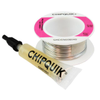
Supplier: Indium Corporation
Description: Bismuth-tin wire is a good low temperature lead-free alloy. Alloy: 58Bi 42Sn Diameter: .030" Quantity: 3 ft Spool Liquidus Melting Temperature: 138ºC Eutectic Solidus Melting Temperature: 138ºC Eutectic Pb-Free: Yes
- Diameter / Thickness: 0.3 inch
- Solder Alloy: Lead Free
- Features: Other, Solid Wire
-
Supplier: Indium Corporation
Description: A low temperature lead-free alloy that is more malleable than BiSn. Alloy: 57Bi 42Sn 1.0Ag Size: 1.00" x .002" Quantity: 3 ft Spool Liquidus Melting Temperature: 140ºC Solidus Melting Temperature: 139ºC Pb-Free: Yes
- Diameter / Thickness: 0.002 inch
- Solder Alloy: Lead Free, Tin-Silver (Sn-Ag)
- Features: Strip / Sheet / Foil
-
Supplier: Belmont Metals, Inc.
Description: low-carbon steel or aluminum to improve machinability, and as a dense material for fishing sinkers. Bismuth as an alloying element can be used in the production of fusible alloys ( low melting point alloys ) and Bismuth based low temperature solders. Standard and special
- Features: Bismuth / Bismuth Alloys, Non-ferrous - Any Type
- Shape / Form: Powder
- Type: White / Low Melting (UNS L)
-
-
Supplier: Accuris
Description: Method for The determination of bismuth in ingot tin, tin-lead solders and white metal bearing alloys (Photometric method) \x97 Methods for the sampling and analysis of tin and tin alloys
-
Supplier: Belmont Metals, Inc.
Description: low-carbon steel or aluminum to improve machinability, and as a dense material for fishing sinkers. Bismuth as an alloying element can be used in the production of fusible alloys ( low melting point alloys ) and Bismuth based low temperature solders. Standard and special
- Features: Bismuth / Bismuth Alloys, Non-ferrous - Any Type
- Shape / Form: Powder
- Type: White / Low Melting (UNS L)
-
Supplier: Belmont Metals, Inc.
Description: low-carbon steel or aluminum to improve machinability, and as a dense material for fishing sinkers. Bismuth as an alloying element can be used in the production of fusible alloys ( low melting point alloys ) and Bismuth based low temperature solders. Standard and special
- Shape / Form: Billet / Slab / Bloom
- Features: Bismuth / Bismuth Alloys, Non-ferrous - Any Type
- Type: White / Low Melting (UNS L)
-
Supplier: Belmont Metals, Inc.
Description: low-carbon steel or aluminum to improve machinability, and as a dense material for fishing sinkers. Bismuth as an alloying element can be used in the production of fusible alloys ( low melting point alloys ) and Bismuth based low temperature solders. Standard and special
- Features: Bismuth / Bismuth Alloys, Non-ferrous - Any Type, Other
- Type: White / Low Melting (UNS L)
-
Supplier: DigiKey
Description: TIN/BISMUTH SOLDER WIRE (SN60/BI
- Melting Range: 280 to 338 F
- Features: Solid Wire
-
Supplier: ASTM International
Description: This specification covers solder metal alloys used as solders for the purpose of joining together two or more metals at temperatures below their melting points. The solder alloy shall conform to the required chemical compositions of cadmium, zinc, tin, lead, antimony,
-
Description: ISO 9453:2006 specifies the requirements for chemical composition for the following families of soft solder alloys: tin-lead, with and without antimony, bismuth, cadmium, copper, and silver; tin-antimony; tin-bismuth; tin-copper, with and without
-
Supplier: Allied Electronics, Inc.
Description: Lower Aggressiveness to Stainless Steel and Other Solder Pot Materials as Compared to Tin-Silver-Copper Alloys Thermal Fatigue Resistance and Creep Strength Better Than Tin-Lead Slow, Even Growth of the Intermetallic Layer at the Solder/Substrate Interface Also, Performs
-
Supplier: MacDermid Alpha Electronics Solutions
Description: Tin-Silver-Copper (SAC) alloy sphere is used. All components used with SnBi solders must be lead-free to eliminate the formation of tin/lead/bismuth intermetallics, which have a melting point under 100°C. Product Features Eliminates the Need for a Second or Third Reflow
- Solder Alloy: Lead Free
- Product Form: Paste
-
Supplier: Lake Shore Cryotronics, Inc.
Description: This is a low melting point solder, nearly identical to what is commonly called Wood’s Metal. An alloy of bismuth, tin, lead, and cadmium, it is an eutectic alloy with a sharply defined melting point of 343.16 K (70 °C). Ostalloy® 158 has proven itself in production processes –
-
Supplier: CSA Group
Description: ISO 9453:2014 specifies the requirements for chemical composition for soft solder alloys containing two or more of tin, lead, antimony, copper, silver, bismuth, zinc, indium and/or cadmium.
-
Supplier: ASTM International
Description: This specification covers low-melting point metal alloys and soldiers, including bismuth-tin, bismuth-lead, bismuth-tin-lead, bismuth-tin-lead-cadmium, bismuth-tin-lead-indium-cadmium, bismuth-tin-lead-indium, indium-lead,
-
Supplier: Allied Electronics, Inc.
Description: Lower Aggressiveness to Stainless Steel and Other Solder Pot Materials as Compared to Tin-Silver-Copper Alloys Thermal Fatigue Resistance and Creep Strength Better Than Tin-Lead Slow, Even Growth of the Intermetallic Layer at the Solder/Substrate Interface Also, Performs
-
Supplier: Allied Electronics, Inc.
Description: Lower Aggressiveness to Stainless Steel and Other Solder Pot Materials as Compared to Tin-Silver-Copper Alloys Thermal Fatigue Resistance and Creep Strength Better Than Tin-Lead Slow, Even Growth of the Intermetallic Layer at the Solder/Substrate Interface Also, Performs
-
Supplier: Allied Electronics, Inc.
Description: Lower Aggressiveness to Stainless Steel and Other Solder Pot Materials as Compared to Tin-Silver-Copper Alloys Thermal Fatigue Resistance and Creep Strength Better Than Tin-Lead Slow, Even Growth of the Intermetallic Layer at the Solder/Substrate Interface Also, Performs
-
Supplier: Indium Corporation
Description: than 300F, well below the melting point of Tin-lead eutectic solders. The major component of fusible alloys is bismuth. Besides producing low melting point, bismuth also gives these materials the unique characteristic of expanding on freezing. This expansion, which can
-
Supplier: Waytek, Inc.
Description: (145°C) Pre-fluxed, low temperature solder delivers superior current flow and tensile strength Translucent, adhesive-lined heat shrink tubing allows for visual inspections and seals against corrosion Solder sleeves are tin and bismuth alloy RoHS Compliant Crimped for
- Connector Type: Automotive Connector
-
Supplier: Waytek, Inc.
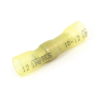
Description: Lead-Free Sealed Crimp & Solder Butt Connector 31971 Category: Butt Connectors Lead-free solder has lower melt temperature - 280°F (138°C) vs 293°F (145°C) Pre-fluxed, low temperature solder delivers superior current flow and tensile strength Translucent, adhesive-lined heat
- Connector Type: Automotive Connector
-
Supplier: Waytek, Inc.
Description: solder has lower melt temperature - 280°F (138°C) vs 293°F (145°C) Pre-fluxed, low temperature solder delivers superior current flow and tensile strength Translucent, adhesive-lined heat shrink tubing allows for visual inspections and seals against corrosion Solder sleeves are
- Connector Type: Automotive Connector
-
Supplier: Waytek, Inc.
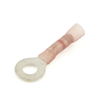
Description: Pre-fluxed, low temperature solder delivers superior current flow and tensile strength Translucent, adhesive-lined heat shrink tubing allows for visual inspections and seals against corrosion Solder sleeves are tin and bismuth alloy RoHS Compliant Crimped for maximum
- North American (AWG): 22 to 18 AWG
- Material: Copper
- Features: Heat Shrink Type, Insulated, Other, RoHS
- Terminal Type: Ring Terminal
-
Supplier: Indium Corporation
Description: than 300F, well below the melting point of Tin-lead eutectic solders. The major component of fusible alloys is bismuth. Besides producing low melting point, bismuth also gives these materials the unique characteristic of expanding on freezing. This expansion, which can
- Overall Thickness: 1 inch
- Overall Length: 4.25 inch
- Tensile Strength (UTS, Break): 6,300 psi
- Shape / Form: Bar Stock, Semi-finished Shape / Mill Stock
-
Supplier: Win Source Electronics
Description: Manufacturer: Molex, LLC Win Source Part Number: 763954-527932670 Series: Easy-On 52793 Packaging: Reel package Number of Positions: 26 Pitch: 0.039" (1.00mm) Operating Temperature Range: -20°C ~ 85°C Features: Solder Retention Termination: Solder Contact Finish: Tin
- Voltage Rating: 50 volts
- Current Rating: 0.5 amps
-
Supplier: Win Source Electronics
Description: Manufacturer: Molex Win Source Part Number: 1120692-0527933070 Packaging: Reel Number of Positions: 30 Pitch: 0.039" (1.00mm) Mounting Style: SMT, Right Angle Features: Solder Retention Termination: Solder Contact Finish: Tin Bismuth Contact Material: Phosphor Bronze
- Voltage Rating: 50 volts
- Current Rating: 0.5 amps
-
Supplier: Win Source Electronics
Description: Manufacturer: Molex, LLC Win Source Part Number: 052795-524372872 Packaging: Reel - TR Number of Positions: 28 Pitch: 0.020" (0.50mm) Features: Solder Retention, Zero Insertion Force (ZIF) Termination: Solder Contact Finish: Tin Bismuth Voltage Rating: 50V Current Rating:
- Voltage Rating: 50 volts
- Current Rating: 0.5 amps
-
Supplier: Win Source Electronics
Description: Manufacturer: Molex Win Source Part Number: 713120-52746-1470 Packaging: Reel Number of Positions: 14 Pitch: 0.020" (0.50mm) Mounting Style: SMT, Right Angle Features: Solder Retention, Zero Insertion Force (ZIF) Termination: Solder Contact Finish: Tin Bismuth Contact
- Voltage Rating: 50 volts
- Current Rating: 0.5 amps












Find Suppliers by Category Top
Conduct Research Top
-
Solder Joint Analysis of Tin-Lead and Bismuth-based Lead-free PV Ribbons in High Throughput Manufacturing
applied it but also strongly impacts yield and throughput of the entire module factory. This paper analyses solder joints and factors affecting solder joints in high throughput manufacturing.
-
How to Choose a Solder
hazardous materials) are banned from the European Union as part of the Restriction of Hazardous Substances (RoHS). Lead-free solder may contain many metals including silver, copper, tin, bismuth, indium, zinc and antimony. Hard solders have a high melting point and are usually made with a high
-
Why Lead-Free Soldering is Better
. Some of the harmful alloys that are used in normal soldering are tin, copper, silver bismuth, indium, zinc, and antimony. So why are these dangerous to humans everywhere? Prior to 1930, all homes used lead pipes to transport water to and from houses. Now, most homes use copper piping. However
More Information Top
 Indicates content that may require registration and/or purchase.

-
http://dspace.mit.edu/bitstream/handle/1721.1/68496/770423264-MIT.pdf?sequence=2
with a low melting temperature eutectic Bismuth Tin solder (Bi5sSn42 ) with the aide .
-
Principles of Soldering
The mechanical properties of bis- muth - tin solders may be improved considerably by the addition of 0.5% Ag.
-
http://calhoun.nps.edu/public/bitstream/handle/10945/40009/93Sep_Vollweiler.pdf?sequence=1
copper, the copper powder was placed in a 6 molar HCI solution to remove the oxide layer prior to its addition to the molten tin - bismuth solder .
-
Modern Electroplating 5th Edition
Z. Mei and J. W. Morris, Jr., “Characterization of Eutectic Tin - Bismuth Solder Joints,” J. Electron. Mat., 21, 599 (1992).
-
Examination of compound formation at interface of tin–bismuth–silver solder and copper substrate by using electron probe micro analysis
The poor wettability of tin – bismuth solders may be caused by the growth of dendritic copper–tin compounds at the copper/solder interface, in contrast to the case of tin–lead solder.
-
ZPRSO2004P049
The mechanical properties of bismuth - tin solders may be improved considerably by the addition of 0.5% Ag.
-
The properties of tin-bismuth alloy solders
Furthermore, few studies of the mechanical properties of the bulk alloy and model solder joints have been re- ported.2-6 Tin - bismuth solders will not .
-
Soldering: Understanding the Basics
In addition to the traditional tin-lead alloys, wave soldering has been adapted to other solders, including the eutectic tin - bismuth solder and the tin-lead-bismuth alloys (Ref 6.14).
-
Green Electronics Design and Manufacturing: Implementing Lead-Free and RoHS-Compliant Global Products > Reliability of Green Electronic Systems
Tin / bismuth solder alloys are much less commonly used for solder attachment than are tin/silver/copper or tin/copper alloys because of the potentially deleterious effects of the interaction between tin/bismuth and tin/lead.
-
Effect of compositional changes and impurities on wetting properties of eutectic Sn–Bi alloy used as solder
0·45 g in weight, of the tin - bismuth solder alloy were cut from 6 mm dia. cast finger- mold sticks.