
Products & Services
See also: Categories | Featured Products | Technical Articles | More Information-
Supplier: Georg Fischer Piping Systems Ltd
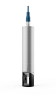
Description: Type 4170 Turbidity Sensor
- Water Quality Parameters: Measures Turbidity
-
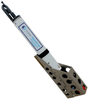
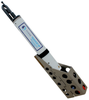
Supplier: Campbell Scientific, Inc.
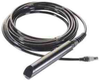
Description: The OBS-3+ Turbidity Monitor is a submersible probe, part of our OBS® line of products that use a backscatter method to measure turbidity. The OBS-3+ operates in the range of 0 to 4000 NTU. It replaces the OBS3 on our price lists. The OBS-3+ can be used in several applications, ranging
- Turbidity Range: 0 to 4,000 NTU (Nephelometric Turbidity Units)
- Accuracy: 2 ±% Full Scale
- Number of Control Relays: 0
- Electrical Output: Analog Voltage Output
-
Supplier: optek-Danulat, Inc.
Description: The TF16 turbidity sensor is a precise dual channel, scattered light turbidity sensor. This sensor is designed to provide inline control solutions for a variety of industrial processes, from sanitary CIP/SIP applications to high-pressure, high-temperature
- Operating Temperature: 32 to 104 F
- Process Media Temperature: 32 to 302 F
- Features and Functionality: Filters
- User Controls: None
-
-
Supplier: Newark, An Avnet Company
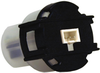
Description: TURBIDITY SENSOR ROHS COMPLIANT: YES
-
Supplier: Newark, An Avnet Company
Description: TURBIDITY SENSOR, 5VDC, PHOTOTRANSISTOR; Sensor Output:Phototransistor; Sensing Range Max:-; Supply Voltage DC Min:-; Supply Voltage DC Max:5V; Output Current:30mA; Product Range:- RoHS Compliant: Yes
-
Supplier: Newark, An Avnet Company
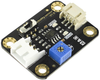
Description: ANALOG TURBIDITY SENSOR; Accessory Type:Analog Turbidity Sensor; For Use With:DFRduino UNO R3 - Arduino Compatible Board; Product Range:Gravity Series; SVHC:No SVHC (27-Jun-2018) RoHS Compliant: Yes
-
Supplier: Newark, An Avnet Company
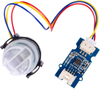
Description: TURBIDITY SENSOR BOARD, ARDUINO BOARD
-
Supplier: Real Tech, Inc.
Description: Real Tech’s Turbidity sensor provides rapid real-time measurement of turbidity or total suspended solids (TSS) in water or wastewater. The sensor uses a low-cost optical technology for low maintenance operation with no consumables. The measurement principle is based on IR
- Turbidity Range: 0 to 4,000 NTU (Nephelometric Turbidity Units)
- Operating Temperature: 32 to 122 F
- Features: Turbidity
-
Supplier: ABB Measurement & Analytics
Description: The ATS430 is a compact, yet extremely robust turbidity sensor capable of measuring turbidity and total suspended solids (TSS) concentrations up to 4000 NTU or 100,000 mg/l. With a choice of hermetically-sealed stainless steel or titanium versions, each featuring
- Maximum Suspended Solids per Liquid Volume: 0 to 100,000 ppm
- Turbidity Range: 0 to 4,000 NTU (Nephelometric Turbidity Units)
- Operating Temperature: 32 to 140 F
- Electrical Output: Analog Current Output, Analog Voltage Output, Switch / Alarm Relay Output
-
Supplier: HF scientific
Description: Connect this Raw Water Turbidity Sensor to a PLC for seamless integration with industrial control systems. Use any computer to display data, calibrate and customize the measurement without an intermediate analyzer electronics box. A LD500 local display can be used if desired.
- Turbidity Range: 0 to 4,000 NTU (Nephelometric Turbidity Units)
- Operating Temperature: 23 to 122 F
- User Controls: None
- Features: Other, Turbidity
-
Supplier: optek-Danulat, Inc.
Description: The model AF16-N is a single channel Near Infrared (NIR) absorption sensor. The inline sensor is designed for a variety of industrial processes. The AF16-N measures concentration or turbidity with great accuracy and repeatability and can be used in demanding applications such as
- Operating Temperature: 32 to 104 F
- Features and Functionality: Filters
- User Controls: None
- Features: Other, Turbidity
-
Supplier: GFS Chemicals, Inc.
Description: ITEM#:8430 CAS#: F.W.: NFPA#: Specific Gravity: 1.000 DOT: Descriptions: Specification TEST 1. Turbidity (OBS sensor inst) 500 TU +/- 5 2. Absorbance at 455nm (10mm pathlength) 3. Lot Number of Baseline Material Properties No properties.
- Function: Reagent, Reference / Chemical Standard
-
Supplier: GFS Chemicals, Inc.
Description: ITEM#:8432 CAS#: F.W.: NFPA#: Specific Gravity: 1.000 DOT: Descriptions: Specification TEST 1. Turbidity (OBS Sensor inst.) 2000 TU +/- 20 2. Absorbance at 455nm (10mm pathlength) 3. Lot Number of Baseline Material Properties No properties.
- Function: Reagent, Reference / Chemical Standard
-
Supplier: GFS Chemicals, Inc.
Description: ITEM#:8428 CAS#: F.W.: NFPA#: Specific Gravity: 1.000 DOT:NR Descriptions: Specification TEST 1. Turbidity (OBS 3+ Sensor) 125 NTU 2. Absorbance at 455nm (10mm pathlength) 3. Lot Number of Baseline Material Properties No properties.
- Function: Reagent, Reference / Chemical Standard
-
Supplier: GFS Chemicals, Inc.
Description: ITEM#:8431 CAS#: F.W.: NFPA#: Specific Gravity: 1.000 DOT: Descriptions: Specification TEST 1. Turbidity (on OBS Sensor inst) 1000 +/- 10 NTU 2. Absorbance at 455nm (10mm pathlength) 3. Lot Number of Baseline Material Properties No properties.
- Function: Reagent, Reference / Chemical Standard
-
Supplier: Analytical Technology, Inc.
Description: ATI’s Model A15/76 Turbidity Monitor is designed to meet the needs of both municipal drinking water systems and industrial water treatment for reliable, low-range turbidity measurement. The turbidity sensor is available with either a White Light Source for EPA Method
-
Supplier: Hach
Description: Flow Sensor - identification of flow rate through your turbidimeter • Automatic Cleaning Module (ACM) - automatic cleaning of the sample cell • System Check - notification of sample cell health • RFID - transmit data to/from your TU5 Series lab and process instruments Use the white triangles
- Display Type: Digital Display
- Water Quality Parameters: Measures Turbidity
- Features: Other
- Form Factor: Panel
-
Supplier: OTT Hydromet
Description: anti-foulant devices. An integral pump minimizes the sensors' exposure to environmental waters, significantly reducing the impact of bio-fouling on sensor performance and drift. A copper faceplate and wiper protect the combination chlorophyll and turbidity sensor. The
- Conductivity / Dissolved Solids Range: 0 to 70,000 µS/cm
- Conductivity Accuracy: 0.003 ±% Full Scale
- Water Quality Parameters: Measures Conductivity / Dissolved Solids
- Features: Other
-
Supplier: OTT Hydromet
Description: anti-foulant devices. An integral pump minimizes the sensors' exposure to environmental waters, significantly reducing the impact of bio-fouling on sensor performance and drift. A copper faceplate and wiper protect the combination chlorophyll and turbidity sensor. The
- Conductivity / Dissolved Solids Range: 0 to 70,000 µS/cm
- Conductivity Accuracy: 0.003 ±% Full Scale
- Accuracy: 20,000 ppm
- Water Quality Parameters: Measures Conductivity / Dissolved Solids
-
Supplier: ASTM International
Description: 1.1 This test method covers the online and inline determination of high-level turbidity in water that is greater than 1.0 turbidity units (TU) in municipal, industrial and environmental usage. 1.2 In principle there are three basic applications for on-line measurement set ups. This
-
Supplier: OTT Hydromet
Description: anti-foulant devices. An integral pump minimizes the sensors' exposure to environmental waters, significantly reducing the impact of bio-fouling on sensor performance and drift. A copper faceplate and wiper protect the combination chlorophyll and turbidity sensor. The
- Conductivity / Dissolved Solids Range: 0 to 70,000 µS/cm
- Conductivity Accuracy: 0.003 ±% Full Scale
- Accuracy: 20,000 ppm
- Water Quality Parameters: Measures Conductivity / Dissolved Solids
-
Supplier: OTT Hydromet
Description: anti-foulant devices. An integral pump minimizes the sensors' exposure to environmental waters, significantly reducing the impact of bio-fouling on sensor performance and drift. A copper faceplate and wiper protect the combination chlorophyll and turbidity sensor. The
- Conductivity / Dissolved Solids Range: 0 to 70,000 µS/cm
- Conductivity Accuracy: 0.003 ±% Full Scale
- Water Quality Parameters: Measures Conductivity / Dissolved Solids
- Features: Other
-
Supplier: ASTM International
Description: surrogate turbidity samples up to about 1000 TU. Many of the technologies listed in this test method are capable of measuring above that provided in the precision section (see Section 16). 1.2 “In-situ measurement” refers in this test method to applications where the turbidimeter
-
Supplier: optek-Danulat, Inc.
Description: The model TF16-EX is a precise dual channel, scattered light turbidity sensor. This sensor provides inline control solutions for a variety of industrial processes and is designed especially for hazardous environments.
- Operating Temperature: 32 to 104 F
- Features and Functionality: Filters
- User Controls: None
- Features: Other, Turbidity
-
Supplier: VAST STOCK CO., LIMITED
Description: Photoelectric Sensors Turbidity Sensor VoltDiff 2.7V +/-20%
-
Supplier: DigiKey
Description: Turbidity Sensor Phototransistor Output
-
Supplier: optek-Danulat, Inc.
Description: The model AF26-EX is a precise, dual channel absorption sensor designed especially for hazardous environments. It accurately measures color or color changes and can be used for inline applications in a variety of industrial processes.
- Operating Temperature: 32 to 104 F
- Features and Functionality: Filters
- User Controls: None
- Features: Other, Turbidity
-
Supplier: AW Company
Description: No Description Provided
- Electrical Output: Analog Current Output
- Form Factor: In-Situ / Field
- Water Quality Parameters: Measures Turbidity
- User Controls: None









Find Suppliers by Category Top
Featured Products Top
-
 . “With results like this, online viable cell monitoring will become standard within five years.” For total cell density measurement, Hamilton’s Dencytee sensor offers a significant improvement over traditional classical turbidity sensors. As the cells grow (read more)
Browse Dissolved Oxygen Sensors Datasheets for Hamilton Company -
Total cell density measurement by the Dencytee sensor is based on optical density, commonly known as the turbidity of a suspension at near-infrared (NIR) wavelengths. All particles and molecules that scatter the NIR light will be detected. This optical density signal can be correlated to (read more)
Browse Conductivity Electrodes Datasheets for Hamilton Company -
Scatter available with or without fluorescence for non-petroleum oils and turbidity Cuvet available for manual sample insertion testing Scale/Algae Inhibitor module available for untreated waters Easy calibration with menu-driven 4-line display Sensor block (read more)
Browse Oil in Water Monitors Datasheets for Arjay Engineering
Conduct Research Top
- Turbidity Sensor Performs Effectively in Multimedia Filter Backwash, Ripening Control
-
The Nearshore Network - Instrumenting Lake Tahoe
of a Turner Designs C3 Submersible Sensor measuring turbidity, algal concentration, and dissolved organic material along with a RBRmaestro multi-channel logger measuring water temperature and conductivity. An underwater cable supplies power to each station and returns data, which are displayed
-
Measurement and Control Basics, Fourth Edition
. application to analytical measurement. Three sections were also added to. Chapter 8 on photoconductive sensors, photomultiplier tubes, and turbidity. analyzers. Chapter 9 on flow measurement contains new coverage on Reynolds. Number and fluid flow profiles. The discussion of the basic principles
-
Coastal Harmful Algae Bloom Monitoring via a Sustainable, Sail-Powered Mobile Platform
decisions. In order to better detect and map blooms, as well as the environmental conditions responsible for their formation, long-term, unattended observation platforms are desired. In this article, we describe a new cost-efficient, autonomous, mobile platform capable of accepting several sensors that can
More Information Top
 Indicates content that may require registration and/or purchase.

-
Development of a River Sediment Transport Monitoring System for Large Reservoirs
Since the early 1990s, turbidity sensors have become more available and have been used to measure suspended sediment concentration (SSC) in rivers and streams with different levels of success.
-
Sediment Matters
Hence, each measurement site is equipped with an optical turbidity sensor that continuously measures the scatter of the emitted signal and provides information about the turbidity.
-
Suspended solids and total phosphorus loads and their spatial differences in a lake-rich river basin as determined by automatic monitoring network
Turbidity sensor . Sediment .
-
Invasive crayfish as drivers of fine sediment dynamics in rivers: field and laboratory evidence
In both laboratory and field studies, turbidity sensors were used to indicate suspended sediment concentrations.
-
Computer and Computing Technologies in Agriculture IV
A Simple Temperature Compensation Method for Turbidity Sensor . . . . .
-
IN SITU MEASUREMENTS OF BASAL WATER QUALITY AND PRESSURE AS AN INDICATOR OF THE CHARACTER OF SUBGLACIAL DRAINAGE SYSTEMS
The turbidity sensors that we use contain a miniature light source and two infra-red photodetectors.
-
Specular reflection vs. backscattering for transdermal OCT-based glucose monitoring with an implantable sensor system
We recently reported a novel concept for the development of an implantable optical turbidity sensor as a means for potential long-term glucose monitoring in diabetics.1 Figure 1A illustrates the conceptual operation of this sensor.
-
Methods for measuring suspended-sediment concentration in streams
Introduction Most commercially available turbidity sensors utilize a light source and detector(s) to measure the amount of light either transmitted or scattered within a water sample.
-
http://www.int-res.com/articles/ame2004/35/a035p105.pdf
… 1996, Schanz et al. 1998, Tonolla et al. 1999, Lüthy et al. 2000, Camacho et al. 2001, DelDon et al. 2001) clearly show that chlorophyll a-containing organisms, while absorbing at the wavelength of the tur- bidity sensor , do not disturb turbidity …