Advanced Automotive Fault Diagnosis, Second Edition
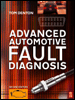
Finding the problem when complex automotive systems go wrong is easy, if you have the necessary knowledge. This knowledge is in two parts:
understanding of the system in which the problem exists;
the ability to apply a logical diagnostic routine.
It is also important to be clear about two definitions:
symptom(s) what the user/operator/repairer of the system (vehicle or whatever) notices;
fault the error in the system that causes the symptom(s).
If it is not broken then do not go to the trouble of repairing it, is the translation of this main section heading! It's a fair comment but if a system is not operating to its optimum then it should be repaired. This is where the skills come in to play. It is necessary to recognise that something is not operating correctly by applying your knowledge of the system, and then by applying this knowledge further and combining it with the skills of diagnostics, to be able to find out why.
Each main chapter of this book includes a basic explanation of the vehicle system followed by diagnostic techniques that are particularly appropriate for that area. Examples of fault-finding charts are also included. In the main, references will be to generic systems rather than to specific vehicles or marques. For specific details about a particular vehicle or system the manufacturer's information is the main source. Alternatively Autodata produce a fine range of...