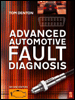
Advanced Automotive Fault Diagnosis, Second Edition
Chapter 2: Diagnostic Techniques

2.1 Introduction

2.1.1 Logic

Diagnostics or faultfinding is a fundamental part of an automotive technician's work. The subject of diagnostics does not relate to individual areas of the vehicle. If your knowledge of a vehicle system is at a suitable level, then you will use the same logical process for diagnosing the fault, whatever the system.

2.1.2 Information

Information and data are available for carrying out many forms of diagnostic work. The data may come as a book or on CD. This information is vital and will ensure that you find the fault particularly if you have developed the diagnostic skills to go with it. Faultfinding charts and specific examples are presented in later chapters.

The general type of information available is as follows:

  • engine diagnostics, testing and tuning;

  • servicing, repairs and times;

  • fuel and ignition systems and carburettor;

  • auto electrics;

  • ABS diagnostics;

  • component location;

  • body repairs, tracking and tyres.

2.1.3 Where to stop?

This is one of the most difficult skills to learn. It is also one of the most important. The secret is twofold:

  • know your own limitations it is not possible to be good at everything;

  • leave systems alone where you could cause more damage or even injury for example air bag circuits.

Often with the best of intentions, a person new to diagnostics will not only fail to find the fault but introduce more faults into the system in the process.

I would suggest you learn your own strengths and weaknesses; you may...

UNLIMITED FREE
ACCESS
TO THE WORLD'S BEST IDEAS

SUBMIT
Already a GlobalSpec user? Log in.

This is embarrasing...

An error occurred while processing the form. Please try again in a few minutes.

Customize Your GlobalSpec Experience

Category: Used and Refurbished Equipment
Finish!
Privacy Policy

This is embarrasing...

An error occurred while processing the form. Please try again in a few minutes.