Advanced Automotive Fault Diagnosis, Second Edition
| Warning | Caution/Achtung/Attention high voltages can seriously damage your health! |
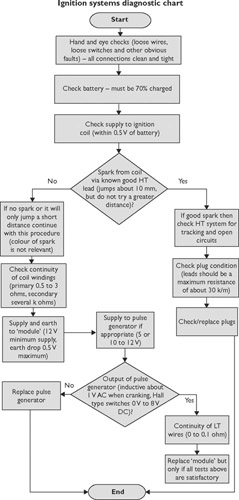
The following procedure is generic and with a little adaptation can be applied to any ignition system. Refer to manufacturer's recommendations if in any doubt.

| Symptom | Possible fault |
|---|---|
| Engine rotates but does not start | Damp ignition components Spark plugs worn to excess Ignition system open circuit |
| Difficult to start when cold | Spark plugs worn to excess High resistance in ignition circuit |
| Engine starts but then stops immediately | Ignition wiring connection intermittent |
| Erratic idle | Incorrect plug gaps Incorrect ignition timing |
| Misfire at idle speed | Ignition coil or distributor cap tracking Spark plugs worn to excess |
| Misfire through all speeds | Incorrect plugs or plug gaps HT leads breaking down Timing incorrect |
| Lack of power | Ignition timing incorrect HT components tracking |
| Backfires | Incorrect ignition timing Tracking |
| Runs on when switched off | Ignition timing incorrect Carbon buildup in engine Idle speed too high Anti-run on device inoperative |
| Pinking or knocking under load | Ignition timing incorrect Ignition system electronic fault Knock sensor not working |
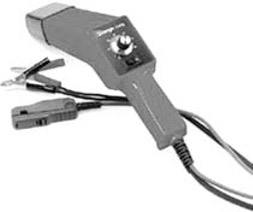
Figure 7.20 shows a typical ignition timing light, essential to ensure correct settings where these are adjustable, or to check programmed advance systems for correct operation.
| Component | Description | Test method |
|---|---|---|
| Spark plug | Seals electrodes for the spark to jump across in the cylinder. Must withstand very high voltages, pressures and temperatures | Compare nose condition to a manufacturer's chart... |