Power Electronics Design: A Practitioner's Guide
Much of the design work in power electronics involves specification of ancillary apparatus in a system. It is essential to a successful design that the engineer knows the general characteristics of these components well enough to permit selection of a suitable device for the intended application. The components in this chapter are usually described in detail in vendor catalog information, but the designer must know the significance of the ratings and how they apply to the job at hand. Competent vendors can be valuable partners in the design process.
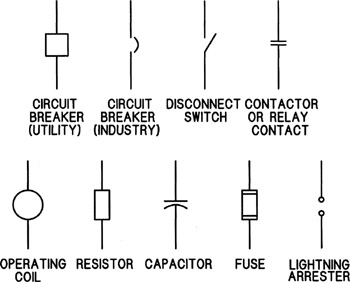
Commonly used symbols in power electronics diagrams are shown in Fig. 2.1. The utility breaker symbol is generally used in single line drawings of power sources, whereas the industrial symbol is used on schematics. There are no hard and fast rules, however, and there are a number of variations on this symbol set.
The equipments intended to connect and disconnect power circuits are known collectively as switchgear (please not switchgears and not switchgear). Switchgear units range from the small, molded-case circuit breakers in a household panelboard to the huge, air break switches on 750-kV transmission lines. They are generally divided into the four groups of disconnect or isolator switches, load break switches, circuit breakers, and contactors.
Disconnect or isolator switches are used to connect or disconnect circuits at no load or very light loads. They have minimum arcquenching capability and are intended to interrupt only transmission line...