Power Electronics Design: A Practitioner's Guide
Power electronics has penetrated nearly every field of human endeavor. Fuel cells and inverters provide ultra-reliable power for critical industries. Electric utility systems employ HVDC converters and var compensators to control voltage and power levels. Lamp dimmers allow control of residential lighting levels. Motor drives, the largest user of power electronics, are at home in pipeline pumping, power station draft fans, and air conditioning systems. They propel luxury cruise ships and grimy freight locomotives and serve a host of other applications. They bring precise speed and torque control with lower energy use. IGBT choppers in DC arc furnaces have tamed the power factor and flicker problems of AC furnaces and reduced electrode consumption. Power electronics is here to stay! Some of the many uses of power electronics are described in this chapter.
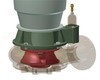
AC and DC motor drives and SCR starters have been touched on in previous chapters. Here, some of the applications will be discussed, and variable-speed pumps are a good place to start. Prior to inexpensive variable-speed drives, fluid flow in the chemical process industries and municipal water works was controlled by throttling valves on constant-speed pumps. At low flow rates, the pumps were very inefficient, and the lost energy went into heating the fluid. With a variable- speed drive, the pumps can be speed controlled to meet the fluid flow demand with no loss of efficiency. The same is true for pipeline pumping of liquid fuels where the same advantages accrue in...