Power Electronics Handbook: Devices, Circuits and Applications, Second Edition
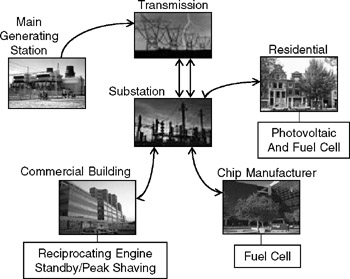
On-site power generation (often called as distributed generation (DG) [1, 2]) using alternative/renewable-energy technologies, as illustrated in Fig. 28.1, can minimize environmental pollution and reduce our dependence on fossil fuels. Distributed energy resources (DER) are parallel and stand-alone electric generation units located within the electric distribution system near the end user. The distributed energy resources, if properly integrated can be beneficial to electricity consumers and energy utilities, providing energy independence and increased energy security. Each home and commercial unit with DER equipments can be a micro-power station, generating much of the electricity it needs on-site and sell the excess power to the national grid.
Table 28.1 provides information regarding commercially available equipment for DER [1, 2] and for those technologies still undergoing development. Some of these technologies are listed in both categories because they are commercially available and undergoing further research and development as well. There are several customer DG applications including (i) allowing customers to continuously generate their own electricity, with or without grid backup; (ii) permitting customers to generate power while serving their thermal and/or cooling loads; (iii) generating a portion of electricity on-site to reduce the amount of electricity purchased during peak-price periods; (iv) licensing customers to sell excess generation back onto the grid when their own demand is low, especially...