Practical Power System Protection
Providing both the underpinning knowledge and basic calculations needed to understand, specify, use and maintain power protection systems, this book also covers the practical techniques required on a daily basis.
 TABLE OF CONTENTS
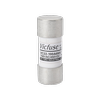
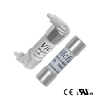
 Fuse is the most common and widely used protective device in electrical circuits. Though 'fuseless' concept had been catching on for quite some time, still quite a lot of low-voltage distribution circuits are protected with fuses. Further fuses form a major backup protection in medium-voltage and high-voltage distribution to 11 kV, where switches and contactors with limited short-circuit capacities are used.
In 1881, Edison patented his 'lead safety wire', which was officially recognized as the first fuse. However, it was also said that Swan actually used this device in late 1880 in the lighting circuits of Lord Armstrong's house. He used strips of tin-foil jammed between brass blocks by plugs of woods. The application of the fuse in those days was not to protect the wires and system against short circuit, but to protect the lights which cost 25 shillings a time (a fortune in those days).
Later, as electrical distribution systems grew, it was found that after short circuits, certain conductors failed. This was due to the copper conductors, not being accurately drawn out (extruded) to a constant diameter throughout the cable length; faults always occurring at the smallest cross-sectional area.
Fuses were often considered as casual devices until not so long ago. The open tin-foil (rewireable) sometimes came in for a lot of abuse. If it blew constantly, then the new fuse was just increased until it stayed in permanently. Sometimes hairpins were used. Greater precision only became possible with the introduction of the Cartridge fuse.