Composite Structures, Design, Safety and Innovation

Design of composite structure involves the choice of materials and structural concepts. The choice of material is often determined by strength and toughness. The process and structural concepts selections are dominated by an array of financial (production and life cycle costs) and performance considerations. Inspection costs and effectiveness are an integral part of both.
The selection of structural concepts still seems to be focused on choices between skin-stringer panels and sandwich panels. The variety of attachment methods (to the sub-structure) and structural enhancements approaches (e.g. stitching) are in dynamic development. So, the approach to design must incorporate explicit, safety-based features to deal with the uncertainty and risk associated with innovation.
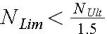
The design of composite structural concepts quite often involves an investigation of whether "damage tolerance" or "static strength" is critical. Criticality in design, in many cases, is based on a situation, when the safety factor of 1.5 can be used to separate limit and ultimate internal loads. This is based on an assumption of a linear relation between external and internal loads. There are exceptions, and some are noteworthy.
The typical situation for geometrical non-linearities is described in Figure 14.1. What is striking here is that while the limit external load is described by,
the internal limit load is described by,
If we write the criticality comparison as a comparison of the effects of maximum internal limit loads, then we can use Figure 14.2 as an illustration of damage tolerance critical structure.
B/