Mixed Signal VLSI Wireless Design: Circuits and Systems
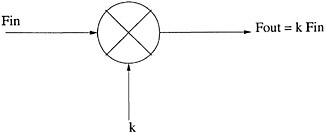
A frequency synthesizer is defined as an electronic device, which is capable of producing one or many frequencies from one or more reference sources [113]. Generally, the output frequencies are any fraction of the input reference, as shown in Figure 12.1. Frequency synthesizers today have a wide variety of applications including radios, satellites, radar systems, television receivers, test equipment, cellular phones, and personal communications services (PCS).
The recent increased demand in portable services, such as cellular phones and PCS, has dramatically increased the use of available spectrum. The main component in such systems, which enables channel selection is the frequency synthesizer. The accuracy of selecting a channel with the purest possible reference source has been subject to intense research in the past few years. It s simple structure combines three large disciplines: analog and digital circuit techniques, digital signal processing, and control theory.
In section 12.2, we present several important frequency synthesizer parameters. In section 12.3, we present two frequency synthesis techniques: the fractional-N frequency synthesizer and the direct digital frequency synthesizer. In section 12.4, we discuss the phase noise in frequency synthesizers. Finally, we conclude the chapter with a summary in section 12.5.
There are several frequency synthesizer parameters that are important in both design and analysis. In this section, the important FS parameters are listed.
One important parameter of a frequency synthesizer is its frequency range. This is defined by the...