Fluid Mechanics, Fourth Edition
Guiding students from the fundamentals to the analysis and application of fluid mechanics, this text covers compressible flow and such diverse applications as hydraulics and aerodynamics.
 TABLE OF CONTENTS
 There are approximately 100 000 km of blood vessels in the adulthuman body (Brown et al. (1999)). In this section, we will examine several models for describing blood flow in some important vessels.
Blood flow in the circulatory system is in general unsteady. In most regions it is pulsatile due to the systolic and diastolic pumping. In pulsatile flow, the flow has a periodic behavior and a net directional motion over the cycle. Pressure and velocity profiles vary periodically with time, over the duration of a cardiac cycle. A dimension-less parameter called the Womersley number, a, is used to characterize the pulsatile nature of blood flow, and it is defined by:
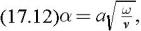
where, a is the radius of the tube, ? is the frequency of the pulse wave (heart rate expressed in radians/sec), and ? is the kinematic viscosity. This definition shows that Womersley number is a composite parameter of the Reynolds number, Re=u 2a/ ?, and the Strouhal number, St= ? 2a/u. The square of the Womersley number is called the Stokes number. The Womersley number denotes the ratio of unsteady inertial forces to viscous forces in the flow. It ranges from as large as about 20 in the aorta, significantly greater than 1 in all large arteries, to as small as about 10- 3 in the capillaries. Let us estimate the Womersley number for an illustration. With a normal heart rate of...