Analytic Hyperbolic Geometry: Mathematical Foundations and Applications
The Bloch vector in the open unit ball
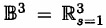
of the Euclidean 3-space ? 3 is well-known in quantum computation theory. Following a brief introduction, we will find in this chapter that the Bloch vector is, in fact, a gyrovector rather than a vector. Hence, we will discover that the geometry of quantum computation theory is the hyperbolic geometry of Bolyai and Lobachevsky, and its algebra is the algebra of gyrovector spaces.
A qubit is a two state quantum system completely described by the qubit density matrix ?( v),
| (9.1) | |
parametrized by the vector
. Here 1 is the unit matrix and ? = ( ? 1, ? 2, ? 3) are the Pauli matrices in vector notation [Chen and Ungar (2001)],
| (9.2) | |
Using vector notation we thus have ? v = v 1 ? 1 + v 2 ? 2 + v 3 ? 3 for any
.
The density matrix [Blum (1996)] dates back to the early independent work of Landau and von Neumann, has proved useful in physics [Urbantke (1991); Chen, Ungar and Zhao (2002); Chen, Fu, Ungar and Zhao (2002)]. Researchers have devoted substantial efforts in describing the spaces denned by density matrices [Bloore (1976)], in using them to analyze the separability of quantum systems [?yczkowski (1998); Slater (1999)], in comparing information-theoretic properties of various probability distributions over them [Slater (1998)], as well as...